Brazil Safety Tips: A Tourist's 2026 Playbook

Jump to section
Updated April 2026: this guide uses current U.S. State Department and UK FCDO guidance, CDC recommendations, and 2024 crime data from Rio's public-security institute (ISP-RJ).
Rio de Janeiro logged 21,423 cell phone robberies in 2024 — up 38% year-over-year — even as more than 2 million foreign tourists visited the city (Instituto de Segurança Pública, ISP-RJ, 2024). That gap is the whole story of Brazil travel safety. Most foreign visitors have a clean trip; the ones who don't usually lost a phone, a card, or an afternoon to the same three or four scam patterns that recur across Rio, São Paulo, Salvador, and the Northeast.
This is a habits guide, not a warnings list. Ten behaviors — plus a five-minute pre-arrival checklist — handle roughly 90% of the realistic risk tourists face in Brazil. The rest of this article maps each habit to the scam it prevents, drops into city context, and ends with a response playbook if something does slip through.
For the country-level picture, see our Brazil safety guide. For the threats these habits defend against, read common scams in Brazil.
Key Takeaways
- Ten habits prevent most tourist incidents in Brazil: ride-share over street taxi, phone in a front pocket, card never out of sight, ATM inside a branch, watch drinks poured, dress down, three Portuguese phrases, STEP enrolled, offline map, travel insurance.
- Brazil holds a U.S. Level 2 advisory (Exercise Increased Caution) and a CDC Level 1 health notice for 2026 — tourist-focused risk is overwhelmingly property scams, not violent crime (U.S. Embassy, 2026; CDC, 2026).
- Phone snatching is the single most common incident: Rio alone logged 21,423 cases in 2024, up 38% YoY (ISP-RJ, 2024).
Is Brazil Safe for Tourists in 2026?
For most trips, yes — but "safe" here is a question of behavior and route, not a yes-or-no flag. The U.S. State Department currently lists Brazil at Level 2 (Exercise Increased Caution), and CDC health guidance is at Level 1 (U.S. Embassy and Consulates in Brazil, 2026; CDC Travelers' Health: Brazil, 2026). The UK FCDO's Brazil advice adds specific warnings about scams, card fraud, and unofficial airport transfers (GOV.UK Brazil travel advice, 2026). Violent crime is concentrated in neighborhoods tourists rarely visit. What reaches visitors is overwhelmingly property crime wearing a disguise.
The practical read: treat Brazil as a country where you manage specific, recognizable scams — not as one generic threat — and the trip gets much simpler. Our Brazil's current safety status page covers week-to-week advisory shifts, while Brazil safety for American travelers covers the U.S.-specific angle.
The 5-Minute Pre-Arrival Safety Checklist
The highest-leverage thing you can do for Brazil travel safety happens before you leave home. Five tasks, done once, neutralize most of the friction if something goes wrong on the ground:
- Enroll in STEP at step.state.gov. Free, two minutes, gives the U.S. Embassy your contact info in an emergency.
- Buy travel insurance with medical, theft, and evacuation cover. See our travel insurance for Brazil guide for what a policy should actually cover.
- Download offline maps in Google Maps or Maps.me for every city on your itinerary. No live street navigation means no visible phone.
- Set up remote-wipe (Find My iPhone or Find My Device) and verify you can wipe the phone from another device. A stolen phone is a data breach if you skip this.
- Learn three Portuguese emergency phrases: "Preciso de ajuda" (I need help), "Onde fica a delegacia?" (Where's the police station?), "Chamem a polícia" (Call the police).
The Brazil Safe Travel app bundles the embassy number, the Portuguese phrases, offline safety-zone maps, and scam-pattern flashcards in one offline package. Install it before you land — airport Wi-Fi is where tourists are most distracted. For paperwork, see our Brazil visa for U.S. citizens guide.
How Should Tourists Handle Transport Safely in Brazil?
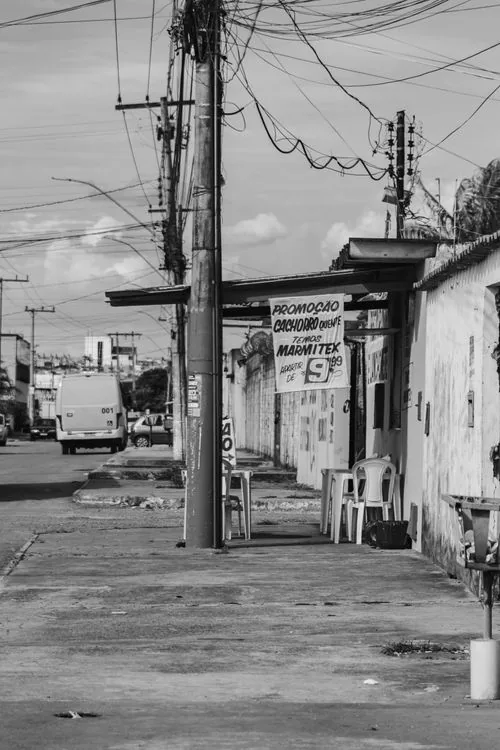
Transport is the single category where a one-line habit fixes most of your risk. Use Uber, 99, or inDrive for everything that isn't an official airport transfer. The UK FCDO specifically flags unregulated taxis and "broken meter" scams as recurring issues in Brazil (GOV.UK Brazil travel advice, 2026); the U.S. Embassy adds warnings about unofficial "transfer" offers inside airport arrivals halls (U.S. Embassy, 2026). Both problems vanish if you default to an app.
Airport-specific habits close the rest: at GRU (São Paulo Guarulhos) rideshare pickup is on the upper level; at GIG (Rio Galeão), the ground-floor exits. At CNF, SSA, REC, and FOR the pattern is identical — app first, official pre-paid desk second, curbside never.
Inside the cities, a short rule list handles what's left: verify the plate and driver photo in the app before you sit; never share the ride PIN or OTP with anyone off your app screen; don't announce your hotel name at the curb; keep the phone in your pocket during the ride (red-light snatches through open windows are a real pattern); and if the route feels wrong, end the trip in-app and book a new one.
São Paulo and Rio metros are safe in daylight and during commute hours; after 10 p.m. or on weekends, lean rideshare. Our São Paulo safety guide covers specific lines that need extra care.
What Are the Top 10 Personal Safety Habits for Brazil?
Ten habits, each mapped to the scam it prevents, cover nearly every realistic tourist risk in Brazil. Phone snatching is the most common incident — ISP-RJ recorded 21,423 cell phone robberies in Rio in 2024, up 38% over 2023 (ISP-RJ, 2024). The scam menu in our common scams in Brazil guide is national; the habits below are the defense layer.
| # | Habit | Scam it prevents |
|---|---|---|
| 1 | Use Uber, 99, or inDrive — never a street taxi | Rigged meter, long-route, fake transfer |
| 2 | Phone in a front pocket; crossbody strap if carried | Walk-by and motorbike phone snatches |
| 3 | Never walk with a phone out, navigating | Street-grab and distraction theft |
| 4 | Card never leaves your sight; type your PIN yourself | Card-machine swap, cloning |
| 5 | Use contactless or mobile wallets when possible | Skimming |
| 6 | Only use ATMs inside bank branches during business hours | ATM skimmers, shoulder-surfers |
| 7 | Watch every drink being poured, stay in groups in nightlife zones | Drink spiking ("Boa Noite, Cinderela") |
| 8 | Dress down — no flashy watch, gold chain, or new camera | Targeted street theft |
| 9 | Don't accept unsolicited help at transit nodes or ATMs | "Fake helper" and distraction scams |
| 10 | Walk on the inside of the sidewalk, away from the curb | Motorbike grab-and-run |
Three habits deserve extra context:
Phone habits have the highest leverage. Keep it in a front pocket (never a hip pocket or tote), use a crossbody strap so any grab meets resistance, never walk while navigating, and silence notifications so a lit screen doesn't advertise the device at night. Step into a café or hotel lobby to check the map, then pocket the phone before walking out.
Card habits prevent the most financially painful scam. Card-machine swaps work because tourists hand the card over and look away while mentally converting BRL to dollars. Never let it leave your sight. Type the PIN yourself, shielded. Confirm the BRL amount on the display. Prefer tap-to-pay, Apple Pay, or Google Pay. Check statements daily during and for two weeks after the trip.
Dress-down is underrated. Targeted street theft is triage on visible wealth. Leave the Rolex, gold chain, and new camera in the safe; bring the $200 Android you don't mind losing. The risk delta between a tourist wearing $5,000 of gear and one who isn't is enormous.
Which Brazilian Cities Have the Best and Worst Safety Profiles?
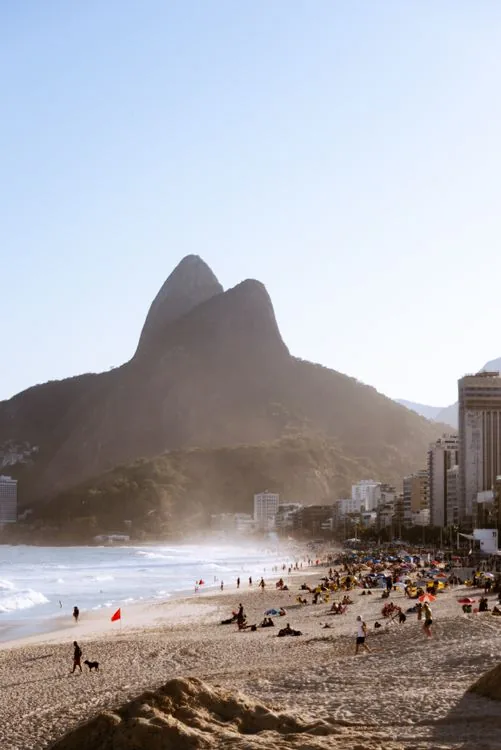
City matters far more than country here. Rio and São Paulo concentrate most of the visible property crime affecting foreigners; mid-sized and southern cities are meaningfully calmer.
Consistently tourist-friendly: Gramado, Trancoso, Ubatuba, and the southern trio of Curitiba, Florianópolis, and Blumenau all post Brazil's best tourist-safety numbers.
Tourist-favorite, but requires the habits above:
- Rio de Janeiro — Copacabana, Ipanema, Leblon, Urca, and Santa Teresa by day are fine; Lapa nightlife needs the group rule.
- São Paulo — Jardins, Itaim, and daytime Vila Madalena are straightforward; Sé and República warrant more care after dark.
- Salvador — Pelourinho is magical by day and more complicated at night; groups + rideshare.
- Recife, Fortaleza, and Belém all have active tourist cores with specific neighborhoods to watch; each city guide covers the detail.
Never tour favelas independently, even the ones with "tours" on Instagram. If you visit, go through a community-run, officially organized operation — and ask locals first.
For safety by traveler type, our guide on safety for solo female, family, and LGBTQ+ travelers drills into how the same habits flex across different profiles.
How Do Tourists Stay Safe at Brazilian Beaches?
The beach is the single highest-theft setting for tourists in Brazil — not because it's especially dangerous, but because everything that matters is visible. Rio's Copacabana and Ipanema, Salvador's Porto da Barra, Fortaleza's Praia de Iracema, and Recife's Boa Viagem all follow the same pattern: a walk-by grab, a kiosk distraction, or a towel theft during a swim.
Four habits handle it:
- Bring only what you can afford to lose — a cheap phone, a card with a low daily limit, small cash, sunscreen, a kanga. Nothing else.
- No phone on the towel. Keep it in a zipped pouch inside a beach bag, and keep the bag in your lap, not at your feet.
- Swim in pairs and rotate watching the bags. If you're alone, take nothing but a kanga and a key.
- Stay between the lifeguard flags. Brazilian currents are real — CBMERJ posts them for a reason, and rip tides at Barra and Ipanema have killed tourists who ignored them.
Beach kiosk ("quiosque") staff turn over a lot. Never hand them your phone or card "to hold."
What Should Solo Travelers, Women, Families, and LGBTQ+ Visitors Know?
Brazil's safety picture doesn't change radically by traveler type, but the mix of habits does. Our safety by traveler profile guide drills into each:
Solo female travelers — rideshare exclusively, groups in Lapa / Vila Madalena / Pelourinho nightlife, extra care with drink-spiking prevention. Brazil is broadly warm to solo women; the scams are the same as everyone else's, with slightly higher base rates in nightlife zones.
Families with kids — neighborhood choice matters more than city choice. A central, tourist-zone hotel plus rideshare plus the beach habits above handles most of it. Amazon and beach trips with licensed tour operators are kid-friendly; independent favela visits are not.
LGBTQ+ visitors — strong federal legal protections and visible public LGBTQ+ life in Rio, São Paulo, Florianópolis, and Salvador. PDA is normal in tourist zones. Some rural and interior areas are more conservative, but in the places tourists actually visit the safety habits are the same.
Digital nomads — same habits, plus two additions: laptops don't come to cafés unattended, and pick a co-working space in a good neighborhood (Ipanema, Pinheiros, Jardins, Icaraí).
What Should You Do If Something Goes Wrong in Brazil?
Get inside first. If a scam lands — stolen phone, drained card, spiked drink, fake taxi — your priority isn't reporting, it's moving to a safe indoor location. A hotel lobby, a police station, an open pharmacy, a 24-hour café. Once you're inside, work through this order:
- Freeze your cards using your bank's mobile app. Most major U.S. issuers support one-tap freeze.
- Remote-wipe the phone before the thief powers it off or swaps the SIM.
- Call Brazilian emergency services if needed: 190 (police), 192 (medical/SAMU), 193 (fire/CBMERJ). Free from any mobile phone.
- File a police report. Most Brazilian states offer an online Delegacia Eletrônica (São Paulo at delegaciaeletronica.policiacivil.sp.gov.br, Rio at delegaciaonline.rj.gov.br). Your "Boletim de Ocorrência" number is required for most insurance claims.
- Call the U.S. Embassy if passports are involved. If you enrolled in STEP (step.state.gov), they already have your contact info.
- Open your travel-insurance claim within 24 hours — most policies require it.
The Brazil Safe Travel app bundles all of this — emergency numbers, Portuguese audio phrases, and geolocation-based safety zones — in one place. Install it offline before you land, not after something goes wrong.
Frequently Asked Questions
How can tourists stay safe in Brazil?
Ten habits prevent most tourist incidents: use Uber or 99 instead of street taxis, keep your phone in a front pocket, don't walk while navigating, never let a card leave your sight, use ATMs inside bank branches, watch your drinks being poured, dress down, enroll in STEP before departure (step.state.gov), carry offline maps, and buy travel insurance. Rio alone logged 21,423 cell phone robberies in 2024 (+38% YoY) per ISP-RJ.
Is it safe to walk around Rio de Janeiro?
Yes in daylight in the main tourist zones — Copacabana, Ipanema, Leblon, Urca, central Botafogo, and Santa Teresa during the day — as long as you apply the phone and card habits. After dark, rideshare is the default; walking is fine between well-lit venues in groups. The U.S. Level 2 advisory asks travelers to exercise increased caution but does not advise against visiting Rio (U.S. Embassy, 2026). For neighborhood detail, see our Rio de Janeiro safety guide.
What should I not do in Brazil as a tourist?
Don't flag street taxis when rideshare apps work everywhere, don't flash a phone or expensive watch on the street, don't let your card leave your sight at a restaurant, don't accept drinks from strangers in nightlife zones, and don't tour favelas independently. These five don'ts prevent roughly the same scam set the UK FCDO flags for Brazil (GOV.UK, 2026).
Do I need travel insurance for Brazil?
Strongly recommended. Brazilian hospitals can refuse non-emergency care without proof of payment or insurance, and medical evacuation from remote areas — the Amazon, parts of the Pantanal, beach towns far from São Paulo or Rio — can cost tens of thousands of dollars. A policy with medical, theft, trip-interruption, and evacuation cover is the standard. Our travel insurance for Brazil guide covers what to look for.
Is it safe to drink tap water in Brazil?
Generally not recommended for tourists. Tap water in most Brazilian cities is treated, but the combination of aging pipes and a traveler's gut that's unused to local microflora usually means stomach trouble. Stick to bottled or filtered water, which is cheap and available everywhere. Our tap water in Brazil article covers city-by-city detail.
The Bottom Line on Brazil Safety
Brazil rewards travelers who bring a habit system. Five minutes of pre-arrival tasks and ten habits handle the vast majority of the risk — and the tools to execute all of them are free. The Brazil Safe Travel app keeps the emergency numbers, Portuguese audio phrases, and geolocation-based risk zones in your pocket so you aren't assembling the response playbook mid-crisis.
For the full safety picture, the Brazil safety guide and common scams in Brazil are the core reading. For city detail, the Rio, São Paulo, Salvador, Recife, Fortaleza, and Belém guides go deeper. For paperwork, travel insurance for Brazil and the Brazil visa for U.S. citizens guides cover it.