Is Brazil Safe for Female Travelers, Families & LGBTQ+?

Jump to section
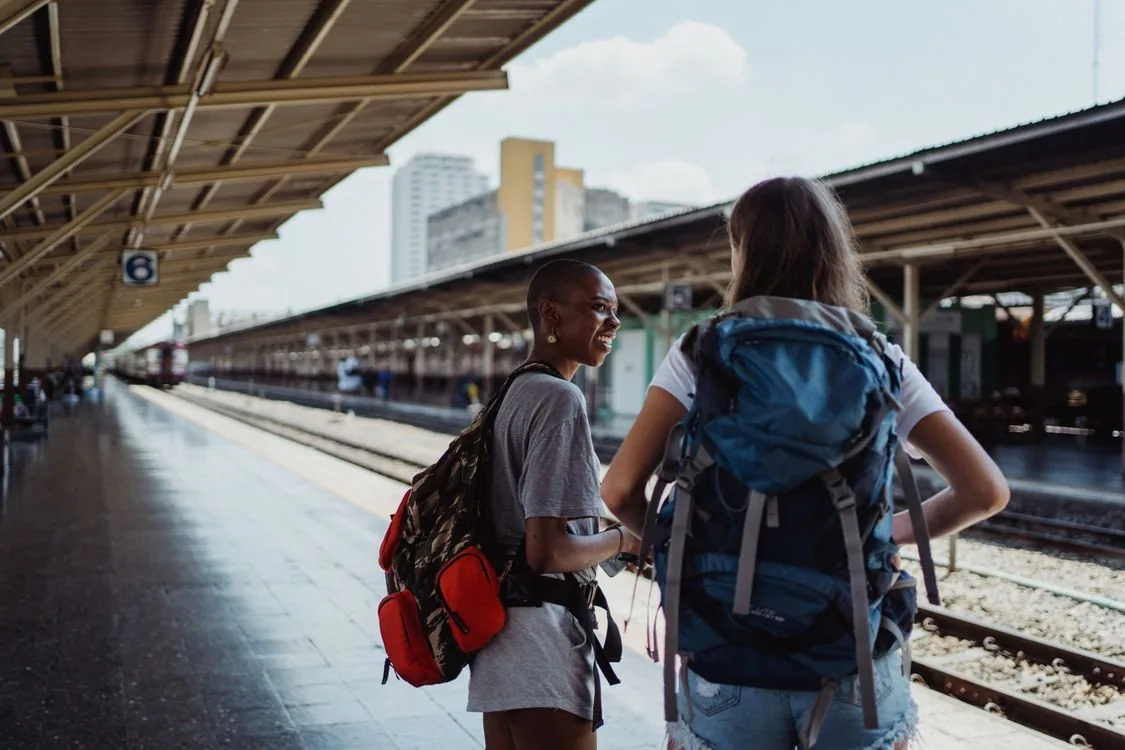
Women travelers on a city trip, matching the profile-specific focus of this guide.
Updated April 2026: this guide uses current CDC guidance, official Brazilian resources, and profile-specific planning logic for travelers deciding whether Brazil fits their trip style.
Is Brazil safe for solo female travelers, families and LGBTQ+ tourists? Usually yes for many routes, but the useful answer is not the same for every traveler. CDC currently lists Brazil at Level 1 for travel health precautions, while U.S. government guidance still points travelers toward increased caution at the country level, which means the real issue is not a simple yes-or-no verdict. It is whether your destination, transport habits, health prep, and nightlife exposure match your traveler profile.
That is where most generic safety articles fail. They answer is brazil safe for female travellers or is brazil safe for families with one paragraph of vague reassurance, then move on. In practice, Brazil becomes easier or harder depending on whether you are traveling solo, moving with children, relying on nightlife after dark, screening hotels and operators carefully, or choosing lower-friction routes for a first trip.
If you still need the broader country-level answer first, start with our full Brazil safety guide. This article is the spoke that helps once you already know the big-picture risks and want to understand how they change by traveler profile.
Key Takeaways
- Brazil can work for solo female travelers, families, LGBTQ+ tourists and many American visitors, but route choice matters more than labels.
- Family travel safety in Brazil includes vaccine timing and lower-friction itineraries, not just hotel choice.
- The most useful profile-based advice is practical: safer transport, better neighborhoods, better timing, and better screening of accommodations and operators.
Is Brazil Safe for Solo Female Travelers?
Brazil can be a workable solo trip for many women, but it usually becomes safer when the traveler chooses stronger neighborhoods, uses app-based transport at night, and keeps the itinerary simpler. The country-level answer alone is not enough because the real risk profile changes quickly between a daylight-heavy stay in a strong tourist corridor and a nightlife-heavy route with improvised late returns. That is why searchers asking is brazil safe for female travellers or is brazil safe for solo female travellers are usually not asking whether Brazil is universally unsafe. They are asking whether the trip becomes manageable if they make smarter choices about where to stay, how to move after dark, and how much improvisation they allow. In practical terms, solo safety in Brazil is more often a question of transitions, timing, and route discipline than of abstract country risk alone.
The official support layer matters here too. Brazil's Ministry of Women says Ligue 180 is a free, 24/7 service for guidance and reporting violence against women, and emergencies should go to 190 (Ministry of Women, 2026). That does not solve day-to-day route judgment, but it does mean a solo female traveler has more than just hotel staff or informal advice if something goes wrong.
The strongest solo-female setup usually looks like this:
- choose neighborhoods with strong tourism infrastructure rather than “interesting but less proven” areas
- use Uber or verified app-based transport after dark
- avoid weak transitions between bars, beaches, streets and hotel entrances
- keep the trip selective if this is a first Brazil visit
- favor properties with a long review history and strong comments on staff responsiveness
The most useful solo-female Brazil advice is not identity-only advice. It is transition advice. Most avoidable problems happen during airport exits, nightlife exits, late returns, and moments when the traveler is tired, carrying a phone openly, or trying to improvise the next move.
If Rio is on the route, read our dedicated Rio de Janeiro safety guide because neighborhood choice matters much more there than a country-level answer can capture.
Is Brazil Safe for Families With Kids?
Brazil can work well for families, but family-safe usually means simpler, more structured, and more health-prepared rather than more adventurous. CDC recommends Hepatitis A vaccination for unvaccinated travelers aged 1 and older going to Brazil and says infants 6 to 11 months should also receive a dose before travel. CDC also emphasizes measles readiness for international travel, including early MMR guidance for infants and full vaccination for older children without evidence of immunity (CDC Travelers' Health: Brazil, 2026; CDC Measles Travel Guidance, 2024). That is why is brazil safe for families is partly a health-prep question, not just a crime or comfort question.
For many families, Brazil becomes easier when the route avoids too many transfers, too many short stays, and too much dependence on nightlife or dense event calendars. A calmer Rio stay, a beach extension with controlled logistics, or a Rio plus Iguaçu route is usually easier than a multi-city sprint that tries to “cover the country” with children in tow.
Family planning priorities should be:
- lower-friction transfers and fewer night arrivals
- child-friendly health prep before departure
- hotels in well-reviewed, better-connected areas
- destination choice based on ease, not just fame
- more daylight activity and less reactive planning in the evening
For families, Brazil safety is usually a mix of vaccine timing, easier logistics, and lower-friction daily movement.
If you are still deciding where a first family route should go, use our Brazil travel guide before narrowing the destination list.
Is Brazil Safe for LGBTQ+ Travelers?
Brazil can be a strong destination for many LGBTQ+ travelers, but the practical answer depends on city choice, neighborhood choice, venue type, and how carefully the traveler screens accommodations and operators. Brazil's Ministry of Tourism said in 2025 that it supports LGBTQIA+ tourism inclusion and distributes the Bem atender: turistas LGBTQIA+ guide to help tourism businesses receive LGBTQIA+ visitors appropriately (Ministry of Tourism, 2025). That is useful not because it proves all experiences are automatically smooth, but because it supports a more realistic conclusion: is brazil safe for lgbtq is best answered by looking for city-specific and service-specific fit rather than by using broad, countrywide stereotypes. The safer routes are usually the ones where accommodation quality, neighborhood comfort, and nightlife movement are screened ahead of time instead of improvised on arrival.
The strongest LGBTQ+ planning habits are:
- stay in areas with a strong tourism and nightlife track record
- favor hotels and operators with visible review signals and inclusive reputation
- treat venue selection as part of safety, not just entertainment
- do not assume the same social atmosphere applies equally across all destinations and hours
For same-sex couples and LGBTQ+ solo travelers, the safest routes are often the ones with stronger tourism density, clearer accommodation standards, and less dependence on improvised movement after midnight.
Is Brazil Safe for American Tourists?
For many Americans, yes, but only if they stop treating Brazil like a low-friction add-on trip where logistics sort themselves out. The biggest mistake many U.S. travelers make is assuming the hard part is just entry rules or flights. In reality, the harder part is often expectation-setting: neighborhood choice, phone visibility, late movement, transport screening, and health preparation. That is why the question is brazil safe for american tourists belongs here as much as in the country-level pilar. Americans often arrive with strong assumptions from U.S. urban travel that do not translate cleanly into Brazil's tourist-facing rhythm, especially on first trips that mix big cities, beaches, and internal flights. In practice, the trip usually becomes easier when the traveler treats Brazil as a route-planning decision first and a booking decision second.
The practical advice is straightforward:
- treat Brazil as a planning-intensive trip, not a spontaneous extension
- combine country-level research with city-level guides
- do not confuse legal entry readiness with on-the-ground readiness
If you need the document side first, read our Brazil visa guide for Americans.
Brazil Planning Considerations for Black Travelers
This is one of the easiest sections to mishandle, so the most honest answer is also the most careful one. The question is brazil safe for black people should not be answered with unsupported sweeping claims about the entire country. The better guidance is practical: choose stronger neighborhoods, better-reviewed accommodations, vetted guides where helpful, and routes where the traveler feels less socially exposed and less dependent on improvisation. In other words, the most useful answer is not “Brazil is this” or “Brazil is that” in the abstract. It is that some routes, neighborhoods, and operators are simply easier to read and trust than others. That framing is more useful because it gives the traveler something actionable without pretending one social reality applies evenly across a country of continental scale.
That is why review history, hotel responsiveness, transfer quality, and tour-operator credibility matter so much. When the social read of a place may feel uncertain, reducing logistical uncertainty becomes even more valuable.
This section should stay grounded in what is operationally defensible:
- prefer stronger urban bases over weaker fringe areas
- use well-reviewed accommodations and guides
- simplify night movement when possible
- avoid overbuilt itineraries that require too much improvisation
Which Brazil Destinations Work Best by Traveler Profile?
Different traveler profiles usually do better on different route shapes. A solo female traveler may prefer a city with stronger tourism infrastructure and stricter transport rules. A family may want fewer stops and more predictable hotels. LGBTQ+ travelers may prioritize destination fit, venue choice and operator quality. A traveler who wants the easiest first Brazil route may simply need the most predictable cities rather than the most famous or ambitious itinerary. That is why most safe cities in brazil is not best answered with one ranked list. It is better answered with a fit matrix that matches traveler profile to route friction. What works for a smoother family trip is not always the same as what works for nightlife-heavy or solo travel.
The best first Brazil route often depends more on trip style than on raw destination fame.
For route selection, pair this spoke with the full Brazil travel guide.
If your route is likely to use São Paulo as the urban base, our Sao Paulo safety guide gives the city-level view on districts, Metro habits, and late-night movement.
What Health and Transport Habits Matter Most by Traveler Profile?
Many profile-specific safety decisions in Brazil are really health and transport decisions wearing a different label. CDC says Brazil is Level 1 for general travel health but also recommends itinerary-specific vaccine and mosquito planning, including yellow fever recommendations for many routes and malaria prophylaxis only in certain areas. CDC also notes Oropouche concerns in the Americas, including pregnancy-specific risk discussion (CDC Travelers' Health: Brazil, 2026; CDC Oropouche Notice, 2025). That is why this section matters across profiles: family travel, pregnancy planning, route complexity and night movement all connect back to health and transport choices. Once you frame the trip this way, profile-specific safety becomes much easier to act on before departure and on the ground.
Use this profile-based checklist:
- Solo travelers: stricter night transport rules and less improvisation after dark.
- Families: vaccine timing, fewer stops, more daylight activity, stronger hotel logistics.
- LGBTQ+ travelers: better accommodation screening and stronger venue selection.
- Pregnant travelers or those planning pregnancy: discuss Oropouche and mosquito exposure with a clinician before travel.
- Nature-heavy itineraries: check yellow fever and malaria logic by route, not by rumor.
If you want the financial-protection layer after this, read our travel insurance for Brazil guide too.
When the Broader Brazil Safety Guide Matters More
If you are still asking country-level questions such as how safe is brazil or is brazil safe to travel, go back to the main Brazil safety guide first. Brazil welcomed millions of international visitors in 2024, which is exactly why one profile-specific spoke cannot replace the national answer: too many routes, cities, and travel styles sit under the same broad search. This article is not trying to replace the pilar. It is here to answer the next question after that one: how does the answer change for your traveler profile? If the traveler still needs a broad national baseline before comparing solo travel, family travel, or LGBTQ+ route fit, the pilar should come first.
Use the pilar if you still need:
- the national risk overview
- regional differences across Brazil
- broader scam, crime and health framing
- handoffs to city and planning guides
Use this spoke if you already know the general country answer and need to decide how the trip changes for solo female travel, family travel, LGBTQ+ travel, or your own comfort threshold.
Frequently Asked Questions
These are the most common profile-specific questions travelers ask once they move beyond the broader “Is Brazil safe?” search. They work best as follow-up questions after the country-level answer because most travelers are really trying to test whether Brazil fits their route, comfort threshold, and planning style rather than asking for a single national verdict.
Is Brazil safe for solo female travelers?
For many routes, yes, especially when the traveler chooses stronger neighborhoods, uses app-based transport after dark, and limits weak transitions after nightlife or long travel days.
Is Brazil safe for families with young kids?
It can be, but families usually do better with simpler routes, earlier vaccine planning, and fewer late-night arrivals or overbuilt itineraries.
Is Brazil safe for LGBTQ+ travelers and same-sex couples?
Often yes in many mainstream routes, but destination, venue and accommodation choice matter more than broad country labels.
Is Brazil safe for American tourists?
Usually yes with planning, but many Americans do better when they reset expectations around transport, neighborhood choice and route friction.
What are the safest cities in Brazil for first-time visitors?
There is no single universal answer. Safer usually means more predictable, more connected, and easier to navigate rather than simply more famous.
What vaccines or health checks matter most before a Brazil trip?
That depends on your route, but Hepatitis A, measles readiness, yellow fever logic, dengue prevention and any pregnancy-specific mosquito-risk questions should be reviewed before departure.
Brazil can be a good fit for solo female travelers, families, LGBTQ+ tourists and many American visitors, but only when the profile-specific version of safety gets answered honestly. The strongest Brazil trips are not always the most ambitious ones. They are the ones that match the traveler to the right route, the right timing, the right transport habits and the right health preparation. If your route includes Rio, keep going to the city-specific safety guide. For where to go next, use the full Brazil travel guide.