Common Scams in Brazil: A Tourist's 2026 Field Guide

Jump to section
Updated April 2026: this guide uses current U.S. State Department and UK FCDO guidance, CDC recommendations, and 2024 crime data from Rio's public-security institute (ISP-RJ).
Cell phone robberies in Rio de Janeiro jumped 38% in 2024 — to 21,423 recorded cases — even as more than 2 million foreign tourists visited the city the same year (Instituto de Segurança Pública, ISP-RJ, 2024). That gap between headlines and the real-life risk tourists actually face is the whole story of Brazil scams. You probably won't be mugged at gunpoint on a Copacabana sidewalk. You probably will be offered a "helpful" card-machine twist, a too-friendly drink, or a curbside taxi with a "broken" meter — and knowing those patterns before you land is what separates a clean trip from a ruined afternoon.
Brazil isn't a uniquely dangerous country. It's a country where scams are patterned and largely preventable. The U.S. Embassy currently places Brazil at a Level 2 Travel Advisory (Exercise Increased Caution), while CDC's Brazil traveler page is at a Level 1 health notice (U.S. Embassy and Consulates in Brazil, 2026; CDC Travelers' Health: Brazil, 2026). The main everyday risk for tourists isn't violent crime — it's property scams you can sidestep with a short list of habits.
For the country-level picture, start with our full Brazil safety guide. The Rio de Janeiro safety guide and São Paulo safety guide cover neighborhood-by-neighborhood logic.
Key Takeaways
Eight scam patterns account for the vast majority of tourist losses in Brazil: card-machine swap, phone snatching, drink spiking ("Boa Noite, Cinderela"), rigged street taxis, ATM skimming, fake "helpers," spill-and-grab distractions, and motorbike grab-and-run.
Brazil holds a U.S. Level 2 advisory; Rio alone recorded 21,423 cell phone robberies in 2024 (+38% YoY) per ISP-RJ, making phone snatching the single most common tourist incident.
Five habits prevent nearly all of it: use Uber or 99 instead of street taxis, keep your phone inside a front pocket, never let your card leave your sight, only use ATMs inside bank branches, and watch your drink being poured.
For what these patterns look like when they succeed, see the documented cases from 2025 and 2026, including a drink spiking in Ipanema that cost two students £16,000.
Is Brazil Safe for Tourists in 2026?
For most trips, yes — but "safe" in Brazil is a question of behavior, route, and recognition, not a single yes-or-no answer. U.S. official guidance places Brazil at Level 2 (Exercise Increased Caution), while CDC health guidance remains at Level 1 (U.S. Embassy and Consulates in Brazil, 2026; CDC Travelers' Health: Brazil, 2026). The UK FCDO adds specific warnings about scams targeting foreigners, particularly around nightlife and transport (GOV.UK Brazil travel advice, 2026). Violent crime is heavily concentrated in neighborhoods tourists rarely visit; what reaches visitors is overwhelmingly property crime dressed up as a scam.
Treat Brazil as a country where you manage specific, recognizable scams — not as one undifferentiated danger zone — and the trip gets much simpler. For traveler-profile context, see our safety guide for solo female, family, and LGBTQ+ travelers.
What Are the Most Common Scams in Brazil?
Tourists in Brazil encounter eight recurring scam patterns that account for the bulk of losses reported to consulates, police, and insurance companies. The UK FCDO's Brazil travel advice specifically flags card fraud, drink spiking, and transport scams as the most common incidents reported by British nationals (GOV.UK Brazil travel advice, 2026). The U.S. Embassy's alert history echoes the same cluster.
Here's the full menu, in rough order of how often tourists encounter them:
- Phone snatching — grab-and-run on streets, beaches, and transit
- Card-machine swap — vendor switches or re-programs the POS terminal
- Drink spiking ("Boa Noite, Cinderela") — drug-assisted theft in nightlife
- Rigged street taxis — broken meters, long routes, airport overcharges
- ATM skimming and shoulder-surfing
- Fake "officials" and unsolicited helpers
- Distraction / spill-and-grab
- Motorbike grab-and-run
The rest of this guide works through each pattern with the specific tell, where it happens, and the exact habit that defeats it.
How Does the Card-Machine Swap Scam Work?
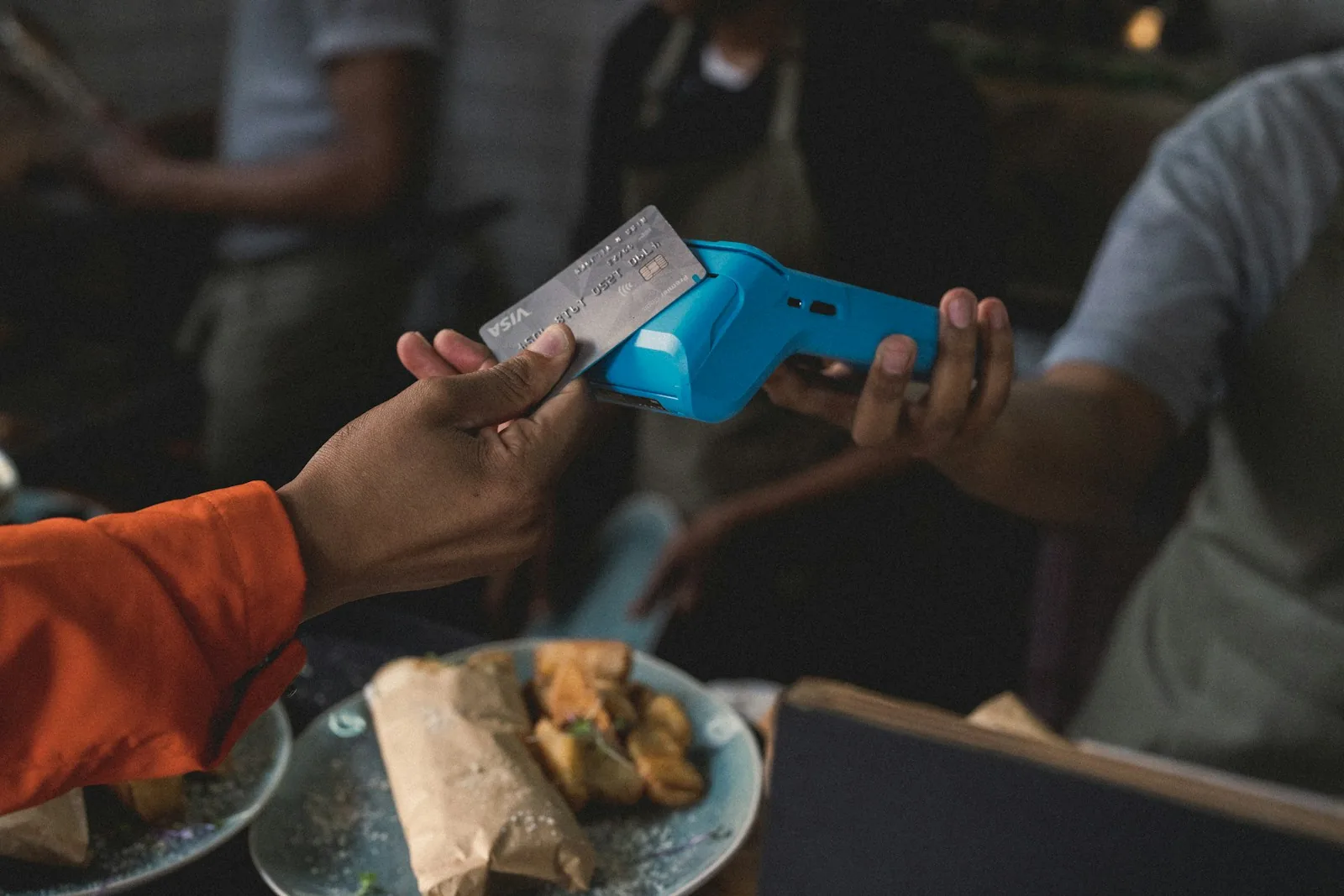
The card-machine swap is the single most financially damaging scam tourists face in Brazil because it often isn't noticed until the statement posts days later. The U.S. Embassy and UK FCDO have warned repeatedly about card-related fraud in Brazil, including skimming, cloning, and fraudulent overcharges at restaurants, kiosks, and street-market stalls (GOV.UK Brazil travel advice, 2026).
The pattern is almost always the same. A vendor or waiter brings the POS terminal, but instead of handing it to you they ask for your card first. In that short window they can swipe it through a second reader under the counter, or enter an inflated BRL amount you rush past because you're mentally converting to dollars. A variant: the vendor hands you a machine, you tap, it "doesn't work," and a second machine appears — which is where the real charge is run.
Five habits defeat nearly all card-machine scams:
- Never let your card leave your sight.
- Type your PIN yourself and shield the keypad.
- Confirm the amount on the display in BRL before you approve.
- Prefer contactless or mobile wallets. A tap can't be re-swiped.
- Check card statements daily during and for two weeks after the trip.
Most Brazilian restaurants and shops now accept contactless via Visa, Mastercard, Apple Pay, and Google Pay. That alone removes most of the attack surface.
How Do Phone Snatching Scams Work on Brazilian Streets?
Phone snatching is the most common scam you'll actually encounter on a Brazil trip. ISP-RJ recorded 21,423 cell phone robberies in Rio in 2024, a 38% YoY jump (Instituto de Segurança Pública, ISP-RJ, 2024). The pattern isn't subtle: a visible phone held in a hand, especially while walking or filming, signals a low-friction target.
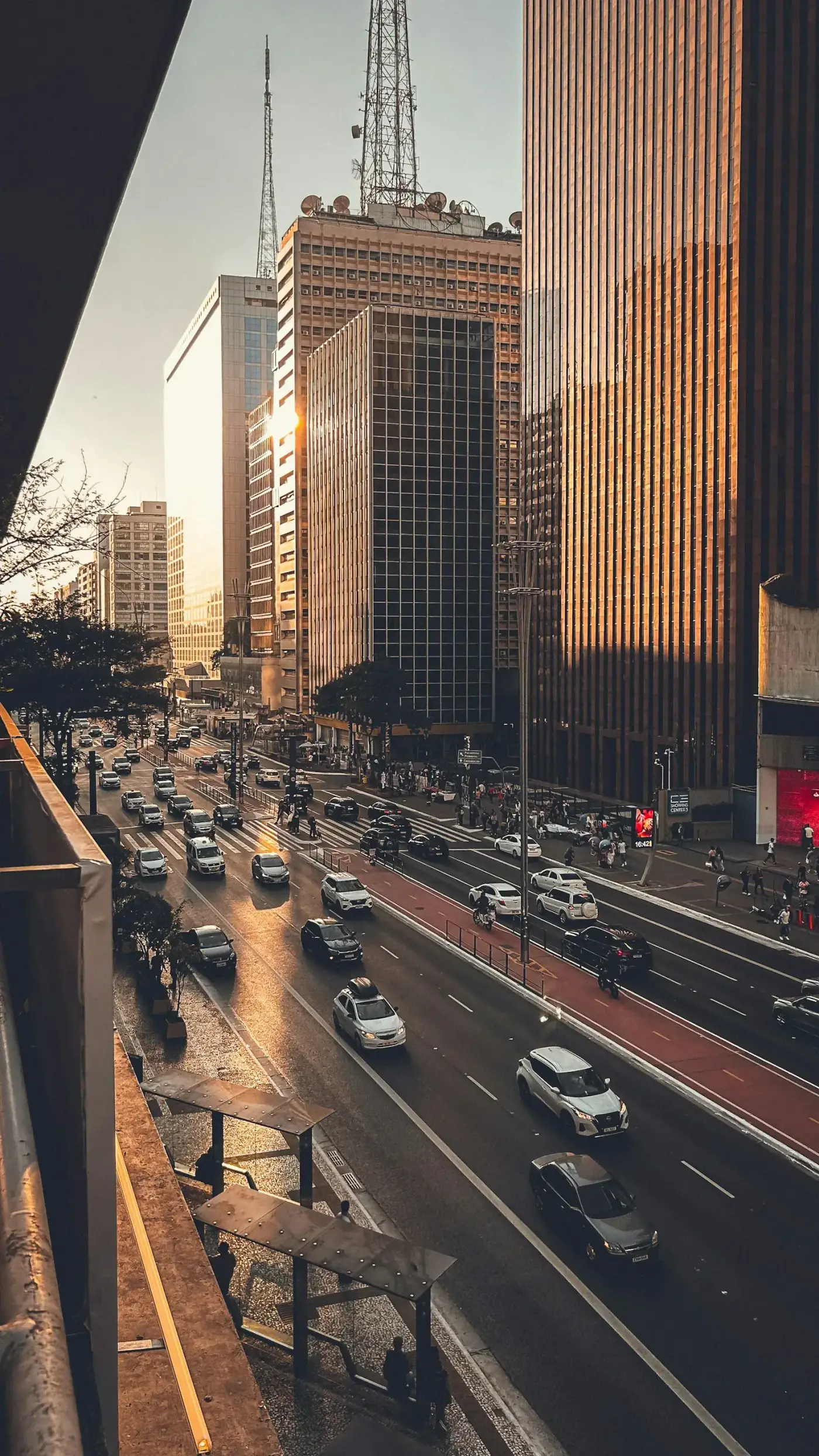
Three variants repeat across Brazilian cities. First, the walk-by grab — a person takes the phone in one motion and sprints into a side street. Second, the motorbike pull-up — two riders, one grabs while the other drives. Third, the beach distraction — a vendor, a child, or a "lost tourist" leans over while a second person lifts the phone from the towel or bag. Copacabana and Ipanema boardwalks, Paulista Avenue in São Paulo, and the Pelourinho in Salvador concentrate most of these attempts.
The prevention habits are boring, which is why they work:
- Keep the phone in a front pocket. Not a hip pocket, not a tote, not in your hand.
- Use a crossbody strap. A tether turns a grab into a tug.
- Never walk while navigating. Step into a cafe to check the map, then pocket the phone.
- Silence notifications. Lighting up in a dark street pre-advertises the device.
- Install remote-wipe (Find My iPhone, Find My Device) before you land.
For Rio-specific hotspots, see our Rio de Janeiro safety guide.
What Is the Drink Spiking "Boa Noite, Cinderela" Scam?
"Boa Noite, Cinderela" — literally "Good Night, Cinderella" — is Brazilian slang for drug-assisted theft, well-documented in nightlife zones of Rio, São Paulo, Salvador, and Florianópolis. The UK FCDO and U.S. Embassy both warn travelers about it, typically under drink-spiking incidents in bars and clubs (GOV.UK Brazil travel advice, 2026). The pattern combines an over-friendly stranger, a drink you didn't watch being poured, and a blurry block of hours during which the victim is led to ATMs, cards are run up, and belongings disappear.
Who gets targeted? Male solo travelers are hit more often than most guides admit, especially in the Lapa corridor in Rio and parts of Vila Madalena in São Paulo. Women are also targeted, frequently with dating apps as the first contact point. The scam is less about gender than about isolation and trust.
Five habits defeat it:
- Watch every drink being poured. If you look away, order a new one.
- Stay in groups — especially in Lapa, Pelourinho, and Vila Madalena.
- Don't accept drinks from strangers.
- Never share rideshare codes with someone you met that night.
- Use reputable venues. Tourist-board-listed bars have higher staff vigilance.
For nightlife context, our Rio nightlife and restaurants guide covers safer venues. Salvador's patterns differ — see the Salvador safety guide for Pelourinho-specific tips.
Which Taxi and Ride Scams Should Tourists Avoid?
Street taxi scams are the easiest to avoid in 2026 because Uber, 99, and inDrive operate across every major Brazilian city. The scams that still work target tourists who default to curbside cabs. The U.S. Embassy specifically calls out unofficial "transfer" offers inside arrivals halls as a recurring problem (U.S. Embassy and Consulates in Brazil, 2026).
Three patterns persist:
- "Broken meter" quote. Driver claims the taximeter is malfunctioning and names a fixed price two or three times the actual fare.
- Long-route airport run. Especially at GRU (São Paulo Guarulhos) and GIG (Rio Galeão). The driver takes a 30-minute detour for a 20-minute trip.
- "Your reservation was canceled." A fake dispatcher at arrivals claims your hotel transfer "didn't come through" and offers a ride at a premium.
Prevention is simple: use an app. Uber, 99, and inDrive show the fare before the trip starts, the plate before the car arrives, and a rating history for the driver. For airports, book an official pre-paid taxi from the authorized desk, or meet an Uber at the designated rideshare pickup zone. Never accept a ride from someone approaching you inside the hall.
Habits that close the remaining gaps:
- Verify plate and driver photo in the app before you sit.
- Don't announce your hotel name loudly at the curb.
- Keep the phone inside a pocket during the ride.
- If the route feels wrong, end the trip, pay via the app, and book a new one.
For São Paulo transit patterns, see our São Paulo safety guide.
How Do ATM, "Helper," and Distraction Scams Work?
These three scams are grouped here because they exploit the same thing: a short moment when your attention is on something other than your money.
ATM scams cluster around two variants — skimmers on standalone machines in malls, hotel lobbies, and gas stations, and shoulder-surfers who watch your PIN and then lift the card during a fake distraction. Brazilian banks increasingly restrict interbank ATM access after dark for this reason. The safest pattern: use ATMs inside a bank branch during business hours (10 a.m.–4 p.m.), shield the keypad, and withdraw a larger lump sum per visit.
Fake "helpers" show up near hostels, rodoviárias (bus stations), and Centro corridors. Someone offers to help with directions, luggage, buying a bus ticket, or "translating" at the counter. The scam ends with an inflated commission, a swapped note, or a missing bag. Never accept unsolicited help at transit nodes — go to the official counter yourself.
Spill-and-grab distractions are the classic tourist-trap scam. A stranger "accidentally" spills something — water, coffee, ketchup, bird droppings — on or near you, then offers to help clean up while a partner lifts your bag. If anything spills, step back, secure your bag across your body, and walk away before dealing with the mess.
Motorbike grab-and-run appears in almost every major Brazilian city and is responsible for a large share of Rio's phone snatches. Two riders, one passenger, a pull-up and a grab. Walk on the inside of the sidewalk, away from the curb.
What Should You Do If You're Scammed in Brazil?

Get inside first. If a scam lands — stolen phone, drained card, spiked drink, fake taxi — the priority isn't reporting, it's moving to a safe indoor location. Your hotel lobby, a police station, or an open restaurant works.
Once you're inside, work through this order:
- Freeze the cards. Most major issuers support instant freeze from a mobile app.
- Remote-wipe the phone using Find My iPhone or Find My Device before the thief powers it off.
- Call Brazilian emergency services if needed: 190 (police), 192 (medical), 193 (fire).
- File a police report. Most Brazilian states offer an online Delegacia Eletrônica that lets you file without visiting a station (São Paulo at delegaciaeletronica.policiacivil.sp.gov.br, Rio at delegaciaonline.rj.gov.br). A police report number ("Boletim de Ocorrência") is required for most insurance claims.
- Call the U.S. Embassy if passports are involved. Enrolling in STEP (step.state.gov) before you leave home takes five minutes and gives the embassy your contact info in an emergency.
- Open the travel-insurance claim within 24 hours for most policies. Our travel insurance for Brazil guide covers what to look for.
The Brazil Safe Travel app bundles emergency numbers, Portuguese audio phrases, and geolocation-based risk zones into one place so you don't have to assemble the response playbook mid-crisis. Keep it installed offline before you land.
The drink-spiking technique has moved beyond bars. Our guide to dating app scams in Brazil covers the arranged-meeting version, where losses run far higher because thieves reach banking apps rather than wallets.
Frequently Asked Questions
What are the top 3 scams tourists face in Brazil?
Phone snatching, card-machine fraud, and rigged street taxis account for the largest share of incidents reported by foreign tourists. Rio alone logged 21,423 cell phone robberies in 2024 (+38% YoY) per ISP-RJ. The UK FCDO flags card fraud and transport scams as the most common issues (GOV.UK Brazil travel advice, 2026).
Is it safe to use credit cards in Brazil?
Yes, if you follow three rules: never let your card leave your sight, type the PIN yourself with the keypad shielded, and confirm the BRL amount on the terminal before you approve. Contactless and mobile wallets like Apple Pay remove most of the cloning risk. Check statements daily during the trip.
Are ATMs safe in Brazil?
The safest approach is to use ATMs inside bank branches during business hours (generally 10 a.m.–4 p.m.), not standalone machines in malls, hotels, or gas stations. Withdraw a larger lump sum per visit rather than multiple small withdrawals to limit exposure. Always shield the keypad. Most Brazilian banks restrict interbank ATM access after dark to reduce skimming risk.
What's the safest way to get from a Brazilian airport to a hotel?
Use Uber, 99, or inDrive from the designated rideshare pickup zone at GRU, GIG, CNF, and most major Brazilian airports. Alternatively, book an official pre-paid taxi from the authorized desk inside the terminal. Never accept a ride offered by someone approaching you inside arrivals; the U.S. Embassy specifically warns about this pattern (U.S. Embassy and Consulates in Brazil, 2026).
How can I prevent phone theft in Brazil?
Four habits defeat nearly all phone-snatching attempts: keep the phone in a front pocket (not a hip pocket or tote), use a crossbody strap so any grab meets resistance, never walk while navigating, and install remote-wipe before you land. ISP-RJ data shows Rio cell phone robberies rose 38% in 2024, making this the single most common tourist incident.
The Bottom Line on Scams in Brazil
Brazil's scam menu is smaller and more predictable than most guides suggest. Eight patterns — phone snatching, card-machine fraud, drink spiking, rigged taxis, ATM tricks, fake helpers, distraction grabs, and motorbike pull-ups — account for nearly every incident tourists actually face. The probability varies by region and hour, but the prevention habits are the same: use Uber or 99, keep the phone pocketed, watch your drink, and never let a card leave your sight.
Do those five things and the rest of the trip plays out the way the brochure shows it. Scam knowledge isn't about fear — it's about removing the scenarios that account for most of the bad stories.
For the full safety picture, start with our Brazil safety guide. For city detail, the Rio de Janeiro, São Paulo, Salvador, and Recife guides dig into neighborhood-specific risk. And our travel insurance for Brazil guide covers what a policy should actually cover if a scam does land.