Is Recife Safe? Beaches, Boa Viagem & Tourist Guide (2026)

Jump to section
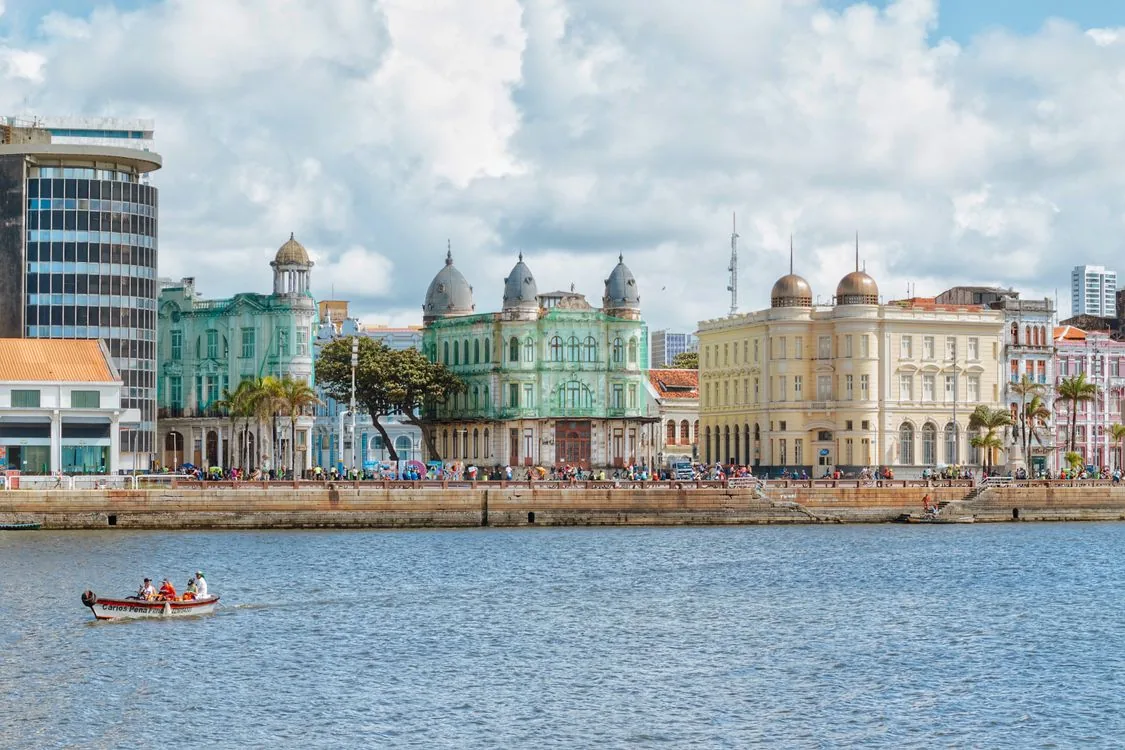
Updated April 2026: this guide uses current U.S. Embassy travel advisories, Government of Canada and GOV.UK FCDO guidance, CPRH Pernambuco beach-water reports, and Aena airport data relevant to Recife right now.
Is Recife safe? For many tourists, yes — but Recife rewards travelers who understand that the city's safety picture has three distinct layers rather than one. Most travel guides flatten Recife into generic crime advice and stop there. That misses what makes the city different: a concentrated hotel corridor in Boa Viagem that works well for most visitors, beach conditions shaped by active shark warnings and weekly water-quality monitoring, and a rainy season capable of causing serious flooding that disrupts movement across the city. Treating all three as one planning system — rather than treating crime as the only question — is what separates a manageable Recife trip from a frustrating one.
If you need the country-level answer first, start with the full Brazil safety guide. If you are comparing Recife with other Northeast cities, our Fortaleza safety guide and Salvador safety guide cover the contrast in detail.
Key Takeaways
- U.S., Canadian, and UK travel advisories all flag Brazil under elevated caution. For Recife, that translates to concrete advice: avoid municipal buses, keep phones out of sight, and stay off beaches after dark.
- Boa Viagem is the strongest tourist base in Recife — but it is not a permission slip for careless behavior on the beach or after dark.
- Shark attacks are a real, officially recognized risk on Recife's beaches. Warning signs and lifeguard flags are not decorative; they are the primary safety tool in the water.
Is Recife Safe for Tourists in 2026?
For many travelers, yes — especially when the trip is built around a clear corridor, structured transport, and honest beach habits. The U.S. Embassy and Consulates in Brazil currently display Travel Advisory Level 2: Exercise Increased Caution for Brazil as a whole (U.S. Embassy Brazil, 2026). The Government of Canada advises travelers to exercise a high degree of caution in Brazil and explicitly flags Recife among higher-crime urban centers where pickpocketing, robbery, and violence are concerns (Government of Canada — Brazil Travel Advice, 2026). GOV.UK's Foreign, Commonwealth and Development Office echoes that framing and specifically notes that mobile phones are especially targeted throughout Brazil (GOV.UK FCDO — Brazil Travel Advice, 2026).
None of those advisories say Recife is off-limits. They say the city requires a specific kind of attention. The visitor who books a hotel in Boa Viagem, uses Uber after dark, keeps a phone out of sight at the beach, and checks the weather forecast during rainy season operates in a meaningfully different risk environment than one who improvises transport at the airport, wanders after midnight, or swims past a red flag. That gap — between a prepared visit and an unprepared one — is wider in Recife than in most Brazilian cities precisely because the risks come from three directions at once.
Recife is also one of Brazil's major urban centers, with IBGE estimating its population at 1,588,376 (IBGE, 2025). That scale means city infrastructure, hospital access, consular support, and emergency services are all available in ways they are not in smaller Northeast destinations. Recife is harder to navigate safely than a smaller city, but it is also better resourced when something goes wrong.
Which Parts of Recife Work Best for Tourists?
Most tourists do best in the Boa Viagem corridor — and the most practical reason to stay there is not just safety but logistics. Boa Viagem is the neighborhood where hotel density, beach access, restaurant options, and rideshare pickup points overlap cleanly. That daily rhythm — hotel, beach, dinner, Uber home — stays compact and legible when you base in Boa Viagem in a way it does not in a cheaper inland neighborhood that adds extra transfers and weaker return routes to every evening.
Recife Antigo, the historic peninsula that anchors the old city, is one of the most visited destinations in the northeast for its colonial architecture, museums, and cultural institutions. It works well as a daytime destination, especially on weekends when it draws larger crowds and better police coverage. It is not a good hotel base for a first-time visitor: the area is less active at night, and the transition back to a hotel in another neighborhood after an evening out adds risk that Boa Viagem does not.
Pina, adjacent to Boa Viagem, is a secondary option that some travelers use as a slightly cheaper alternative with similar coastal access. It is workable but less consistent than Boa Viagem in terms of street-level activity and hotel service quality. Areas further inland — including central commercial districts — add transport friction and are not recommended as tourist bases.
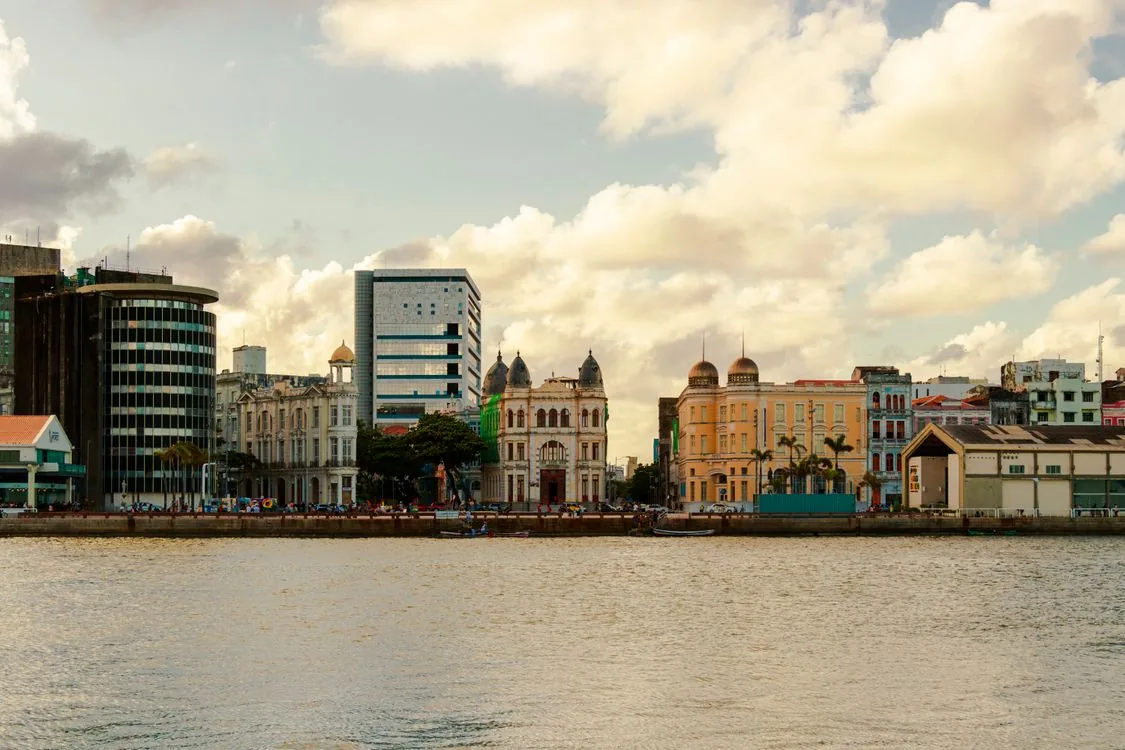
The best Recife base for most tourists is not simply the cheapest room or the one closest to a landmark. It is the one that keeps daily movement between hotel, beach, and dinner shortest and most structured.
What Should Tourists Avoid in Recife?
The most important things to avoid in Recife are not neighborhoods on a blacklist — they are behavioral patterns that create openings in otherwise manageable situations. The U.S. Embassy's official guidance specifically advises U.S. government personnel not to use municipal buses in Brazil due to robbery and assault risk, especially at night (U.S. Embassy Brazil, 2026). For tourists, the same logic applies: buses are not the right transport choice after dark, and app-based transport removes most of the risk that comes with standing at a public bus stop in an unfamiliar area.
GOV.UK flags mobile phones as an especially targeted item throughout Brazil, and the pattern holds strongly in Recife: phones left visible on restaurant tables, held out at the beach, or used while walking near roads are the single most common source of theft reported by tourists in the city (GOV.UK FCDO, 2026). The fix is simple and mechanical: keep the phone in a pocket or bag when not in active use, and never place it on a table outside.
Beyond phones and buses, the main avoidable mistakes are:
- walking extended distances after dark, especially from Recife Antigo back toward the hotel without a pre-planned Uber
- arriving at the airport without a decided transport plan and improvising curbside with luggage visible
- using the beach after sunset, when phone snatching and robbery risk rises sharply
- ignoring red flags and lifeguard warnings in the water — these carry specific safety meaning in Recife beyond generic surf caution
- assuming that a crowded daytime beach promenade will feel the same way at 9pm
Is Boa Viagem Safe to Stay In and Use as a Tourist Base?
Boa Viagem is the most practical base Recife offers for tourists, and for most first-time visitors it is the right answer. The neighborhood sits along an 8-kilometer stretch of urban beach, has consistent hotel and apartment rental options across different budgets, and stays active enough in the evenings that walking within its core corridors does not carry the same risk as walking in less-populated parts of the city. Police presence is more consistent here than in most of Recife's other neighborhoods, and the density of restaurants and shops along the beachfront road means that even after dark there are staffed spaces to duck into quickly.
That said, Boa Viagem being the best base in Recife does not make it effortless. Phone theft remains a real concern along the beachfront promenade, particularly during the late afternoon when the beach crowd thins but the street remains busy. The beach itself follows the same rule that applies city-wide: safe and practical during the day, notably higher-risk after sunset. Uber is the right return mechanism from evening activities in any part of Boa Viagem; walking home at midnight because the hotel looks close on the map is the version of route improvisation that most tourist incidents trace back to.
Boa Viagem also has a specific beach dynamic that requires separate planning. The natural reef line offshore creates a beautiful tidal pool effect inside the reef and is why the neighborhood became the tourist base it is today. The same reef system, combined with murky water and high freshwater outflow from the rivers feeding into the bay, is part of what makes the outer waters one of the more shark-active stretches of the Brazilian coast. That layer of beach safety is covered in full in the next section.
Are Recife Beaches Safe? Shark Warnings, Water Quality and Night Use
Recife beach safety is not only about theft and timing. Shark warnings, surf conditions, water-quality monitoring, and lifeguard flags are core safety tools here in a way that does not apply to most other Brazilian beach cities. Understanding how to use them is the difference between a beach day and a serious incident.
Both GOV.UK and the Government of Canada flag shark attacks as a real hazard on beaches around Recife in their current Brazil travel advisories (GOV.UK FCDO, 2026; Government of Canada, 2026). That is unusual: most travel advisories do not mention shark risk by city. Recife appears in these advisories because the historical attack record around its coast is notably high by global standards. Data compiled from 1992 to 2006 documented 59 shark attacks in the Recife area, with roughly 40 percent of victims dying — a fatality rate significantly above the worldwide average of around 16 percent (ResearchGate / International Shark Attack File, 2006). Bull sharks are the primary species involved, drawn to the area by freshwater river outflow and murky coastal conditions.
This does not mean Recife beaches are unusable. It means they have specific rules that are enforced through a visible warning system. Red flags mean the beach is closed to swimming. Yellow flags mean swim with caution. Warning signs about sharks are posted permanently at many access points and should be read, not photographed and ignored. Swimming outside reef lines — in deeper, open water — carries materially higher risk and is explicitly discouraged by local authorities.
CPRH Pernambuco, the state environmental agency, monitors beach-water quality weekly at 50 monitoring points across 11 coastal municipalities, classifying beaches as suitable or unsuitable for bathing according to CONAMA 274/00 thresholds (CPRH Pernambuco, 2026). Checking the weekly CPRH bulletin before going to any Recife beach is the same kind of practical update that changes your beach day more than any generic safety reassurance.
The beach timing rule is also firm: Boa Viagem beach and all other Recife beach areas should be treated as significantly higher-risk after dark. The main risks shift from shark and water concerns to theft and robbery, and both are avoidable by keeping beach use to daylight hours.
Beach safety in Recife is not a single question. Water conditions, shark warnings, and time of day all need to be part of the same decision.
Is Recife Airport Transfer and Local Transport Safe?
Usually yes — with structured transfers and decided logistics before leaving the terminal. Recife's Guararapes–Gilberto Freyre International Airport sits approximately 11 km from the city center and roughly 1.1 km from the nearest metro station, making it more accessible than most Brazilian city airports (Aena Brasil, 2026). That proximity is an advantage, but it only works cleanly when the traveler has already decided how the airport-to-hotel move will happen before landing.
The metro is the cleanest low-friction option for daylight arrivals. The Aeroporto station is within walking distance of the terminal, and the line runs toward the city center and has connections useful for travelers heading to Boa Viagem by bus or connecting transport. For most first-time visitors, however, an app-based rideshare from the airport directly to the hotel is the most straightforward arrival: it removes the transfer decision, produces a route record, and does not require navigating a new transit system with luggage.
Official taxi stands at the airport are the acceptable alternative when rideshare is unavailable. Do not accept rides offered by drivers approaching you inside the terminal or on the curbside — use the official taxi stands or the rideshare app. Improvising at the curb with luggage visible is where most airport-area incidents begin.
For local movement throughout the trip, the same hierarchy applies: Uber or 99 for night movement, hotel-coordinated taxis as an alternative, and public buses only during the day on familiar routes with nothing valuable visible. The U.S. Embassy's guidance against municipal buses for U.S. personnel is the clearest official signal available on this point (U.S. Embassy Brazil, 2026), and it is practical guidance, not overcaution.
Recife's airport proximity makes arrival easier than many Brazilian cities. The advantage only holds when the airport-to-hotel plan is already decided before you reach the curb.
What Health and Weather Risks Matter in Recife?
Recife's safety planning needs to include weather and health risks that most competitors ignore completely. The rainy season in Pernambuco typically runs from March through August, with the heaviest rainfall concentrated between May and July (GOV.UK FCDO, 2026; APAC Pernambuco, 2026). Flooding in Recife during heavy rainfall is not a hypothetical risk. In February 2025 — outside the typical peak of the rainy season — a storm delivering over 148 mm of rain in 48 hours killed five people in Recife and forced the evacuation of more than 90 families from high-risk areas, with the city remaining on high alert for days afterward (The Watchers, 2025). During the formal rainy season, disruptions of that scale happen multiple times.
The practical implication for tourists is straightforward: keep the Civil Defense alert system in your planning workflow during rainy-season travel. Recife's Defesa Civil and APAC (Pernambuco's Agency for Water and Climate) both publish alerts and forecasts, including phone and SMS-based warnings for high-risk rain events (Prefeitura do Recife / Defesa Civil, 2026). When a red rain alert is issued, the guidance is to stay indoors and avoid flooded streets and low-lying areas, as floodwater moves faster than it looks and drainage infrastructure can be overwhelmed quickly. Avoiding the rainy season entirely — by traveling between September and December — is the simplest mitigation.

On the health side, dengue prevention applies in Recife as it does across the Brazilian northeast: repellent, screened or air-conditioned accommodations, and awareness of standing water near your hotel are the practical steps. CDC does not list yellow fever vaccine as generally recommended for travel limited to Recife, but routine vaccine readiness still applies (CDC Travelers' Health: Brazil, 2026). Before you go, make sure you have adequate travel insurance for Brazil — health coverage and trip-disruption protection are both relevant in a city where flooding can close roads and cancel travel plans on short notice.
What Should You Do If Something Goes Wrong in Recife?
The best response in Recife is procedural from the first moment: get into a hotel, restaurant, or any staffed indoor space, lock financial accounts and card access immediately, and then begin using the official reporting system. Brazil's national emergency numbers are 190 (Polícia Militar), 192 (SAMU for medical emergencies), and 193 (Corpo de Bombeiros for fire and rescue). The Recife city helpline 156 handles a range of urban service requests and can connect callers to the right authority for non-emergency incidents.
Pernambuco's Polícia Civil offers online reporting through the Delegacia pela Internet for incidents including theft, where tourists can file a boletim de ocorrência remotely without needing to visit a physical police station (Polícia Civil de Pernambuco, 2026). That report is the document required for insurance claims. Recife also has a tourist police unit — Delegacia de Turismo — that handles incidents involving foreign visitors and can provide translation assistance.
For American travelers, STEP enrollment with the U.S. Embassy gives you a way to receive security alerts and makes consular support easier to activate if documents are lost or safety conditions escalate (STEP, 2026). Enrollment takes around fifteen minutes and is worth doing before any Brazil trip.
If a Civil Defense flood alert is issued during your stay: do not attempt to drive or walk through flooded streets, avoid underpasses and low-lying river-adjacent areas, and follow official Civil Defense instructions from your hotel or accommodation. Recife's flood risk during heavy rain is real and moves quickly.
Is Recife a Good First Northeast City for Tourists?
Recife can be a strong first Northeast city for travelers who want easier airport access, a structured urban-coastal base, and a UNESCO World Heritage neighbor in Olinda just minutes away. The practical case for Recife as a starting point is the airport proximity, the hotel infrastructure in Boa Viagem, and the fact that Olinda, Caruaru, and the coast of Pernambuco are all accessible as day trips from the same base. That range of experiences, in a city with good consular and hospital access, makes Recife more manageable for a first Northeast visit than its reputation might suggest.
The trade-off compared to Fortaleza is real. Fortaleza's beach corridor is simpler to navigate and does not carry Recife's shark-warning layer. Recife's historic and cultural offer — Marco Zero, Recife Antigo, Olinda's colonial streets, and the frevo Carnival tradition — gives it depth that a pure beach itinerary might not. If the primary goal is beach relaxation with the simplest possible safety system, Fortaleza often wins. If the primary goal is cultural depth, urban history, and a richer regional itinerary, Recife makes a stronger case, provided the beach rules and rain planning are built in from the start.
For timing, keep this article paired with our best time to travel to Brazil guide, which covers when the Northeast dry season peaks and how to plan around Carnival and rainy-season windows. For the broader city comparison, see our Brazil travel destinations guide.
Recife is rarely visited alone. Natal sits four hours north and is the usual next stop for travelers working their way up the Northeast coast.
Frequently Asked Questions
Is Recife, Brazil safe for tourists?
For many tourists, yes — especially those who base in Boa Viagem, use app-based transport after dark, follow beach safety rules, and check weather forecasts during the rainy season. U.S., Canadian, and UK authorities all advise elevated caution in Brazil. For Recife specifically, that means concrete habits around phones, transport, and beach timing rather than avoidance (U.S. Embassy Brazil, 2026; GOV.UK FCDO, 2026).
Is Boa Viagem safe to stay in?
Boa Viagem is the strongest tourist base in Recife for most visitors. It has consistent hotel options, beach access, restaurant density, and reliable rideshare availability. It is not a place to relax basic street or beach discipline — phone theft along the beachfront promenade and robbery after dark do occur — but the neighborhood is significantly more forgiving than less-established alternatives.
Is it safe to walk on Recife beaches at night?
No. All Recife beaches, including Boa Viagem, carry significantly higher risk after sunset. The risks shift from water-related concerns to theft and robbery, and the beach promenade becomes markedly less safe once the daytime crowd thins out. Keep beach use to daylight hours and use Uber for evening returns from the seafront.
Are shark attacks a real risk in Recife?
Yes. Both GOV.UK and the Government of Canada flag shark attacks as a genuine hazard in their current travel advisories for the Recife area (GOV.UK FCDO, 2026; Government of Canada, 2026). Historical data shows an unusually high fatality rate for attacks near Recife. Obey red warning flags, do not swim outside reef lines, and read the posted warning signs at beach access points. The risk is manageable when you follow the local warning system; it is not manageable when you ignore it.
What should I do if my phone is stolen in Recife?
Move immediately into a hotel, restaurant, or another staffed indoor space. Lock financial accounts and card access right away. Then file a boletim de ocorrência through the Polícia Civil de Pernambuco's Delegacia pela Internet — that report is required for insurance claims. If documents or safety are compromised, STEP enrollment gives American travelers direct access to consular support (STEP, 2026).
Is Recife or Fortaleza better for a first Northeast trip?
It depends on the trip goal. Fortaleza has a simpler beach corridor with no shark-warning layer and is easier to navigate as a pure coastal relaxation trip. Recife offers richer urban and cultural depth — Recife Antigo, Olinda, frevo, and a more complex city to explore — with better airport access and a practical hub for wider Pernambuco day trips. If the goal is simple beach safety, Fortaleza often wins. If the goal is cultural depth and regional range, Recife is the stronger base when the safety planning is done properly. Our Fortaleza safety guide covers that comparison in detail.
Recife is not a city that rewards assumption. The visitors who do best there are the ones who go in knowing that safety has three distinct layers — street and transport risk, beach and ocean risk, and rain and flooding risk — and who build each layer into the plan before they arrive. None of those layers requires heroic effort. Boa Viagem is a practical and genuinely enjoyable base. The beaches are beautiful inside the reef. The rainy season is predictable and avoidable. Recife Antigo and Olinda are extraordinary in the morning light.
The trip works when those pieces are assembled before departure, not improvised on arrival. If you still need the country-wide picture, the Brazil safety guide is the right starting point.