Is Curitiba, Brazil Safe for Tourists? (2026 Guide)

Jump to section
Updated April 2026: this guide uses the Anuário Brasileiro de Segurança Pública 2024 figures, the latest Secretaria de Segurança Pública do Paraná data, current U.S. State Department advisory guidance, Numbeo city indices, and verified information about Curitiba's neighborhoods, airport transfers, and the famous BRT system.
Is Curitiba safe? For a standard southern-Brazil itinerary in 2026, yes — and more comfortably than most travelers expect. Paraná is one of the six safest states in Brazil by homicide rate, Curitiba is regularly named among the best-organized large cities in the country, and the tourist geography is concentrated enough that a first-time visitor rarely has a reason to leave the main corridor between Batel, Centro Cívico, and the Jardim Botânico. The city punches below its weight on the "is Brazil dangerous?" conversation for a simple reason: regional safety gaps in Brazil are real, and the South is the mild end of the curve.
Most English-language content about Curitiba still frames it alongside Rio or Salvador. That framing is misleading. Paraná's 14.1 homicides per 100,000 in 2024 put it closer to Argentina's national rate than to Bahia's — and the trend has continued downward into 2025. The number that matters for planning a trip right now is the 2024 figure, not a Brazil-wide headline.
For the country-level picture first, start with our Brazil safety guide. If you're comparing southern bases or combining Curitiba with other cities, the São Paulo safety guide covers the closest metro alternative with similar urban logic.
Key Takeaways
- Curitiba works well for tourists who stay in Batel, Centro Cívico, or Jardim Botânico, use Uber or 99 between zones, and treat the central bus terminal and peripheral districts as skip zones after dark.
- Brazil holds a U.S. Level 2 Travel Advisory (Exercise Increased Caution), and Paraná's homicide rate fell to 14.1 per 100,000 in 2024 — below Brazil's national average of 17.1 (Anuário Brasileiro de Segurança Pública, 2024).
- The real tourist risk in Curitiba isn't violent crime — it's pickpocketing on the crowded BRT system during rush hour and the short stretches around Rua XV de Novembro at night.
Is Curitiba, Brazil Safe for Tourists in 2026?
For most tourist itineraries, yes — Curitiba is among the safer large Brazilian capitals. The U.S. Embassy and Consulates in Brazil currently maintain Travel Advisory Level 2: Exercise Increased Caution for Brazil as a whole, with no elevated state-level warning for Paraná (U.S. Embassy and Consulates in Brazil, 2026). Paraná's homicide rate dropped to 14.1 per 100,000 in 2024, below the Brazilian national average of 17.1 per 100,000 (Anuário Brasileiro de Segurança Pública, 2024). Intentional homicides in the state fell roughly 10% year-over-year.
The Greater Curitiba region recorded 236 intentional homicides in 2024, and the state security secretariat reports that homicides in the metro area fell a further 17% in 2025 (Secretaria da Segurança Pública do Paraná, 2025). Paraná also reached its lowest homicide rate in the historical series during the first half of 2025 — a continuing downward trend, not a plateau.
Numbeo's city-level index, which tracks resident perception rather than tourist-corridor experience, still lists Curitiba with a moderately high Crime Index and a Safety Index in the mid-30s range (Numbeo, 2025). That index reflects concerns across all neighborhoods — peripheral districts included — not the zones where tourists actually spend time. The distinction matters, and it mirrors what Fortaleza, Natal, and Recife look like on Numbeo too.
The practical implication: tourists who base themselves in Batel, Centro Cívico, or the Jardim Botânico area, use app-based transport, and apply standard urban habits (pocket your phone on buses, avoid isolated stretches after midnight) tend to find Curitiba meaningfully calmer than Rio or even São Paulo.
Which Areas of Curitiba Are Best for Tourists?
Curitiba's tourist map is unusually compact. The districts that make sense as a base all sit within a three-to-four-kilometer triangle: Batel to the southwest, Centro Cívico just north of the historic center, and the Jardim Botânico neighborhood east of the city core. Água Verde and Bigorrilho function as extensions of Batel for longer stays.
Batel is the default first-time base. It's an upscale, walkable neighborhood built around Alameda Dr. Carlos de Carvalho and Avenida do Batel, with hotels, shopping centers, Italian and Japanese restaurants, craft beer bars, and the city's most concentrated nightlife strip. Most four- and five-star hotels sit here or a short walk away. The area has consistent foot traffic through evening hours and a visible municipal guard presence around Praça do Japão.
Centro Cívico suits visitors who want to prioritize museums and civic architecture. It's home to the Palácio Iguaçu (state government seat), the wide planned avenues that make Curitiba feel European, and — a short walk away — the Oscar Niemeyer Museum (MON), whose "Olho" building is the second-most photographed landmark in the city after the Botanical Garden. Centro Cívico is organized, calm during the day, and best treated as a daytime district.
Jardim Botânico — the neighborhood, not just the garden — is the quieter residential option. The area is dense with mid-range pousadas and small hotels, and everything fans out from the park entrance. It's a good base for travelers who want to run or walk in the mornings and prefer residential calm over Batel's nightlife.
Three districts, three rhythms — the choice mostly depends on whether you want walkable nightlife, civic/museum proximity, or residential calm.
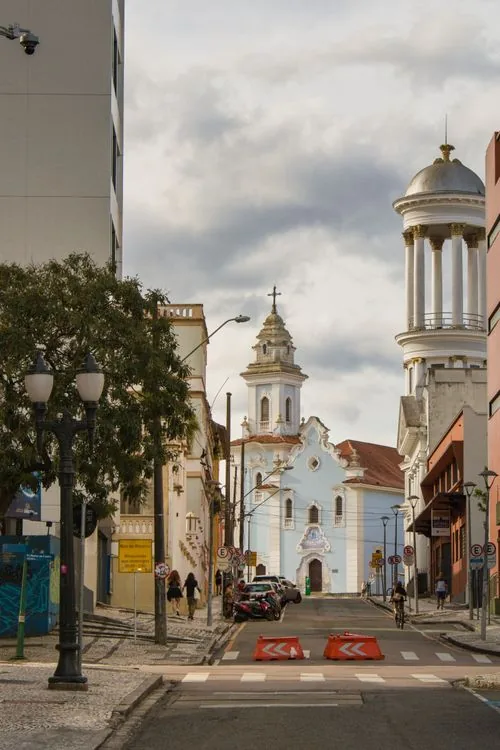
The historic quarter — São Francisco and Largo da Ordem — is not a base, but it's a required visit. The Feira do Largo Sunday crafts market and the colonial-era streets around the Ordem Terceira de São Francisco church are the photographic heart of the old city. It's safe during the day and during the Sunday fair, and empties quickly after 6 p.m.
For a broader comparison with other Brazilian destinations worth pairing Curitiba with, our Brazil travel destinations guide covers the options in more depth.
What Should Tourists Avoid in Curitiba?
The risk patterns that actually affect tourists in Curitiba are narrow. Three situations account for almost every incident reported online: peripheral districts that aren't on any reasonable itinerary, the area around the central bus terminal (Rodoviária) after dark, and the short walk between Rua XV de Novembro and Largo da Ordem at night.
Neighborhoods such as Tatuquara, Sítio Cercado, the outer edges of Cidade Industrial, and parts of the Cajuru periphery aren't places a tourist has any reason to end up in. There's no famous restaurant, no must-see park, no scenic viewpoint that requires going there. The Uber algorithm occasionally routes through neighborhoods on the edge of these districts — if the app suggests a 40-minute route across the western periphery to save five minutes, take the longer main-road option instead.
The area around the Rodoviária (central bus terminal) deserves its own note. The terminal itself is well-policed and fine during normal arrival and departure hours. The surrounding streets in the Rebouças district thin out quickly after commuter rush hour, and the few blocks between the terminal and the city center pick up a rougher character after dark. If you're arriving on an intercity bus late at night, take an Uber directly from the terminal's app-pickup area to your hotel rather than walking to a subway stop.
ATM use follows the same Brazil-wide pattern as everywhere else in the country. The bigger bank branches on Rua XV de Novembro, along Av. do Batel, and inside shopping centers (Shopping Pátio Batel, Shopping Curitiba, Park Shopping Barigüi) are fine during daylight and early evening. Avoid small ATMs tucked into poorly lit side streets, and never withdraw a large round sum late at night. Our common scams in Brazil guide covers the patterns that translate across cities.
Is Public Transport in Curitiba Safe?
App-based transport — Uber, 99, and InDrive — is the easy default. All three apps have dense coverage across the tourist zones, the airport, and the metro area, and pricing is regulated by the app rather than by a curbside driver. If you're new to Brazil, start with app-based transport and layer the BRT system in once you're comfortable.
Curitiba's BRT — the Rede Integrada de Transporte, with its famous tube-shaped stations and Linha Direta express buses — is internationally studied as a public-transport model. It's fast, cheap, and covers the city well. It's also the single most common place tourists report pickpocketing. Crowded buses during weekday rush hour (roughly 7–9 a.m. and 5–7 p.m.) are where phones, wallets, and small cameras disappear the most often. The solution is not to avoid the BRT — it's to use it off-peak, keep your phone in a front pocket or a zipped bag, and treat it the way you'd treat the New York subway or London Tube.
Afonso Pena International Airport (CWB) sits in São José dos Pinhais, about 18 to 20 kilometers southeast of downtown Curitiba. Budget 30 to 45 minutes to Batel depending on traffic. A typical Uber fare runs roughly R$60–100; the Aeroporto Executivo shuttle service connects the airport with downtown hotels for a fixed fare. The airport has a regulated app-pickup area and a 24-hour taxi stand. Use one of those — not the informal transfer touts inside the terminal — and the most common airport-adjacent scam disappears from your trip entirely.
For day trips, the Serra Verde Express train from Curitiba to Morretes (through the Atlantic Forest coastal range) is one of the country's classic rail journeys. Book directly through the operator rather than a curbside agent, and the day handles itself.
For the trip-insurance clauses that matter most on longer Brazil itineraries, our travel insurance for Brazil guide covers the medical and repatriation coverage to verify before landing.
Is Curitiba Safe at Night?
Curitiba is safe at night within the main tourist and nightlife zones, with the standard Uber-for-returns rule. Batel's nightlife corridor — Alameda Dr. Carlos de Carvalho and the streets branching off Praça do Japão — runs active from roughly 7 p.m. through 1 or 2 a.m. on weekends, with restaurants, bars, craft-beer houses, and the occasional live-music venue. Foot traffic stays consistent, the sidewalks are well lit, and the mix of residential and commercial use keeps the area from feeling abandoned.
The São Francisco historic quarter is the other evening option. Friday and Saturday nights bring a moderate bar crowd along Rua São Francisco and Rua Mateus Leme, with cocktail bars and small restaurants that open onto the cobblestones. It's pleasant, genuinely atmospheric, and works well with a pre-arranged Uber for the return. The thing to watch is the transition zone between São Francisco and Rua XV de Novembro — roughly four blocks that are fine during the day, fine up until about 9 p.m., and quietly empty after that. Uber handles it.
Sunday nights are noticeably quieter citywide, which matches the European-influenced civic culture. If you're arriving on a Sunday evening, don't expect the Batel corridor to be peak — budget your dinner for a hotel restaurant or one of the always-open shopping-mall food courts instead.
What to Do If Something Goes Wrong in Curitiba
Start inside. If anything happens — theft, a lost passport, a medical issue — move to a safe indoor point first: your hotel, a shopping mall, a restaurant. Shopping Pátio Batel, Shopping Curitiba, and Park Shopping Barigüi are all useful landmarks if you need an air-conditioned interior with security staff, bathrooms, and reliable Wi-Fi. Most hotels in Batel and Centro Cívico have English-capable front-desk staff who will help place the right call.
Emergency contacts for Curitiba:
- 190 — Polícia Militar (Police)
- 192 — SAMU (Medical emergency)
- 193 — Bombeiros (Fire / rescue)
For non-emergency reporting — a stolen phone or a lost travel document — Paraná offers electronic police reporting through the state's Delegacia Eletrônica portal. You can file a formal boletim de ocorrência online without visiting a physical station. That's the document your travel insurance company will ask for. Ask your hotel to help you navigate the Portuguese-language interface; most have done it for other guests before.
Curitiba also has a Delegacia do Turista that handles incidents involving international visitors specifically. It's a better first stop than a general police precinct if you're unsure where to start and the issue isn't urgent.
Enroll in STEP (Smart Traveler Enrollment Program) before leaving the U.S. at step.state.gov. It's free, takes under 10 minutes, and gives the State Department a way to reach you in a genuine emergency. For Paraná, U.S. consular support is routed through São Paulo — there's no consulate in Curitiba itself. For most tourists, the Brazil Safe Travel app also provides context-aware safety alerts, emergency numbers, and language help for the reporting process — worth having installed before you arrive.
Is Curitiba Worth Visiting?
Yes — especially for travelers looking for a calmer, cooler, more European-feeling base in Brazil. The city averages around 17 °C year-round and gets actual winter (temperatures in the single digits are normal in July). That's genuinely unusual for Brazil and explains both the architecture (Haussmann-style boulevards, pine trees, Italian-Polish-Ukrainian heritage districts) and the rhythm (cafés, museums, parks, a quieter after-dark pattern).
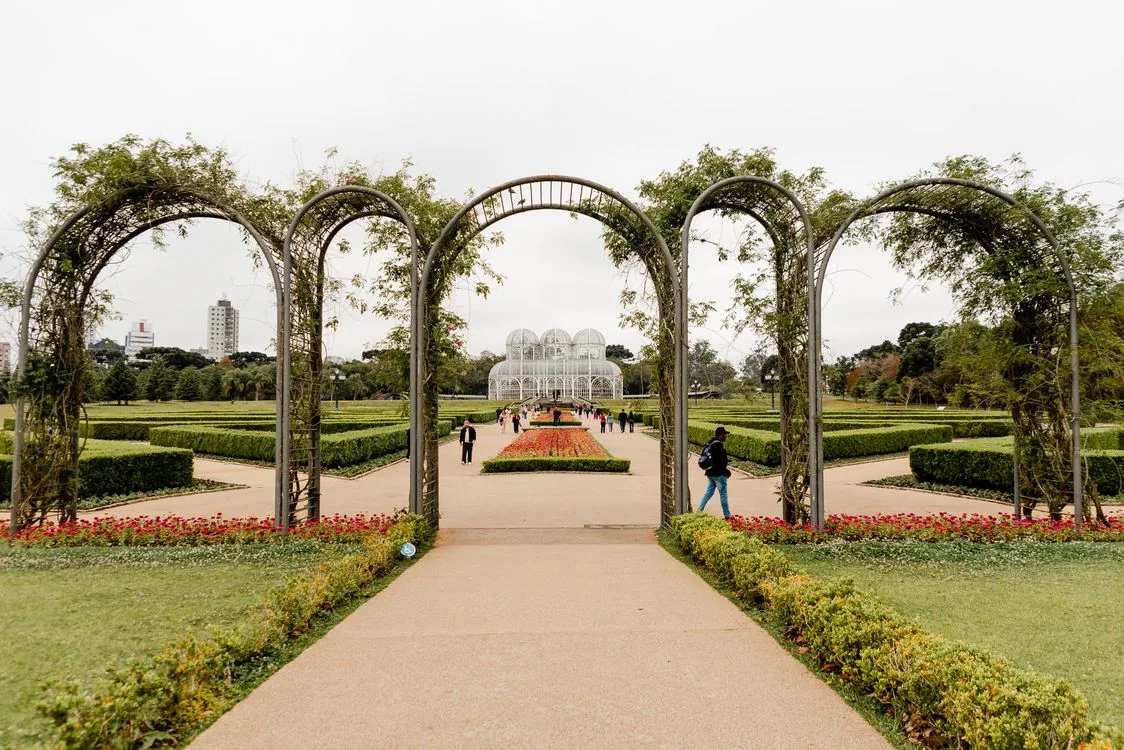
The Jardim Botânico, with its Art Nouveau greenhouse, is the obvious visual anchor. The Oscar Niemeyer Museum — nicknamed the "Eye" because of its signature suspended pavilion — is a short distance away in Centro Cívico and is among Brazil's best single-building architectural landmarks. The Feira do Largo in São Francisco on Sundays is the Curitiba most residents show visitors. Parque Barigüi, Parque Tanguá, and Parque Tingüi form a green belt that handles morning running, weekend picnics, and long-lens photography.
Regional pairing is where Curitiba earns its place on most itineraries. Iguaçu Falls sits a 90-minute flight or an overnight bus west of the city. Morretes and Antonina — two colonial towns at the base of the Atlantic Forest escarpment — are reachable in a day via the Serra Verde Express train. Ilha do Mel, a car-free island off the Paraná coast, is another weekend trip. Curitiba functions well as the urban hub for all of them.
Compared with São Paulo, Curitiba is smaller, quieter, safer on paper, and about a third the size. Compared with Rio, it's a different climate, a different culture, a different pace. Travelers doing a multi-city South and Southeast trip often pair Curitiba with Iguaçu as the southern leg, then add either São Paulo (urban scale, food scene) or Florianópolis (beaches, Santa Catarina island) before heading north. For the full set of regional options, our best time to travel to Brazil guide covers the seasonal trade-offs in more depth.
Curitiba sits in Paraná, the same state as Foz do Iguaçu, which makes the two an easy pair on one trip. The city also comes up constantly among people weighing whether Brazil is safe to live in rather than just visit.
Frequently Asked Questions
Is Curitiba safer than Rio de Janeiro or São Paulo?
On state-level homicide data, yes. Paraná's rate sat at 14.1 per 100,000 in 2024, below Brazil's national average of 17.1 and meaningfully below Rio de Janeiro and parts of São Paulo state (Anuário Brasileiro de Segurança Pública, 2024). Tourists still apply the same urban habits — Uber after dark, careful with phones on public transport — but the baseline risk is lower.
What is the safest neighborhood to stay in Curitiba?
Batel is the most popular tourist base and is generally considered very safe — it's upscale, walkable, and has a visible municipal guard presence. Centro Cívico works well for daytime museum-focused trips, and Jardim Botânico is the quieter residential alternative. All three sit within a short Uber ride of the main sights and have consistent foot traffic.
Is Curitiba safe at night?
Yes within the main nightlife zones. Batel's Alameda Dr. Carlos de Carvalho corridor stays active through the evening, and the São Francisco historic quarter runs a moderate bar scene on Friday and Saturday nights. Use Uber or 99 for returns rather than walking long distances, and avoid the area around the central bus terminal (Rodoviária) after dark.
Is the Curitiba BRT safe for tourists?
The BRT itself — the famous tube-shaped stations and Linha Direta express buses — is safe and is one of the most studied public-transport systems in the world. The caveat is pickpocketing during rush hour (7–9 a.m. and 5–7 p.m.) when buses are packed. Ride off-peak, keep phones in a front pocket or a zipped bag, and the system handles the city well.
What's the safest way from Afonso Pena airport to downtown Curitiba?
Use Uber, 99, or InDrive from the designated app-pickup area at Afonso Pena International Airport (CWB). The typical fare runs R$60–100 to Batel or Centro Cívico, and the drive takes 30 to 45 minutes. The Aeroporto Executivo shuttle is a fixed-fare alternative that stops at major hotels. Skip the informal transfer touts inside the terminal.
The Bottom Line on Curitiba Safety
Curitiba rewards travelers who understand that Brazil is a continent, not a single country. The southern states — Paraná, Santa Catarina, Rio Grande do Sul — run a different safety curve from the Northeast or from the Rio and São Paulo metros, and Paraná specifically has been on a multi-year downward trend that's continued into 2025. The 14.1 homicides per 100,000 figure is the number to plan around, not the Brazil-wide headline.
Book a hotel in Batel, Centro Cívico, or Jardim Botânico. Use Uber or 99 for anything after dark. Ride the BRT off-peak, keep your phone out of sight on crowded buses, and treat the Rodoviária and peripheral districts as skip zones. That pattern handles the trip. Curitiba is not a city that demands extraordinary vigilance — it demands the same basic urban habits you'd apply in any large metro.
For the American-traveler frame specifically, is Brazil safe for Americans covers consular support and the State Department advisory framework in more depth. For the cross-country habits that travel with you regardless of which Brazilian destination you're in, Brazil safety tips covers the pattern recognition that keeps the whole country — not just Curitiba — manageable.