Is Copacabana Safe? What the 2025 Police Data Shows

Jump to section

Copacabana and Leme share one curve of sand, split between two police areas.
Updated November 2026. The neighborhood figures below come from the Instituto de Segurança Pública (ISP-RJ) monthly records for police areas 12 and 13, the two that cover Copacabana and Leme. We downloaded the dataset and added up both areas in November 2026.
Is Copacabana safe? For visitors who treat theft as the real risk, yes. In 2025 the two police areas covering Copacabana and Leme recorded 2,981 phone thefts but only 233 phone robberies and 4 intentional homicides (ISP-RJ, 2025). That is roughly 13 phones lifted quietly for every one taken by force.
Across the whole city of Rio, police logged about two phone thefts per phone robbery in 2025, so Copacabana stands out as a place of towel grabs and pickpockets rather than holdups. Its phone robberies also fell from 511 in 2023 to 233 in 2025. The risk peaks on the sand, after dark and on mega-event nights.
For how Copacabana compares with Ipanema, Leblon and Botafogo, see our ranking of Rio's safest neighborhoods.
Key Takeaways
- Copacabana and Leme's police areas logged 2,981 phone thefts and 233 phone robberies in 2025, about 13 to 1 (ISP-RJ).
- Phone robberies fell 54% from 511 in 2023 to 233 in 2025; street robberies fell from 643 to 334 (ISP-RJ).
- Phone thefts run at four to five times a normal month during beach mega-events: 680 in May 2024 (Madonna), 811 in May 2025 (Lady Gaga).
- The costliest scam is the card machine: one tourist was charged R$ 8,246 for two caipirinhas quoted at R$ 80 in July 2026 (CNN Brasil).
How safe is Copacabana in 2026?
Copacabana's crime is overwhelmingly theft. Its two police areas recorded 4 intentional homicides in 2025, against 2,981 phone thefts and 1,204 thefts from pedestrians (ISP-RJ, 2025). Robberies with force have fallen two years running, while quiet phone thefts rose 33% in 2025 after a dip in 2024.
ISP publishes crime counts by police area, called a CISP. Area 12 covers "Copacabana (part) and Leme" and area 13 covers the rest of Copacabana, according to the institute's territorial table (ISP-RJ, 2026). We combined both to describe the neighborhood as a whole.
| Crime (ISP-RJ category) | 2023 | 2024 | 2025 | Jan–Oct 2026* |
|---|---|---|---|---|
| Phone theft, no force (furto de celular) | 2,499 | 2,238 | 2,981 | 2,618 |
| Phone robbery (roubo de celular) | 511 | 268 | 233 | 212 |
| Theft from pedestrians (furto a transeunte) | 1,602 | 1,262 | 1,204 | 1,058 |
| Street robbery (roubo a transeunte) | 643 | 403 | 334 | 235 |
| Intentional homicide | 7 | 4 | 4 | 4 |
Source: ISP-RJ monthly records for CISP 12 and 13, totals calculated by Brazil Safe Travel. *2026 figures are provisional: ISP corrects its data every quarter (ISP-RJ, 2026).
The 2026 trend is mixed rather than worse. Against January to October 2025, phone thefts are flat (2,618 against 2,623), phone robberies are slightly up (212 against 191) and street robberies are down 18% (235 against 287).
The city of Rio logged 17,580 phone robberies and 36,763 phone thefts in 2025, so Copacabana accounted for 1.3% of the robberies but 8.1% of the thefts (ISP-RJ, 2025). These are reported crimes only; a phone lifted from a towel and never reported does not appear. The citywide picture, including homicide trends, is in our Rio de Janeiro safety guide.
Is Copacabana beach safe by day and at night?
By day, yes, for people who keep valuables on their body. The UK government notes that "thefts are particularly common on public beaches" and advises visitors not to go on to city beaches after dark (GOV.UK, 2026). In Copacabana, thefts from pedestrians, a category that includes beach thefts, totaled 1,204 in 2025 (ISP-RJ).
Daytime theft on the sand is opportunistic: a phone on the towel while its owner swims, a bag behind a chair, a "lost" stranger leaning in while a partner picks something up. None of it needs a weapon, only an item out of reach for a minute.
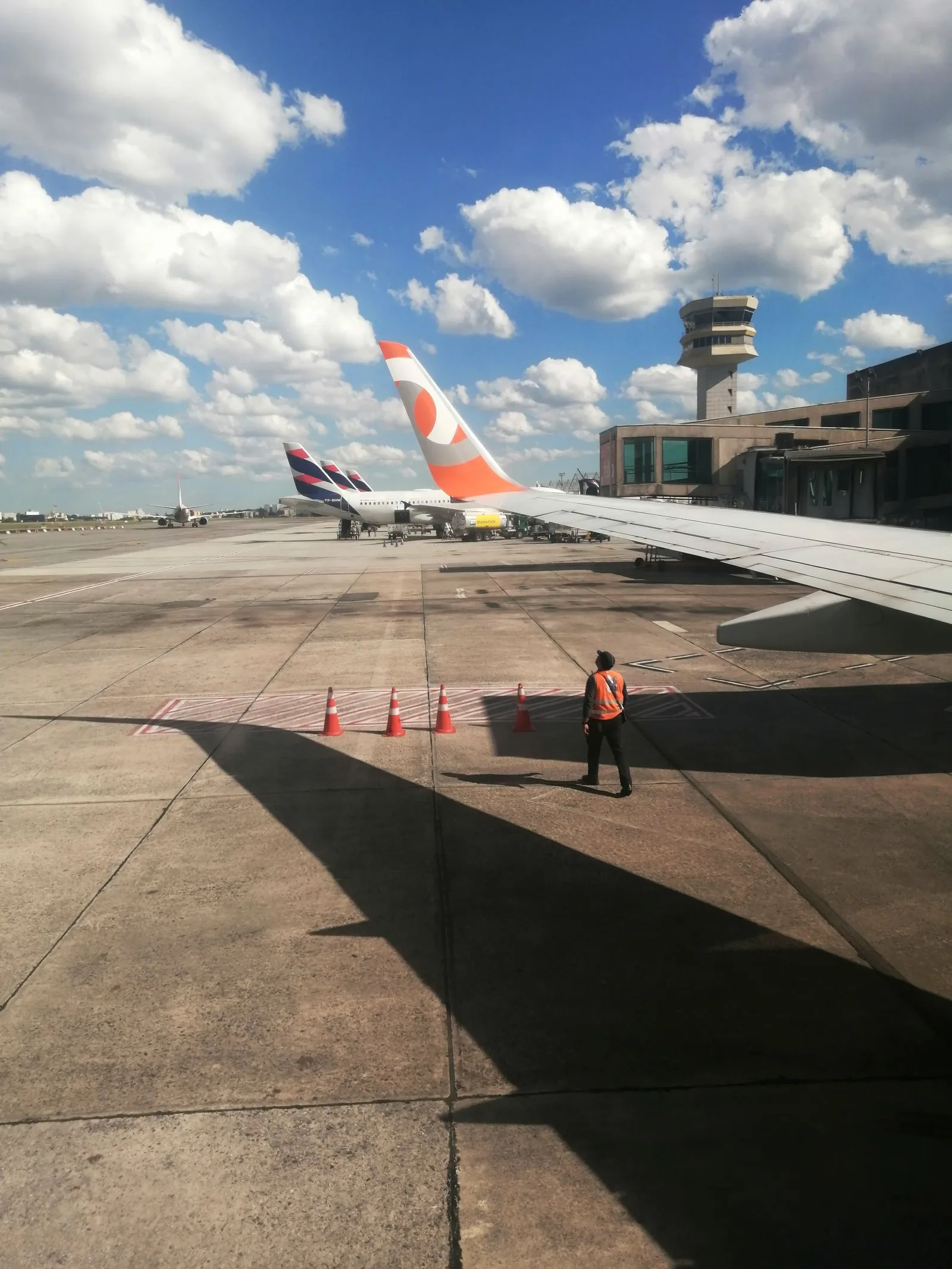
A crossbody bag worn across the chest beats a bag on the sand. Bring only what you can carry into the water or afford to lose.
The fixes are cheap. Carry one card, a little cash and a phone in a waterproof pouch, swim in turns, and leave passports in the hotel safe. If you want quieter sand, our guide to Rio's beaches compares the other Zona Sul stretches.
At night, skip the sand itself. Avenida Atlântica's sidewalk stays lit and busy with kiosks until late, but the dark beach beyond the lights is where group grabs (arrastões) have been reported after midnight. Walk on the building side of the avenue.
Which parts of Copacabana need more care?
Risk follows foot traffic and edges rather than one bad zone. Police area 12, covering Leme and part of Copacabana, logged 2,061 phone thefts in 2025, and area 13, covering the rest, logged 920 (ISP-RJ, 2025). ISP does not publish the street line between them, so treat those as two halves of one bay, not a ranking.
Avenida Atlântica versus the back streets
Avenida Atlântica is wide, lit and lined with hotels staffed around the clock. Its weak points are the crossings, where people stop with a phone out to check a map, and the bike lane, which gives a thief on wheels a fast exit.
One block in, Avenida Nossa Senhora de Copacabana and Rua Barata Ribeiro form the commercial spine, busy into the evening. They are fine to walk; the classic risk is a phone snatched from a hand at a bus stop. The quieter cross streets empty out after midnight, when a five-minute walk is better done by car.
Leave the streets that climb off any night route. Ladeira Ary Barroso in Leme, Rua Saint Roman, the upper end of Rua Sá Ferreira and Ladeira dos Tabajaras lead up toward hillside communities. If a GPS sends you up one at night, it has picked the wrong route.
The Leme end versus the Posto 6 end
Leme, beyond Avenida Princesa Isabel, is shorter, more residential and calmer. Calm cuts both ways: fewer people around at 11 p.m. means fewer witnesses, so take a car to the door after dark.
The Posto 6 end, by Fort Copacabana, is busier at night and close to Arpoador and Ipanema. The middle stretch holds most hotels and the densest crowds, which also draw card-machine scammers: one was arrested at Posto 4 in April 2026.
What about the favelas on the hills above Copacabana?
Two pairs of hillside communities border Copacabana: Babilônia and Chapéu Mangueira above Leme, and Pavão-Pavãozinho and Cantagalo between Copacabana and Ipanema. Both pairs received Police Pacification Units (UPPs) in 2009, on 10 June and 23 December respectively (RioOnWatch, 2015). Many of their residents work in the neighborhood below.
For visitors they matter in two practical ways. The access streets are not routes to wander into, and conflict on the hills can occasionally reach the streets below: in October 2016 a shootout in Pavão-Pavãozinho and Cantagalo closed shops in Copacabana and Ipanema and stopped traffic on Rua Sá Ferreira (Agência Brasil, 2016).
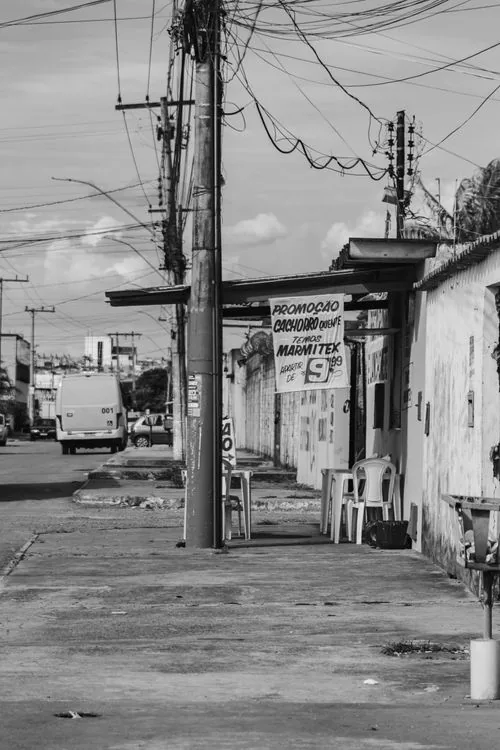
Hillside communities like these sit above several Zona Sul neighborhoods.
Keep that in proportion: police areas 12 and 13, which include the hillside streets inside Copacabana and Leme, recorded 4 intentional homicides in 2025 (ISP-RJ). If shops pull their shutters down, step inside and wait it out.
Visiting is a separate decision. The UK government advises visitors to "avoid all favelas, including favela tours marketed to tourists" (GOV.UK, 2026). Our guide to Rio's favelas explains how these communities work and what a responsible visit involves.
Which scams target tourists in Copacabana?
The costliest is the card-machine overcharge. On 19 July 2026, a French tourist on the Copacabana seafront was quoted R$ 80 for two caipirinhas, told the vendor took cards only, and was charged R$ 8,246; two more attempts worth over R$ 20,000 were declined (CNN Brasil, 2026).
The pattern repeats. In April 2026 another French tourist paid R$ 400 for two caipirinhas on a tampered machine that hid the real amount (CNN Brasil, 2026). Both suspects were booked for estelionato (fraud), which the two Copacabana police areas recorded 3,990 times in 2025, alongside online and other frauds (ISP-RJ).
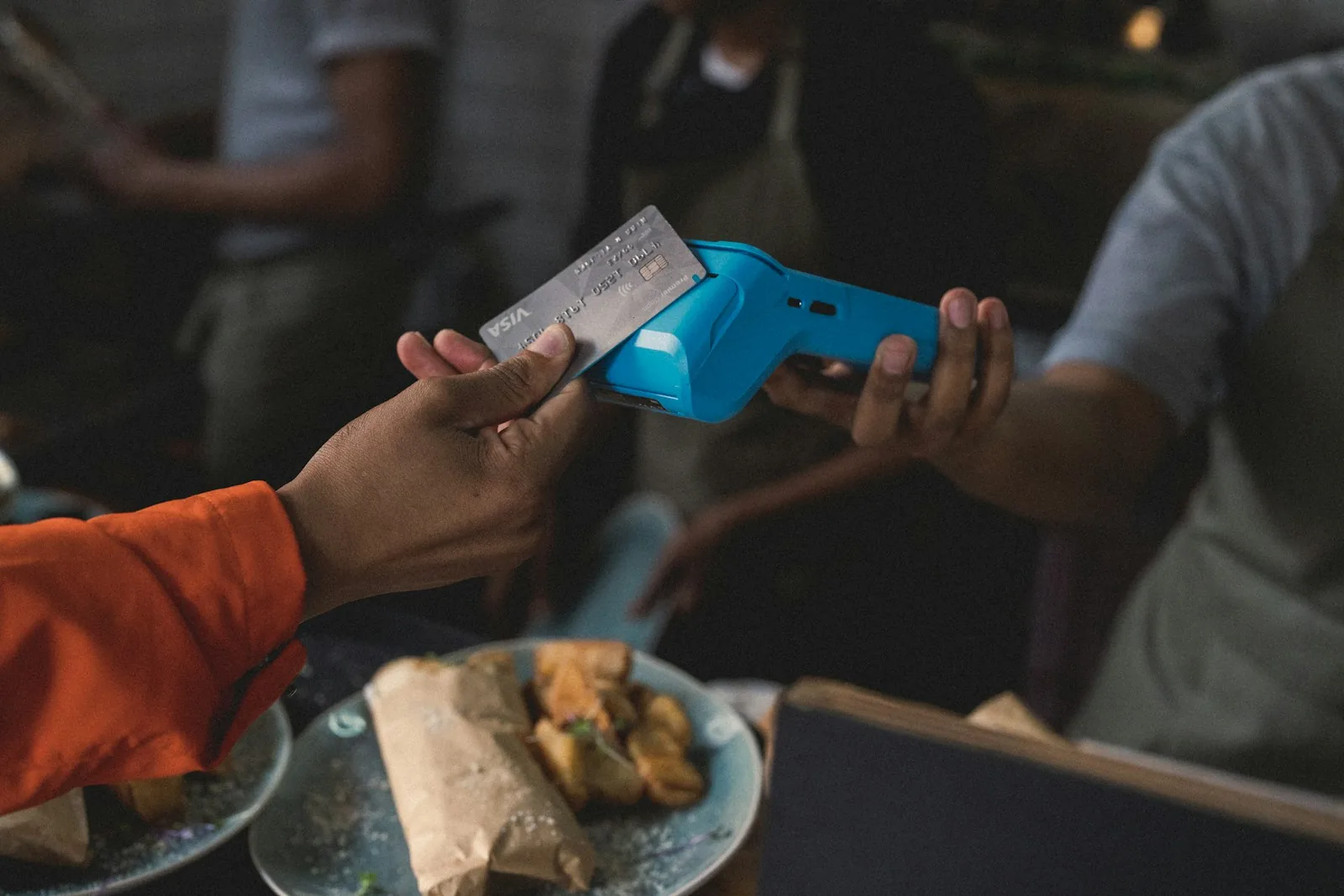
Read the amount on the screen yourself before you tap or type a PIN. The card should never leave your hand.
The defense is simple:
- Agree the price before anything is opened or poured, and prefer kiosks with a printed menu.
- Hold the card yourself and read the amount on the terminal before paying, as GOV.UK advises.
- Carry small cash for beach vendors, and treat "card only" from a roaming seller as a warning sign.
- Turn on instant purchase alerts in your bank app.
Distraction thefts make up the rest, usually a stranger pressing close while a partner works your pocket. Our roundup of common scams in Brazil covers these, plus the taxi and drink-spiking tricks.
Is Copacabana safe on New Year's Eve?
It is safe enough to go, and it is one of the nights your phone is most at risk. The turn to 2026 put 2.6 million people on Copacabana beach, out of 5.1 million across the city (Agência Brasil, 2026). In January 2025, the month that opens with that night, Copacabana logged 457 phone thefts (ISP-RJ).
That is more than double the 2025 average for the other eleven months, which was under 200. January is also peak summer, but other mega-events show the crowd effect clearly. Madonna's free show on 4 May 2024 drew 1.6 million people and 3,200 police officers (Agência Brasil, 2024); phone thefts that month hit 680.
Lady Gaga's show on 3 May 2025 drew 2.1 million people (Agência Brasil, 2025), and that May the two police areas recorded 811 phone thefts. Both concert months ran at four to five times the average of the other months.
For Réveillon, plan the crowd:
- Leave the main phone at the hotel, or carry it in a zipped front pocket or under-clothes pouch.
- Carry a passport copy, one card and cash, and no backpack.
- Agree a meeting point by posto number in case the group splits and the network jams.
- Walk inland a few blocks before calling a car. Our Rio New Year's Eve guide covers stages, transport and timing.
Where to stay and what to do if something goes wrong
Stay where people are, and let a car cover the dark gaps. Street robberies in Copacabana fell to 334 in 2025 (ISP-RJ), and short night walks keep you out of that count. A hotel on Avenida Atlântica with a 24-hour desk, or a building on a busy street one or two blocks inland, keeps the walk home short and lit.
The middle stretch near the commercial streets is the most convenient base. Leme suits travelers who want quiet nights and do not mind a car to the door, and the Posto 6 end puts Arpoador within walking distance. Our Rio hotel guide lists options by area and budget, and if the beach is not the point of the trip, our Botafogo safety guide explains the cheaper base across the tunnel.
Our take: the numbers point at the towel and the card machine. Our one rule for a first night: the phone never sits on the sand, on a kiosk table or loose in your hand on Avenida Atlântica, and every card payment gets read before it is tapped. We would also take a side-street room in the busy middle stretch over a sea-view room at a quiet end, because a lively block at 11 p.m. protects you more than a view does.
Getting back at night
After about 11 p.m., or for anything beyond a few lit blocks, book Uber or 99 from inside the restaurant or lobby and step out when the car arrives. Check the plate and the driver's name first. GOV.UK warns of "express kidnappings, assaults and robberies from unlicensed taxis" and tells visitors not to hail taxis on the street (GOV.UK, 2026). Our guide to ride apps in Brazil covers the checks that matter.
The Brazil Safe Travel app adds a layer here, with GPS warnings about each neighborhood's risk zones and active alerts from other travelers.
If you are robbed or scammed
- Do not resist. Nothing in the bag is worth a confrontation.
- Block the phone and bank apps first, from any device you can borrow.
- File a police report (boletim de ocorrência). DEAT, the tourist police station, handled the R$ 8,246 card case above, and insurers ask for the report.
- Call 190 for the police in an emergency. Our Brazil emergency numbers guide lists the rest.
Frequently asked questions
Is Copacabana safe at night?
The streets mostly are; the sand is not. Avenida Atlântica and the commercial streets stay lit and busy into the evening, but GOV.UK advises against going on to city beaches after dark (GOV.UK, 2026). Walk the building side of the avenue and use Uber or 99 for anything beyond a few blocks after 11 p.m.
Is Copacabana beach safe for tourists?
Yes, by day, if you keep valuables on you. The beach's problem is theft without force: Copacabana's two police areas recorded 2,981 phone thefts in 2025 against 233 phone robberies (ISP-RJ, 2025). Bring one card, some cash and a phone in a waterproof pouch, and swim in turns.
Is Copacabana safer than Ipanema?
Ipanema is calmer after dark and ranks above Copacabana in our ranking of Rio's safest neighborhoods. Copacabana's beachfront is busier and its risk runs later into the night. The difference is how careful you need to be, and both work well with the same habits.
Is Leme safer than the rest of Copacabana?
Leme is quieter, but ISP does not publish it separately: it shares police area 12 with part of Copacabana, which logged 2,061 phone thefts in 2025 (ISP-RJ, 2025). Quieter also means emptier at night, so take a car to the door after dark.
Can I visit the favelas next to Copacabana?
Babilônia and Chapéu Mangueira sit above Leme, and Pavão-Pavãozinho and Cantagalo between Copacabana and Ipanema. The UK government advises avoiding all favelas, including tours (GOV.UK, 2026). If you go anyway, go only with a resident guide booked in advance, never by walking up an access street alone.
The bottom line
Copacabana is safe to visit and to stay in, as long as you plan for the crime it actually has. In 2025 its two police areas logged 2,981 phone thefts, 233 phone robberies and 4 intentional homicides. The risk is a phone on the sand, a card machine you did not read and a crowd on a concert or New Year's night.
Keep the phone on your body, stay off the beach after dark, read every payment screen, and let Uber or 99 handle the walk home. For risk-zone warnings and traveler alerts on the move, download the Brazil Safe Travel app before you land.