Favelas in Rio de Janeiro: What They Are, Safety & Can You Visit?

Jump to section
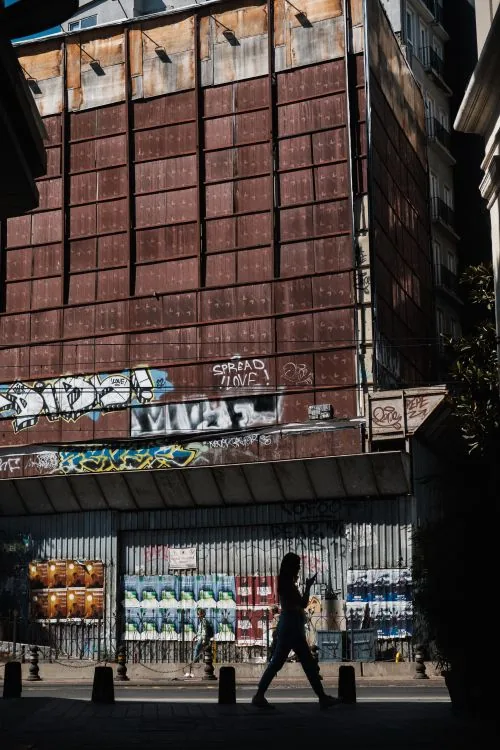
Updated June 2026: this guide uses Brazil's 2022 IBGE census, verified 2024 crime data, and current 2025 US advisory guidance to explain what Rio's favelas actually are — and what they mean for visitors.
More than 2.1 million people live in favelas across Rio de Janeiro state — the second-largest favela population of any Brazilian state, behind only São Paulo (IBGE 2022 Census, 2024). Those communities are woven into the same hillsides that frame Ipanema, Copacabana, and Christ the Redeemer — which is exactly why so many first-time visitors are confused about what a favela is, whether it's dangerous, and whether they're allowed to go in.
If you're searching favelas in rio de janeiro because you saw them from a plane window or a Sugarloaf cable car and want to understand what you're looking at, this guide answers the real questions: what they are, why they exist, where the biggest ones are, how safe they actually are, and whether tourists can — or should — visit.
If you want the wider safety picture for the city first, read our honest Is Rio de Janeiro safe? guide, and for the country-level answer see Is Brazil safe?.
Key Takeaways
- Brazil's 2022 census counted 16.4 million favela residents nationally; 2.1 million live in Rio de Janeiro state (IBGE, 2024)
- Rocinha, in Rio's South Zone, is Brazil's largest favela — officially 72,021 residents, with local estimates far higher (IBGE, 2024)
- Most favelas are controlled by drug factions or militias; conditions can change in minutes, which is why the US State Department advises tourists not to enter
- The real tourist risk isn't the favela itself but accidentally driving, walking, or wandering into one — something a GPS risk-zone check prevents
What Are the Favelas in Rio de Janeiro?
A favela is a self-built, historically informal neighborhood that grew outside official city planning — not a slum in the Western sense, but a dense, established community with shops, churches, schools, and a strong local identity. Brazil's 2022 census formally renamed them "Favelas and Urban Communities" and counted 12,348 of them nationwide, home to 16,390,815 people, or 8.1% of the country's population (IBGE 2022 Census, 2024).
In Rio de Janeiro, favelas are impossible to miss. They climb the morros (hills) right up against the wealthiest districts, so a five-minute drive can take you from a beachfront avenue to the edge of a community of tens of thousands. This proximity is what makes Rio unique — and what makes understanding favelas essential for any visitor, even one who never plans to enter one.
It's worth dropping the Hollywood image. Favelas are working neighborhoods where the vast majority of residents are ordinary people commuting to jobs across the city. They are also, in many cases, governed informally by armed groups rather than the state — and that combination of normal daily life and parallel power is the single hardest thing for outsiders to hold in their heads at once.
What this means for you as a traveler: a favela is neither a tourist attraction to casually stroll through nor a uniform "no-go zone." It's a real place with real residents and real risks that vary enormously from one community to the next.
Why Do Favelas Exist in Rio de Janeiro?
Favelas exist because Rio's housing supply never kept pace with the waves of people who moved to the city looking for work. The first favelas date to the late 1800s, but the biggest growth came in the mid-20th century, when industrial expansion and droughts in Brazil's northeast pushed huge numbers of migrants toward Rio — and, with no affordable formal housing available, they built homes themselves on unclaimed hillsides (Britannica).
Rocinha is the textbook example. It sits on a steep slope in the South Zone, between the districts of São Conrado and Gávea, and grew house-by-house over decades as residents constructed their own dwellings without official infrastructure or land titles. Over time, what began as scattered shacks became a permanent, densely built community of tens of thousands.
That origin story explains two things at once. First, why favelas are physically right next to rich neighborhoods — they grew on the leftover hillsides between them. Second, why the state's presence has always been thin: these communities were built without government planning, so basic services, policing, and formal authority arrived late, partially, or not at all. Into that vacuum stepped other forms of control, which is where the safety question begins.

Where Are Rio's Biggest Favelas?
Rio's favelas are spread across the city, but a handful of large communities account for much of the population — and most are well away from the standard tourist corridor of Ipanema and Leblon. Rocinha is the largest favela in all of Brazil, with 72,021 residents and 30,371 housing units recorded in the 2022 census, though local estimates put the real figure far higher because the community grows faster than any census can count (IBGE 2022 Census, 2024).
The ones travelers hear about most often:
- Rocinha — Brazil's biggest favela, on the hillside between São Conrado and Gávea in the South Zone. The most famous, and the most commonly toured.
- Complexo da Maré — A large cluster of communities near the Linha Vermelha expressway, on the route between the international airport and the city center. Many tourists pass it without realizing.
- Complexo do Alemão — A big complex in the North Zone, served by a cable car, with a long history of police operations.
- Rio das Pedras — In the west, near Barra da Tijuca; the country's fifth most populous favela with 55,653 residents (IBGE, 2024), and historically associated with militia control rather than drug factions.
- Complexo da Penha — Adjacent to Alemão in the North Zone, another large grouping of communities.
The practical takeaway is geographic: the favelas most likely to intersect a tourist's path are the ones near transport infrastructure — Maré along the airport expressway, and Rocinha near the São Conrado tunnels. You are far more likely to skirt a favela in a car or rideshare than to seek one out, which is why knowing roughly where they sit matters even if you never intend to enter.
For a neighborhood-by-neighborhood breakdown of where tourists actually stay, our Is Rio de Janeiro safe? guide maps the safe Zona Sul bases against the areas to avoid.
Are the Favelas in Rio de Janeiro Safe?
Favela safety in Rio varies enormously and changes without warning — which is precisely why no honest guide can give a blanket "yes" or "no." Most residents live ordinary, peaceful lives, but many communities are controlled by drug-trafficking factions or by milícias (militias often made up of current and former police), and disputes between these groups, or police operations against them, can turn a calm street into a shooting in minutes. The US State Department's 2025 Brazil advisory (Level 2: Exercise Increased Caution) explicitly warns travelers to avoid favelas at all times, noting that police presence is limited and conditions are unpredictable (US State Department, 2025).
The citywide crime numbers give the backdrop. Rio de Janeiro recorded a homicide rate of 20.35 per 100,000 in 2024 — high by global standards, though the lowest total since 2015 — and much of that violence is geographically concentrated in peripheral neighborhoods and favela complexes rather than the tourist zones (Sinesp / Ministry of Justice, 2025). The danger to a visitor is not random; it is tied to specific places and specific moments.

A few realities tourists should understand:
- Stray bullets are a real risk during operations. When police enter a favela, or factions clash, gunfire can reach nearby roads and buildings. This is the main reason to avoid favela edges during active incidents.
- An unmarked boundary can be crossed by accident. There is rarely a sign. A wrong turn on foot, a rideshare taking a shortcut, or a "scenic" road can put you inside without warning.
- Conditions are hyper-local and fluid. A community that's calm one week can be tense the next after a single incident. Yesterday's advice can be wrong today.
This is exactly where situational tools help. The Brazil Safe Travel app maps active risk zones across Rio by GPS, flagging favela boundaries and live alerts from other travelers — so you get a warning before you walk or drive into an area, not after.
Can Tourists Visit a Favela in Rio de Janeiro?
You can find favela tours in Rio, but official guidance is clear: tourists should not enter favelas, even on an organized tour. The US State Department advises against visiting favelas at any time, including with a guide or as part of a tour booked through a hotel or travel agency, because operators cannot guarantee safety in areas the state does not fully control (US State Department, 2025).
That puts the decision squarely on you. Favela tourism is a genuine, long-running industry in Rio — particularly in Rocinha — and many tours are run by residents or community organizations who argue that respectful, well-guided visits bring income and challenge stereotypes. Supporters say a good local guide knows which areas are currently calm and has relationships that an outsider never could.
The counterarguments are just as real. Conditions can shift between the time a tour is booked and the day it runs; a guide's local knowledge cannot stop a police operation or a faction dispute; and critics describe the more voyeuristic tours as "poverty tourism" that treats residents' homes as a spectacle. There is no version of a favela visit that carries the same predictability as a guided walk through Ipanema.
If you weigh all that and still decide to go, the harm-reduction basics are non-negotiable: only ever go with an established, reputable operator and a local guide — never independently, never on foot on your own; never enter at night; don't photograph people, homes, or anything drug-related without explicit permission; dress down and leave valuables at your hotel; and check current conditions the same day. And understand the floor of the risk: even a perfect guide cannot make a favela visit as controlled as the rest of your Rio itinerary.
For most travelers, the better way to experience Rio's hillside communities is from a distance — the Sugarloaf cable car, the Christ the Redeemer viewpoint, or a São Conrado overlook — where you see the scale of the city without the risk.
How to Stay Safe Around Rio's Favelas
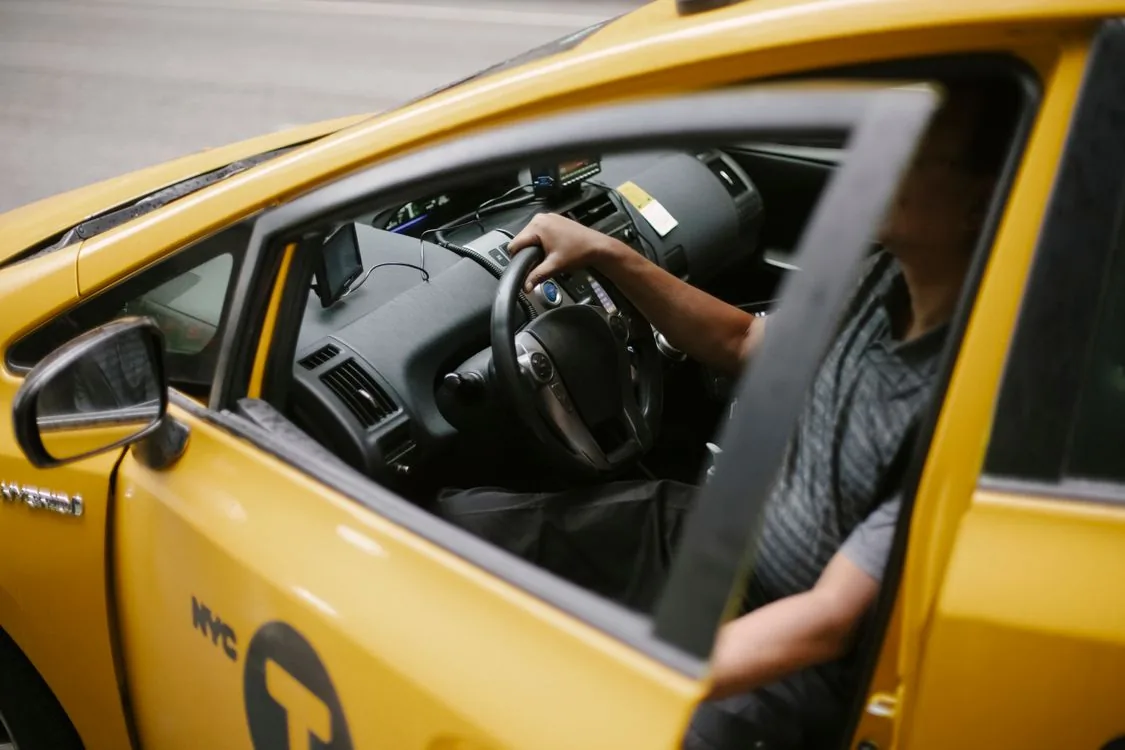
The most important favela safety rule for the average tourist is not about how to behave inside one — it's how to avoid entering one by accident. The biggest single risk is an unintended crossing: a rideshare taking a cheaper route, a walk that drifts uphill, or a road that looks scenic on a map. With Rio's favelas physically interlaced with tourist districts, the boundary is often invisible, and 21,423 cell phone robberies were recorded across the state in 2024 — much of the street-crime risk clustering at these transitional edges (ISP-RJ, 2024).
Practical habits that keep you on the right side of the line:
- Use Uber or 99 and watch the route. App-based rides record the trip and let you flag a wrong turn. If a driver heads uphill into a dense residential area you don't recognize, ask them to stop and reroute.
- Never follow a navigation app blindly on foot. Walking directions sometimes route through or past favela edges. Stick to main, populated avenues, especially in São Conrado, the North Zone, and anywhere near the airport expressway.
- Avoid the Linha Vermelha and Maré area on foot, day or night. This airport-to-center corridor runs alongside large favela complexes and is not a pedestrian route.
- Don't go looking for a "viewpoint" inside a community. If a shortcut or a photo spot requires entering a favela, it isn't worth it.
- Check risk zones before you move. The Brazil Safe Travel app shows favela boundaries and live GPS alerts, so you know which areas to route around before you set off — the single most useful habit for this specific risk.
- Keep your phone out of sight at transitional edges. Phone snatching concentrates where tourist streets meet denser areas; walk with your device pocketed.
If you do find yourself accidentally at a favela entrance, don't panic and don't take photos — calmly turn around, return to a main road, and call a rideshare from a populated, well-lit spot. For the full set of city-wide habits, including what to do if you're robbed, see our Is Rio de Janeiro safe? guide and our breakdown of common scams in Brazil.
Frequently Asked Questions
These are the questions travelers ask most often about Rio's favelas before deciding where to stay and how to move around the city.
What is a favela, exactly?
A favela is a self-built, historically informal neighborhood that grew outside official city planning. They are dense, permanent communities with shops, schools, and churches — not temporary slums. Brazil's 2022 census counted 12,348 favelas and urban communities nationwide, home to 16.4 million people, 8.1% of the population (IBGE, 2024).
What is the largest favela in Rio de Janeiro?
Rocinha, on the hillside between São Conrado and Gávea in Rio's South Zone, is the largest favela in Rio — and in all of Brazil. The 2022 census recorded 72,021 residents and 30,371 housing units, though local estimates run much higher because the community grows faster than the census can measure (IBGE, 2024).
Are the favelas in Rio de Janeiro safe for tourists?
No, not as places to enter. Safety varies by community and can change within minutes, and many favelas are controlled by drug factions or militias with limited police presence. The US State Department advises tourists to avoid favelas at all times, including on guided tours (US State Department, 2025). The main risk for most visitors is entering one by accident.
Can I take a favela tour in Rio?
Favela tours exist, especially in Rocinha, but the US State Department advises against entering favelas even with a guide or organized tour, because operators cannot guarantee safety in areas the state does not fully control (US State Department, 2025). If you go anyway, use only a reputable, resident-led operator, never go alone or at night, and check conditions the same day.
How do I avoid accidentally entering a favela?
Use Uber or 99 and watch your route, stick to main populated avenues on foot, don't follow walking directions blindly near São Conrado or the airport expressway, and check a GPS risk-zone map before you move. The Brazil Safe Travel app flags favela boundaries and live alerts so you can route around them in advance.
The Honest Bottom Line
Rio de Janeiro's favelas are home to more than two million people and are inseparable from the city's history and skyline. They are not the war zones of stereotype, and they are not casual sightseeing — they are real communities where everyday life and informal armed control exist side by side, and where conditions can shift faster than any guidebook can track.
For the visitor, the smart posture is respect and distance. Understand what favelas are, appreciate them from the viewpoints that make Rio famous, and focus your safety energy on the one risk that actually affects most tourists: crossing into one without meaning to. Use rideshare and watch the route, stay on main streets, and check risk zones before you move.
Download Brazil Safe Travel to see live GPS risk zones and favela boundaries across every Rio neighborhood before you set out.