Crimes Against Tourists in Brazil: 3 Real Cases

Jump to section
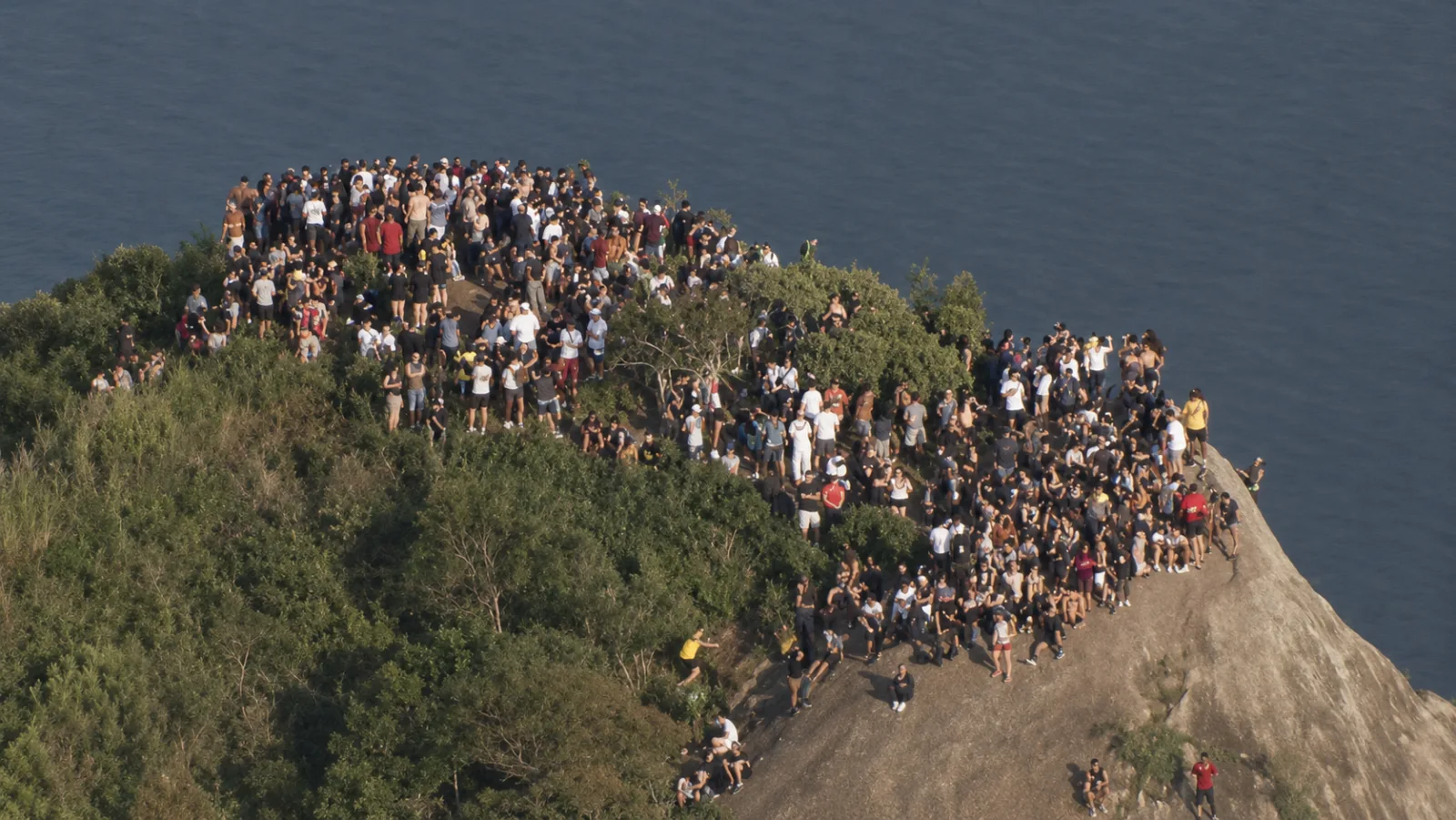
Morro Dois Irmãos, Rio de Janeiro
Updated August 2026: this article uses press reporting from AFP and AP, plus Brazilian public-security data from ISP-RJ, the Fogo Cruzado Institute and the Brazilian Public Security Forum.
Most safety articles about Brazil talk in rates and advisory levels. This one does not. It walks through three crimes against tourists that were reported in international press between August 2025 and April 2026, what the police and data actually say about each, and — the part that matters for your trip — which of them you could have avoided with information you can get before you leave.
The short answer: two of the three were preventable, and neither required luck. One turned on knowing that a specific street stops being a tourist street after dark. The other turned on knowing that a navigation app in Rio does not know where the city ends and a gang-controlled favela begins. The third — the shootout — was not preventable by any tourist decision, and pretending otherwise would be dishonest.
Key Takeaways
- Two British students lost roughly £16,000 and both their phones to a drugged drink in Ipanema on 8 August 2025; three women aged 23 to 27 were later arrested.
- An Argentine tourist was shot dead in December 2024 after his GPS routed him into Morro dos Prazeres on the way back from Christ the Redeemer.
- The Fogo Cruzado Institute recorded 19 people shot, five fatally, in 2024 after civilians or police accidentally entered a Rio favela — the highest since it began tracking in 2016.
- More than 200 tourists, 70% of them foreign, were trapped for about two hours on Morro Dois Irmãos on 20 April 2026. Nobody was hurt.
- Rio's homicide rate is 20.35 per 100,000 (ISP-RJ, 2024) — near the national average of 19.1, not the outlier most travellers assume.
Crimes Against Tourists in Brazil: What the Record Shows
Brazil is not uniformly dangerous, and the numbers say so plainly. Rio de Janeiro's homicide rate stands at 20.35 per 100,000 residents (Sinesp / ISP-RJ, 2024), close to Brazil's national rate of 19.1 per 100,000 recorded in the 20th Brazilian Public Security Yearbook (Fórum Brasileiro de Segurança Pública, 2025). São Paulo is far lower at 5.46 per 100,000 (SSP-SP, 2025). Neither figure describes a city in collapse.
What those rates do not capture is how crime reaches a visitor. Tourists are rarely the target of the violence that drives the homicide statistics; they are exposed to a narrower, more specific set of risks — property crime by deception, and the danger of accidentally crossing into territory where an armed group is watching for enemies. The three cases below are each an example of one of those mechanisms. Read together, they explain the gap between "Brazil is statistically fine" and "a tourist got shot last December."
For the wider picture on advisories and regional variation, our complete Brazil safety guide covers what Level 2 actually means for trip planning.
How Were Two British Students Drugged in Ipanema?
In the early hours of 8 August 2025, two British university students were drugged and robbed in Ipanema, one of Rio's most heavily policed tourist districts. They had spent the evening at a samba event in Lapa before moving on, where three women approached them and offered drinks. One of the students, a 21-year-old engineering undergraduate, collapsed on the sand at Ipanema beach after drinking a caipirinha laced with sedatives.
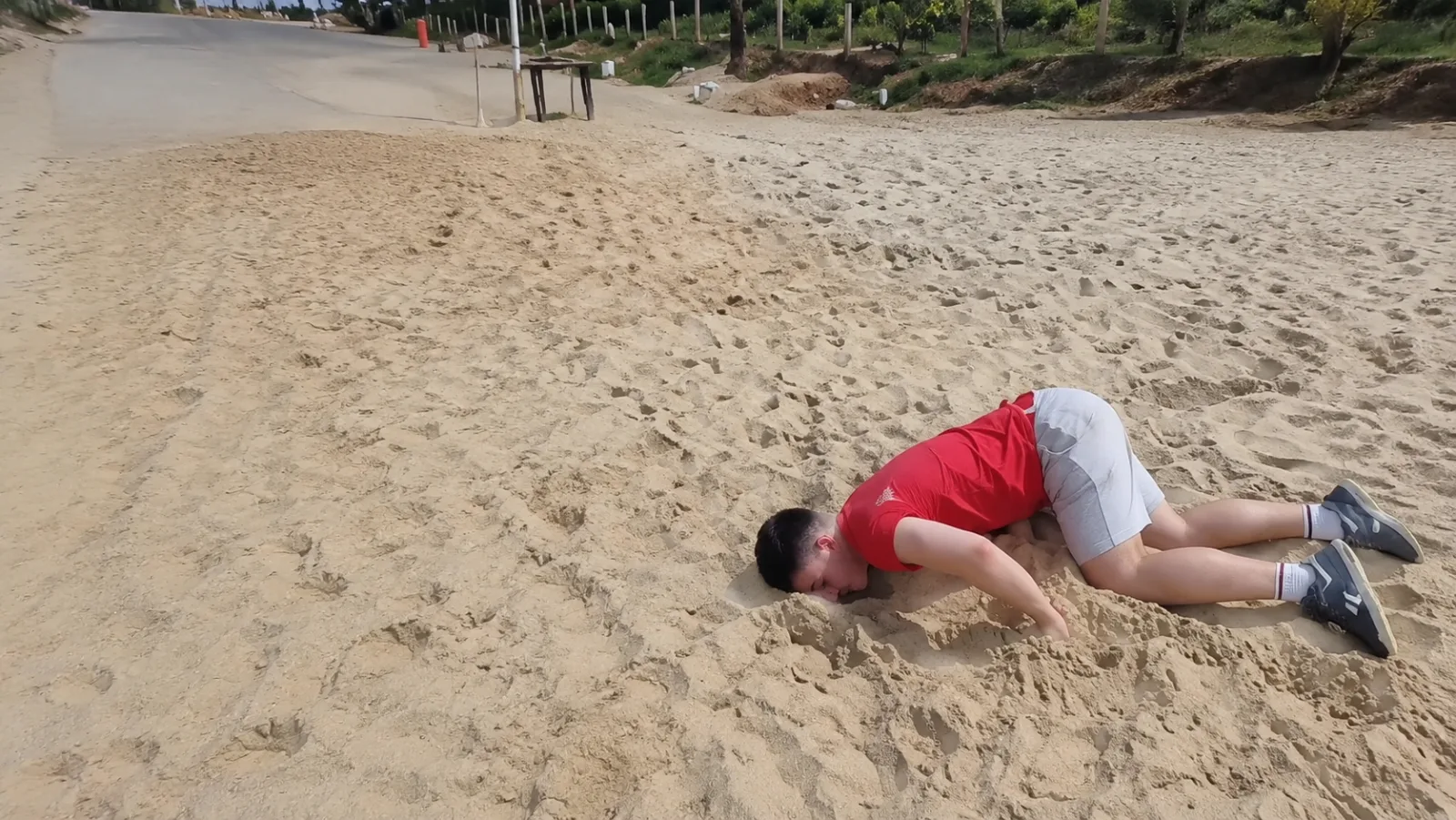
Victims of boa noite, Cinderela are usually found unconscious in a public place, hours after the drink
He woke in an emergency room. Both phones were gone, and roughly £16,000 had been withdrawn from his accounts (IBTimes UK, 2025). A delivery driver who saw him collapse called emergency services and later helped police identify the suspects. Three women, aged 23, 26 and 27, were arrested. Investigators said the group targeted foreign tourists; one of the three had previously served part of a sentence for drugging and robbing another British tourist in 2023 before her conviction was overturned on appeal.
Brazilians call this boa noite, Cinderela — "good night, Cinderella" — the local name for any sedative slipped into a drink to incapacitate someone. It is the single most common serious crime against male tourists in Rio's nightlife districts, and it does not look like a robbery while it is happening. It looks like a good night out.
The mechanism worth internalising: the drink came from a stranger who had been friendly for an hour first. The rule that prevents this is not "do not talk to people." It is narrower and easier — watch your drink being poured, and never accept one already made. Our guide to the scams that actually run in Brazil covers the variants, including the card-machine swap and the fake-taxi fare.
Why Did a Wrong GPS Turn Kill an Argentine Tourist?
In December 2024, an Argentine tourist was driving back from Christ the Redeemer with his wife and children when his navigation app routed him into Morro dos Prazeres, a favela controlled by an armed drug-trafficking group. He was shot twice and died in hospital (AFP, via Buenos Aires Times, 2025).
He was not robbed. He was shot because an unfamiliar car entering that territory reads, to the people watching the entrance, as either police or a rival faction. As Rio's state security secretary Victor dos Santos put it in the same AFP report: "The scenery changes fast… the criminal who is there, alert, waiting for an adversary, ends up shooting first."
This is not a freak event. The Fogo Cruzado Institute, which has tracked armed violence in Rio since 2016, recorded 19 people shot — five of them fatally — in 2024 after civilians or police accidentally entered a favela. That was the highest annual figure since its records began. "This obviously has to do with the geography of Rio de Janeiro," said Maria Isabel Couto, the institute's data director. "And it has to do with the problem of territorial control."
The geography is the whole problem. In Rio, wealthy neighbourhoods and gang-controlled hillsides are separated by a single street, sometimes a single corner. Google Maps and Waze optimise for time and have no concept of territorial control, so a shortcut that saves four minutes can route a rental car through an entrance that residents know never to use. Locals who must drive through these areas follow unwritten rules: no more than 20 km/h, windows down, headlights on, hazard lights flashing — all signals that say I am not a threat. A tourist has no reason to know any of this.
The preventable part is concrete: do not follow turn-by-turn directions into unfamiliar residential hills in Rio, especially at night, and treat any route that leaves a main avenue for a steep narrow road as wrong. If you want to understand the geography rather than just avoid it, our explainer on how Rio's favelas are organised covers which areas are pacified and which are not.
How Did 200 Tourists Get Trapped Above Vidigal?
On the morning of 20 April 2026, police moved to arrest suspected members of Comando Vermelho hiding in the Vidigal favela. Officers came under fire, and the exchange blocked the main route of the trail up Morro Dois Irmãos — the Two Brothers Hill that rises behind Ipanema and Leblon, and one of Rio's most popular sunrise hikes.
More than 200 people were on that trail. They had gone up before dawn to watch the sunrise and were stranded for roughly two hours while the gunfight continued on the hillside below them (AFP, via Inquirer, 2026). "There were more than 200 people taking the tour this morning. Seventy percent were foreign tourists," said Renan Monteiro of the operator Favela Turismo. Three people were arrested. No tourists were injured, and by the next dawn hikers were back on the trail.
This case is here precisely because it was not preventable. The tourists did nothing wrong: they booked a legitimate guided hike, on a well-known route, in daylight hours, with operators who followed procedure and told them to sit down and stay low. The risk was structural — the trail runs through a community where a police operation could begin at any hour, without warning to anyone on the hill.
The honest conclusion is that some exposure in Rio cannot be planned away, only prepared for. What the guides did — get people down, keep them still, keep them informed — is the entire reason nobody was hurt. That is also the argument for booking hikes and favela visits through operators with a real safety protocol rather than a flyer at a hostel desk.
What Do These Three Cases Have in Common?
At first glance, nothing: a robbery by deception, a territorial shooting, and a police operation. But there is one thread, and it is the useful one.
| Case | What the tourist could not know | Time to act |
|---|---|---|
| Ipanema drugging, Aug 2025 | That accepting a pre-made drink is the mechanism, not the setting | Seconds, before drinking |
| GPS routing, Dec 2024 | That the road ahead left the tourist city | Seconds, before turning |
| Vidigal trail, Apr 2026 | Nothing — the operation began without warning | None |
In two of the three, the missing element was information available seconds before the decision, in a place where the traveller had no way to look it up. Not a guidebook read a month earlier, not an advisory PDF — a warning at the moment of the turn, or the moment of the drink.
That is a narrow gap, and it is worth being precise about how narrow. It does not cover the third case at all. But it covers the two that killed and cost the most.
Which of These Risks Can a Tourist Actually Prevent?
Three habits close most of the gap, and none of them require changing your itinerary:
- Never accept a drink you did not watch being made. This single rule defeats the entire boa noite, Cinderela method. It costs nothing socially — order at the bar together.
- Treat GPS as advisory, not authoritative, in Rio. If a route leaves a main avenue for a narrow uphill street you do not recognise, stop and re-route. Ride apps with local drivers are safer than a rental car precisely because the driver knows which entrances are not entrances.
- Have the emergency sentence ready before you need it. After a robbery, the practical failure is not knowing how to explain what happened to a bystander or a police officer. Brazil's emergency numbers are 190 (police), 192 (ambulance) and 193 (fire) — our guide to what to dial and what to say covers the boletim de ocorrência, the police report without which no insurance claim on a stolen phone will settle.
This is where our app fits, and we will be specific rather than grand about it. Brazil Safe Travel carries an offline risk map that warns you as you approach an area like the one the Argentine tourist drove into — the warning arrives before the turn, not in the report afterwards. It holds the scam patterns from the Ipanema case, and it plays a clear spoken request for help in Portuguese to a bystander who does not speak your language. It works without a signal, which matters because the moments described above all happened where a tourist would not stop to search the internet.
It would not have helped the 200 people on Morro Dois Irmãos. No app would have. We would rather say that than imply otherwise on a page about people who were shot.
What to Do in the First Hour After a Crime
The first hour determines whether you recover anything.
- Do not chase, do not resist. Phone snatching in Rio ran to 21,423 reported robberies in 2024 (ISP-RJ). Every one of those was survivable by letting go.
- Get to a delegacia and file a boletim de ocorrência. File it before you leave the country. Rio and São Paulo both operate tourist police units with English-speaking officers. Without this document, insurance claims on stolen electronics are refused as a matter of course.
- Freeze accounts before you replace the phone. In the Ipanema case the money moved while the victim was unconscious — the theft of the handset and the theft of the account are the same event, minutes apart.
- Check your policy's single-item limit, not the headline figure. It is often $250–$500, well below the price of a current handset, and it is the number that decides a phone claim.
Frequently Asked Questions
How common are crimes against tourists in Brazil?
Serious violent crime against tourists is rare relative to the number of visitors, but property crime by deception is not. Rio recorded 21,423 phone robberies in 2024 (ISP-RJ), and drugged-drink robberies are concentrated in nightlife districts such as Lapa, Copacabana and Ipanema. The risk is highly specific to setting and time of day rather than spread evenly across a trip.
Is it safe to follow GPS directions in Rio de Janeiro?
Not without judgement. Navigation apps optimise for travel time and have no data on territorial control, which is how an Argentine tourist was routed into Morro dos Prazeres and killed in December 2024. The Fogo Cruzado Institute logged 19 people shot in 2024 after accidental favela entries. Treat any route that leaves a main avenue for a narrow uphill street as an error, and re-route.
What is the "good night, Cinderella" scam?
Boa noite, Cinderela is the Brazilian term for incapacitating someone with a sedative — usually slipped into a drink — in order to rob them. Victims typically lose consciousness within an hour and wake with no memory of the theft. In the August 2025 Ipanema case, roughly £16,000 was withdrawn from a victim's accounts while he was unconscious.
Are hiking trails and viewpoints in Rio dangerous?
Most are not, but trails that pass through or near favelas carry a risk that no booking decision removes. On 20 April 2026, more than 200 hikers were trapped for two hours on Morro Dois Irmãos when a police operation in Vidigal turned into a gunfight. No one was injured, largely because the guides kept the group still and low. Book through operators with a stated emergency protocol.
Should I still travel to Brazil after reading this?
Yes, with the caveat this article was written to support: risk in Brazil is concentrated in specific decisions rather than spread across the country. Rio's homicide rate of 20.35 per 100,000 (ISP-RJ, 2024) sits near the national average, and São Paulo's 5.46 is lower than several major US cities. Our practical safety habits guide covers what changes the odds day to day, and the Rio-specific breakdown covers neighbourhood-level detail.