Is Botafogo Safe? Rio's Value Neighbourhood in 2026

Jump to section
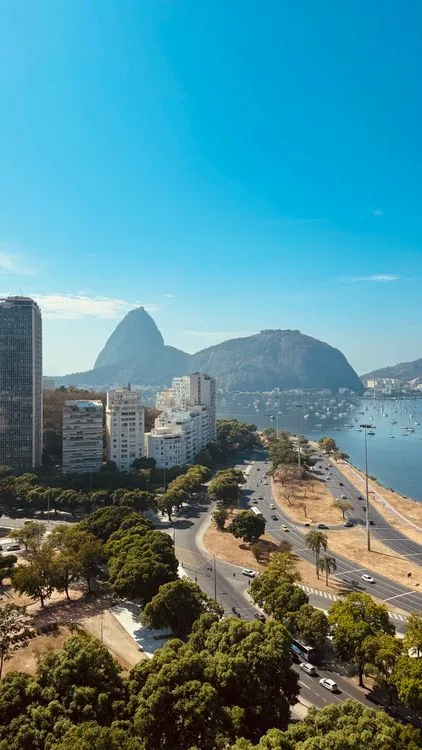
Botafogo bay, with the Sugarloaf behind it. The neighbourhood sits between the bay, Flamengo, Humaitá and the hill of Santa Marta.
Updated September 2026: the perimeter figures below are from the Prefeitura do Rio's CompStat presentation of 28 July 2026, based on Instituto de Segurança Pública (ISP-RJ) data; the city-wide figures are ISP-RJ 2024.
Is Botafogo safe? Yes — and the answer got better in 2026. On 28 July 2026 the city presented its CompStat Rio figures for the seven perimeters patrolled by the new Força Municipal, and the three that showed the biggest improvement were all in Botafogo. Robberies and thefts of phones and from pedestrians fell 67.4% around Botafogo metro (the São Clemente and Voluntários da Pátria corner), 51.3% along Praia de Botafogo at Marquês de Abrantes, and 51.4% around Rua Lauro Müller by the Rio Sul shopping centre, comparing the same months of 2025 and 2026 (Prefeitura do Rio, 2026). No other perimeter in the city came close; the next best, Tijuca, was 32.9%.
Those are big numbers from a short period — the Força Municipal only started work on 15 March 2026 — and they measure three street corners, not the whole neighbourhood. But they are the first street-level safety data any Rio neighbourhood has published, and they happen to cover exactly the three places a visitor to Botafogo spends time: the metro exit, the seafront and the shopping centre. For the wider question of how Botafogo compares with the rest of the city, our ranking of Rio's safest neighborhoods puts it third behind Leblon and Ipanema; this page is about what it is actually like to base yourself there.
Key Takeaways
- The city's July 2026 CompStat report shows phone and pedestrian robberies and thefts down 67.4% around Botafogo metro, 51.3% on Praia de Botafogo and 51.4% at Lauro Müller versus the same months of 2025 (Prefeitura do Rio / ISP-RJ, 2026).
- Rio's homicide rate is 20.35 per 100,000 (ISP-RJ, 2024) and the city recorded 21,423 phone robberies in 2024 (ISP-RJ) — the second figure is the one that matters in Botafogo.
- Botafogo is not a beach neighbourhood: the risk profile is metro exits and the Voluntários da Pátria bar strip late at night, not the beachfront.
- The Santa Marta favela sits on the hill above Botafogo's western streets; it is a pacified community with a tourist trail, not a no-go zone, but the streets that climb toward it are not where to wander at 2 a.m.
- The 10ª DP police station is inside the neighbourhood, at Rua Bambina 140 — useful if you need to file a report.
How Safe Is Botafogo in 2026?
Safer than the reputation the neighbourhood carried two years ago, and the data is unusually specific about it.
Rio publishes crime figures through the state's Instituto de Segurança Pública, and city-wide the picture in 2024 was a homicide rate of 20.35 per 100,000 (ISP-RJ via Sinesp, 2024) and 21,423 phone robberies (ISP-RJ, 2024). Homicide is not what happens to tourists in Zona Sul; phone robbery is, and Botafogo — with two metro stations, a shopping centre and the densest bar strip in the zone — has historically had more than its share.
That is what the Força Municipal was created to change. The city's new municipal security force, a unit of the Guarda Municipal with a mandate to patrol fixed perimeters, began operating on 15 March 2026 and took on Botafogo in May. At the CompStat Rio meeting on 28 July 2026, the municipal secretary of urban security, Brenno Carnevale, presented the first results, based on ISP records for the same periods of 2025 and 2026:
| Perimeter | What it covers | Change, 2025 → 2026 |
|---|---|---|
| Metrô Botafogo × São Clemente × Voluntários da Pátria | The main metro exit and the start of the bar strip | −67.4% |
| Praia de Botafogo × Marquês de Abrantes | The seafront and the Flamengo border | −51.3% |
| Lauro Müller × General Severiano × Venceslau Brás | Rio Sul shopping and the road to Urca | −51.4% |
| Tijuca (São Francisco Xavier–Afonso Pena) | For comparison | −32.9% |
| Central do Brasil / Cinelândia | For comparison | −16.8% |
Source: Prefeitura do Rio, CompStat Rio, 28 July 2026. Crimes counted: robbery and theft of mobile phones, and robbery and theft from pedestrians. July 2026 data partial.
Carnevale's summary was that "the methodology employed by the Força Municipal is producing results" (Prefeitura do Rio, 2026) — which, given the source, is what you would expect the municipal secretary to say. Three reasons to take it seriously anyway: the underlying records are the state's, not the city's; the comparison is like-for-like months; and the same report showed weak results elsewhere (16.8% at Central), which a purely promotional release would have left out. The reason to keep it in proportion is that it covers four months and three corners. It tells you the places you will most use in Botafogo are being watched; it does not tell you the side streets are.
Is Botafogo Safe at Night?
Mostly yes, and the exceptions are geographic rather than temporal. Botafogo at night has three distinct zones, and they do not behave the same way.
The Voluntários da Pátria and Nelson Mandela bar strip. This is where Botafogo's nightlife lives — dozens of bars and restaurants between the metro and Rua São Clemente, busy until 2 a.m. at weekends. The crowd is the safety, and the 67.4% perimeter sits at its start. The risk is the classic one: a phone on a table, a bag on a chair, a walk to a car parked three streets away at closing time. Leave with the ride already booked and the phone in a pocket, and this is one of the safer places in Rio to be out late.
Praia de Botafogo and the seafront. The bay-side avenue is wide, lit and busy with traffic, but it is not a promenade the way Copacabana's is — there is no beach economy, no kiosks, no crowd after dark. The 51.3% perimeter at Marquês de Abrantes covers the stretch that connects to Flamengo. Walk it in the evening if you like; do not sit on the seawall with a phone at midnight, because the same emptiness that makes it pleasant makes you the only person there.
The streets climbing west toward Santa Marta. Botafogo's western edge — the upper ends of São Clemente, Dona Mariana and the streets around the Cobal — rises toward the Santa Marta favela on the Dona Marta hill. Santa Marta was the first community to receive a Police Pacification Unit in 2008 and is one of the few favelas in Rio with an established tourist trail; our favelas in Rio guide explains what that does and does not mean. For a visitor staying in Botafogo the practical rule is simple: the neighbourhood's hotels, bars and metro are on the flat; the residential streets that climb are not a shortcut anywhere at night, and a ride-app driver who is routing you uphill has the wrong address.
Botafogo vs Copacabana vs Ipanema: Which Is Safer to Stay In?
Not "safer" across the board — different. The honest comparison is a trade-off table, because the three neighbourhoods have different risk shapes.
| Botafogo | Copacabana | Ipanema | |
|---|---|---|---|
| Beach | No — 10 min by metro to Copacabana | On the doorstep | On the doorstep |
| Price | Lowest of the three | Mid | Highest |
| Main theft risk | Metro exits, bar strip at closing time | Beachfront and Avenida Atlântica after dark, Posto 6 end | Beach snatches in daytime crowds |
| Night activity | Bar strip busy to 2 a.m. | Busy but mixed crowd on the seafront | Quieter, restaurants and bars inland |
| Transport | Two metro stations (Botafogo, Flamengo edge) | Three metro stations | One metro station |
| Favela adjacency | Santa Marta on the hill above | Pavão-Pavãozinho / Cantagalo between Copa and Ipanema | Cantagalo above the eastern end |
| 2026 data | −51% to −67% in patrolled perimeters | No perimeter data published | No perimeter data published |
Read that as a visitor choosing a base. Copacabana's risk is on its main asset, the beachfront, and it runs all night. Ipanema's risk is daytime beach theft in the crowds at Posto 9, and the neighbourhood is the calmest of the three after dark. Botafogo's risk is at its transport nodes and its bar strip, and it is the only one of the three with published evidence that the risk is falling. If the beach is the point of the trip, Ipanema is the safest default and our Rio hotel guide is organised around it. If the trip is about the city — restaurants, Sugarloaf, day trips — and the budget matters, Botafogo is the better base, and the metro puts you on Copacabana sand in ten minutes.
Which Streets and Areas Should Tourists Avoid in Botafogo?
Botafogo has no area that a visitor should treat as off-limits by day. The list of places to be careful is short and specific.
- The upper ends of São Clemente and the streets around the Cobal after midnight. These climb toward Santa Marta. Not dangerous in the daytime — the Cobal is a food market — but not a route to walk home alone late.
- The Botafogo metro exit onto Voluntários da Pátria, at closing time. The 67.4% perimeter exists because this was the worst corner in the neighbourhood. It is better now; it is still the place where a phone comes out to check the map and a motorbike is waiting.
- The seawall on Praia de Botafogo late at night. Empty, and therefore the wrong place to be looking at a screen.
- The underpasses and footbridges across the Aterro. The Aterro do Flamengo park is a delight by day and a running route in the morning; its crossings are not for 1 a.m.
- The road to Urca past Lauro Müller. Fine in daylight, and the 51.4% perimeter covers it; at night take the ride.
What is not on the list: Santa Marta itself, which is a community with guided visits, a Michael Jackson statue and residents who have spent seventeen years living next to a police post; the Botafogo shopping centre and Rio Sul, which are patrolled; and the whole of the neighbourhood by day. The pattern is the one that applies across Zona Sul, described in our Rio safety guide: the risk is not a district, it is a moment — usually a lone person, a phone in hand and a quiet street.
Is the Botafogo Metro and Bus Corridor Safe?
Botafogo is the best-connected neighbourhood in Zona Sul, which is a safety advantage in itself: the less you walk between places at night, the less exposure you have.
The metro station sits under the Voluntários da Pátria and São Clemente junction, on lines 1 and 2, with Copacabana three stops south and Centro five stops north. The Flamengo station is a ten-minute walk on the eastern edge. Both are well-lit and staffed until close, and the platforms are safe; the exits are where the 2026 patrols are concentrated, for a reason. Keep the phone away until you are inside the station.
Buses run the length of Praia de Botafogo and along São Clemente; they are fine in daytime and mostly full, but the stops on the seafront are exposed at night. For any journey after about 11 p.m., or from the bar strip back to a hotel more than a few blocks away, use a ride app — our Uber in Rio guide covers the checks that matter: plate, name, and never getting in a car that approached you rather than the reverse. Botafogo's one ride-app quirk is the hill: if the app routes a driver up a steep residential street toward Santa Marta, the pin is wrong. Fix it before the car arrives.
Walking is the right choice by day across the whole neighbourhood and by night along the bar strip and between the metro and any hotel within five blocks of it. The walks to avoid are the ones that take you across the Aterro or uphill.
What to Do If Something Goes Wrong in Botafogo
Botafogo is one of the easier Rio neighbourhoods to have a bad day in, because the police station is inside it.
- The 10ª Delegacia de Polícia is at Rua Bambina 140, a residential street four blocks west of the metro. For a theft you can also file the boletim de ocorrência online through the Polícia Civil do RJ; for a robbery with violence, go in person. The report is the document every insurer asks for.
- DEAT, the tourist police, is in Leblon, and handles crimes against foreign visitors with English-speaking staff; for a Botafogo incident the 10ª DP is closer and just as valid.
- Emergency numbers are national: 190 police, 192 ambulance, 193 fire. Our Brazil emergency numbers guide covers what to say.
- Freeze the accounts before you think about the phone. In Rio a taken phone is worth more for the bank apps than the hardware, and the window is minutes. Do it from any device — a bar's phone, a stranger's — before anything else.
- Then get back online. A second eSIM profile, set up before the trip, means the replacement handset works the moment you buy it. Our Brazil eSIM guide compares the options.
Frequently Asked Questions
Is Botafogo safe for tourists?
Yes. Botafogo is a residential and commercial Zona Sul neighbourhood with good metro access, a large bar and restaurant scene and, as of July 2026, published city data showing phone and pedestrian robberies down 51–67% in its three patrolled perimeters (Prefeitura do Rio / ISP-RJ). The everyday risk is phone theft at the metro exit and on the bar strip late at night, and the standard Rio rules — phone away on the street, ride app after 11 p.m. — cover it.
Is Botafogo safer than Copacabana?
It has a different risk shape rather than a lower one. Copacabana's theft happens on the beachfront and runs all night; Botafogo's happens at the metro and the bar strip at closing time. Botafogo is the only one of the two with 2026 data showing a fall, because it is where the Força Municipal patrols. If you want the beach at the door, Copacabana or Ipanema; if you want value and the city, Botafogo.
Is Botafogo beach safe to swim at?
No, and not for safety reasons: Botafogo bay is polluted and not used for swimming. The beach is a view, a running route and a place to launch a stand-up paddleboard for the Sugarloaf shot. For swimming, the metro takes you to Copacabana in ten minutes; our Rio beaches guide covers which stretch to use.
What about the favela above Botafogo?
Santa Marta, on the Dona Marta hill, was the first favela in Rio to receive a Police Pacification Unit, in 2008, and has a guided tourist trail and a view over the bay. It is not a threat to the neighbourhood below it. The practical rule is that Botafogo's flat streets are where visitors stay and go out, and the residential streets that climb toward the hill are not a route to walk alone at night. The distinction between a pacified community with visits and one to avoid is explained in our favela tours guide.
Where should I stay in Botafogo?
Within five blocks of the metro and on the flat: the streets around Voluntários da Pátria, Nelson Mandela, Praia de Botafogo and the lower end of São Clemente. That puts you inside or beside the patrolled perimeters, on the bar strip and a short walk from the station, and it keeps the walk home short. Avoid the upper ends of the streets that climb west, not because they are dangerous but because they add a hill and an empty stretch to every late return.
The Bottom Line
Botafogo is safe to stay in, it is the best-value base in Zona Sul, and in 2026 it is the only Rio neighbourhood with street-level evidence that its main risk is falling: phone and pedestrian robberies down 67.4% at the metro, 51.3% on the seafront and 51.4% by Rio Sul. It is not a beach neighbourhood, and its risk lives at the transport nodes and the bar strip rather than on a promenade. Stay on the flat near the metro, keep the phone away at the station exit, take a ride after the bars close, and treat the hill as scenery. Do that, and Botafogo gives you Rio for less than Ipanema charges, ten minutes from the same sand.