Safest Neighborhoods in São Paulo: 10 Districts Ranked

Jump to section
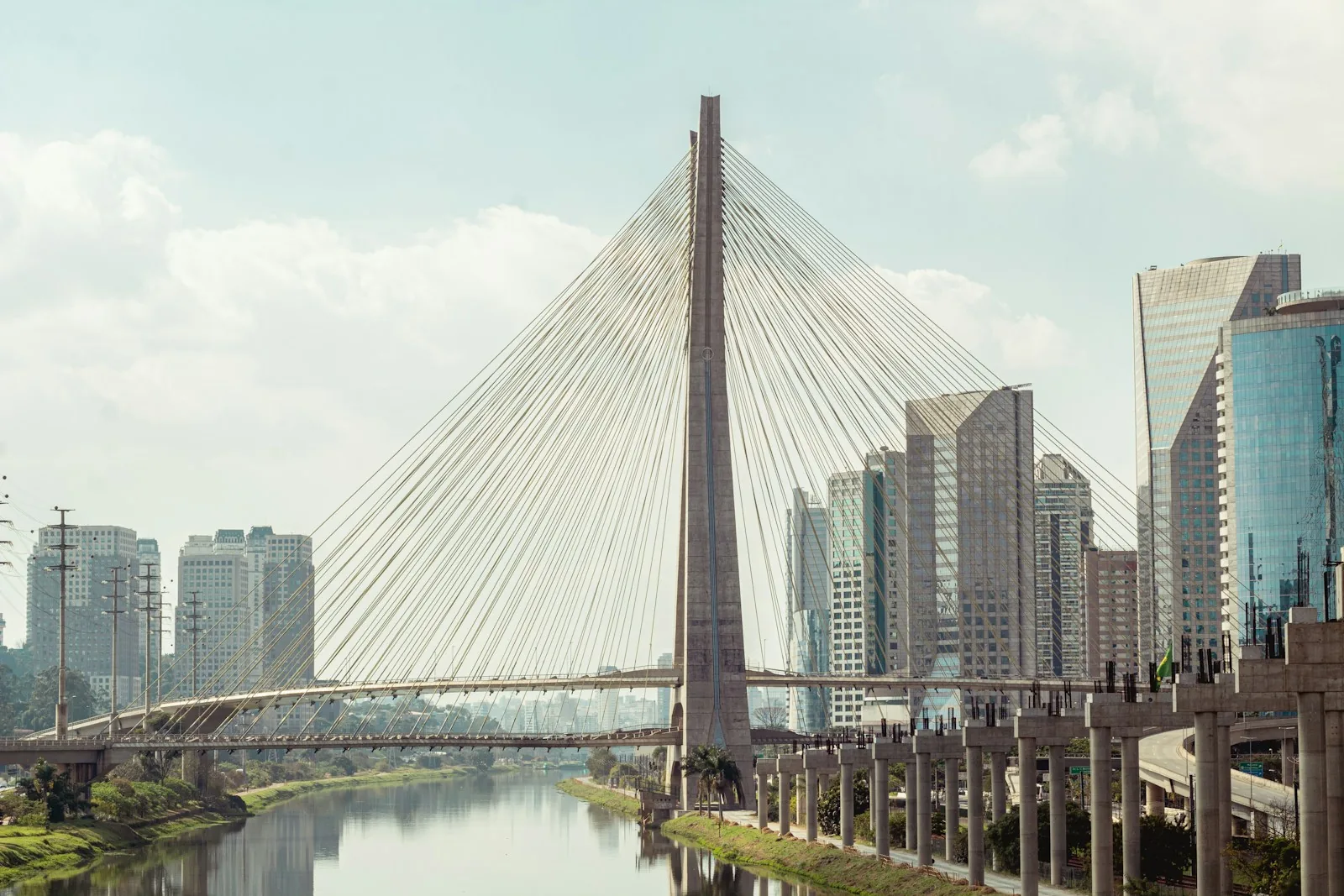
The Pinheiros river, with Itaim Bibi and Pinheiros — two of the safest districts to stay in, and two of the busiest for theft — on either bank.
Updated September 2026: theft counts by district are from the Secretaria de Segurança Pública de São Paulo (SSP-SP) for May 2025–April 2026, as compiled by Crime Brasil and published by Gazeta de S.Paulo; the state homicide rate is the SSP-SP 2025 figure.
The safest neighborhoods in São Paulo — Jardins, Itaim Bibi, Vila Olímpia, Moema, Pinheiros, Vila Madalena and Higienópolis — are also the districts where you are most likely to have a phone taken. That is not a contradiction; it is the single most useful thing to understand before you book. São Paulo state's homicide rate is 5.46 per 100,000 (SSP-SP, 2025), the lowest in Brazil and the lowest since the series began in 2001. In the same city, Pinheiros logged 9,007 thefts between May 2025 and April 2026, more than any other district (SSP-SP data via Gazeta de S.Paulo, 2026). Bela Vista (6,762) and Itaim Bibi (6,188) are also in the top ten, alongside Consolação (6,793) and Vila Mariana (7,475). Every one of those is a district travel guides tell you to stay in — and they are right to.
So São Paulo has two safety maps, and they do not overlap. The violence map is concentrated in the far periphery, hours from anywhere a tourist goes. The theft map is drawn by foot traffic: it peaks wherever there are bars, restaurants, offices and people holding phones, which is exactly the neighbourhoods with the best reputation. Ranking "safest" honestly means ranking by the first map and then telling you how to behave on the second. That is what the list below does. For the city-wide picture — airport transfers, metro, scams — start with our São Paulo safety guide; this page is the where-to-stay decision.
Key Takeaways
- São Paulo state's homicide rate is 5.46 per 100,000 (SSP-SP, 2025) — the lowest in Brazil. Violence is not the tourist's problem here.
- Pinheiros recorded 9,007 thefts between May 2025 and April 2026, the most of São Paulo's 96 districts; Vila Mariana (7,475), Consolação (6,793), Bela Vista (6,762) and Itaim Bibi (6,188) are all in the top ten (SSP-SP via Gazeta de S.Paulo, 2026) — the "safe" districts are theft leaders because they are the busy ones.
- The city logged 61,829 thefts in the first quarter of 2025, the highest quarterly total this century (SSP-SP via Metrópoles, 2025).
- The safest bases for a first visit are Jardins, Itaim Bibi, Vila Olímpia and Moema; Pinheiros and Vila Madalena for nightlife; Higienópolis for a quiet, central, residential feel.
- The districts to be careful in after dark are Centro (Sé, República), Campos Elísios/Luz and the northern edge of Bela Vista — the same places the police data flags.
What Does "Safe" Mean in São Paulo?
It means two different things, and any ranking that does not say which one it is measuring is misleading you.
The first meaning is violence: homicide, armed robbery, assault. On that measure São Paulo is exceptional. The state rate of 5.46 per 100,000 is a quarter of the national violent-death rate of 19.1 (Brazilian Public Security Yearbook, 2025) and below many US cities. What violent crime exists is concentrated in the outer periphery — Brasilândia, Cidade Tiradentes, Grajaú — districts a visitor would have to make a deliberate effort to reach.
The second meaning is theft: the phone lifted from a café table, the bag opened on the metro, the handset snatched from a hand at a crossing. On that measure São Paulo is a hard city, and the numbers are getting harder. The city recorded 61,829 thefts in the first three months of 2025, a rise of 4.6% on the same period of 2024 and the worst quarter of the century (SSP-SP via Metrópoles, 2025). Phone theft alone reached 29,169 reports in January and February 2025 (SSP-SP via Exame, 2025). The point here is that theft goes where the phones are, and the phones are in the nice districts.
The SSP-SP's own 2025 breakdown by police precinct makes the pattern unmistakable: the 14º DP in Pinheiros registered 38 robberies and thefts a day in the first quarter of 2025 — one every 38 minutes — followed by the 23º DP in Perdizes at 37 a day, with the 1º DP (Sé) and 3º DP (Campos Elísios) at 33 each. Two of the top four are the leafy west-side districts; two are the historic centre. Same theft count, very different reasons, and very different advice.
Which Neighborhoods Are Safest to Stay In?
Ranked by the violence map first, with the theft figure where the SSP-SP has published it by district. "Theft/yr" is the May 2025–April 2026 count and city rank (of 96 districts) from SSP-SP data compiled by Crime Brasil for Gazeta de S.Paulo; a dash means the district was outside the published top ten.
| Rank | District | Zone | Theft/yr (SSP-SP) | Best for | Night feel |
|---|---|---|---|---|---|
| 1 | Jardins | West | — | First visit, shopping, embassies | Quiet residential streets, lively along Oscar Freire |
| 2 | Itaim Bibi | West | 6,188 (10th) | Business travel, restaurants | Busy until late on Joaquim Floriano; empty side streets |
| 3 | Vila Olímpia | West | — | Business, hotels near Faria Lima | Office district; dead after 22:00 except bars |
| 4 | Moema | South | — | Families, Ibirapuera Park | Calm, residential, well-lit |
| 5 | Pinheiros | West | 9,007 (1st) | Nightlife, food, metro access | Very busy; highest theft in the city |
| 6 | Vila Madalena | West | — | Bars, street art, weekends | Crowded Fri–Sat; watch phones on Aspicuelta |
| 7 | Higienópolis | Central | — | Quiet, walkable, close to Paulista | Residential, doormen on every building |
| 8 | Paulista / Consolação | Central | 6,793 (6th) | Location, transport | Safe on the avenue; side streets vary |
| 9 | Bela Vista | Central | 6,762 (7th) | Budget, Italian restaurants (Bixiga) | Fine near Paulista; rougher toward Centro |
| 10 | Centro (Sé, República) | Central | 6,873 (5th, República) | Architecture, day visits | Avoid staying; do not walk here after dark |
Three things to read off that table. First, the top four are all low-violence and, apart from Itaim at tenth, outside the theft top ten — they are residential enough that the crowds thin out. The districts between Pinheiros and Bela Vista on the theft list are Brás, Santo Amaro, Vila Mariana and República: commercial hubs, transport terminals and the old centre, not places a visitor would base themselves. Second, Pinheiros ranks fifth despite the highest theft count in the city, because the theft is a function of it being the best-connected, busiest district for eating and going out; you would not avoid Shoreditch or the Marais for the same reason. Third, Bela Vista is the one district where the ranking and the theft figure agree: its north-eastern half shades into Centro, and its 6,762 thefts (seventh in the city) include streets you should not be on late. If you are booking there, stay within five blocks of Avenida Paulista.
Why Does Pinheiros Lead the City in Theft If It Is "Safe"?
Because theft is a crime of opportunity, and Pinheiros is where the opportunities are. It has the densest concentration of bars and restaurants in the city (Rua dos Pinheiros, Mateus Grou, the Largo da Batata), two metro lines, a CPTM station, and a floating population of diners and office workers many times the number of residents. The SSP-SP publishes its figures by district of occurrence, so every phone taken from a tourist's hand outside a bar in Pinheiros counts against Pinheiros — a district of 65,145 residents — while the person who lost it may live in Moema and the thief may have arrived by motorbike from somewhere else entirely.
The street-level breakdown makes the point better than any argument. The single address with the most thefts in Pinheiros is Rua Capri, with 710 in twelve months — and 81% of those were classified by police as occurring in a metro, train or terminal environment, because Rua Capri is the address of Pinheiros station (Gazeta de S.Paulo, 2026). In five of the ten highest-theft districts, the "street" that leads the count is a station address. Next on Pinheiros's list are Avenida Rebouças (583), Rua Mourato Coelho (474) and Avenida Brigadeiro Faria Lima (368); the bar streets — Aspicuelta (269) and Rua dos Pinheiros (249) — are well down the order. The theft is at the transport nodes and the busy avenues, not in the bars.
Asked about the ranking, the state's Secretaria de Segurança Pública said in a statement: "The SSP stresses that it is not appropriate to compare different regions, since each has its own geographic, demographic and seasonal characteristics" (SSP-SP note to Gazeta de S.Paulo, 2026), adding that in the police division covering Pinheiros, robberies fell 6.46% over the same period. That caveat is self-serving, but it is also correct: the per-precinct daily figure is a more honest read than the district total. Even on that basis, Pinheiros's 14º DP is the busiest in the city at 38 incidents a day — but 38 a day in a district hosting hundreds of thousands of people each evening is a rate that rewards ordinary caution, not avoidance.
What the figure does tell you is how to behave in Pinheiros and Vila Madalena: phone in a front pocket, not in a hand at the kerb; bag on the lap, not on the chair back; leave the bar with the Uber already booked. That is the whole difference between the tourist who has a great weekend in Vila Madalena and the one who spends Sunday at the delegacia. The techniques are the same ones we describe in the common scams in Brazil guide — the bar-tab distraction, the fake helper at the ATM, the motorbike snatch at a red light.
Where Should Tourists Avoid at Night?
The places to avoid after dark are the ones where the theft map and the violence map overlap, and in São Paulo that is a short, specific list.
- Centro after dark: Sé, República, Anhangabaú. By day the historic centre is worth a visit — the Theatro Municipal, the Pátio do Colégio, the Martinelli building. After the offices close, the pedestrian streets empty out, the 1º DP's 33 daily incidents concentrate in fewer hours, and the crack-market population that the city calls Cracolândia drifts through the area between Luz and República. Take the metro in during the day and leave before dusk.
- Campos Elísios and Luz. The 3º DP's 33 daily incidents are here. The Pinacoteca and the Estação da Luz are safe to visit in daylight with a direct route in and out; the surrounding blocks are not somewhere to walk with a phone out at any hour.
- The northern edge of Bela Vista. South of Avenida Paulista, Bela Vista (Bixiga) is a pleasant Italian quarter. North of Rua Treze de Maio it merges with Centro, and its 6,762 thefts skew heavily to those blocks.
- Empty office streets in Vila Olímpia and Brooklin at night. Not dangerous in the violent sense; just deserted, which is when a lone pedestrian with a phone becomes the only target on the street. Take the Uber to the door.
- Any pedestrian bridge or underpass along the Marginal. These are not routes; they are places people get cornered.
Notice what is not on this list: the favelas. Unlike Rio, São Paulo's low-income communities — Paraisópolis, Heliópolis — are not adjacent to the districts tourists stay in, and the "wrong turn into a favela" scenario that dominates Rio coverage does not apply here. The risk in São Paulo is the deserted street at midnight in a district that felt perfectly safe at noon.
Is It Safe to Walk in São Paulo?
Yes, within a district; the mistake visitors make is walking between districts. Avenida Paulista is walkable end to end at any hour, and on Sundays it closes to traffic and becomes the city's promenade. Jardins, Itaim, Moema, Higienópolis and Pinheiros are all pleasant on foot in daylight and fine at night on the main streets. Vila Madalena's bar streets are packed until 02:00 at weekends and the crowd itself is the safety.
Where walking goes wrong is the 2-kilometre gap between Pinheiros and Itaim Bibi, or the walk from Paulista down into Centro, or the stroll from Vila Olímpia along the Marginal to anywhere. Those routes cross highway underpasses, empty stretches and, in Centro's case, the boundary into the districts above. São Paulo is a city of safe islands connected by roads that are not for walking; ride between them. Our Uber in Brazil guide covers how to do that without the airport-kerb and fake-driver problems, and the metro is the better option on lines 2 (green) and 4 (yellow), which serve Paulista, Pinheiros, Faria Lima and Vila Madalena directly.
Two walking rules specific to São Paulo. Do not stop at a kerb with your phone at face height: the motorbike snatch is the city's signature crime and red lights are its venue. And if someone asks you a question on an empty street — the time, directions, whether you speak English — keep walking; the question is the approach, and the phone is what they are looking at.
What to Do If Something Goes Wrong in São Paulo
São Paulo has better infrastructure for a tourist who has been robbed than any other Brazilian city, and using it quickly is what separates a bad hour from a bad trip.
- File the boletim de ocorrência online. São Paulo's Polícia Civil accepts theft reports through its Delegacia Eletrônica, in Portuguese, from any device. You do not need to visit a station for a theft, and no insurer will pay a phone claim without the BO. Our emergency numbers guide walks through the form.
- For a robbery with violence, or if you need English, use DEATUR. The Delegacia Especializada em Atendimento ao Turista has a station on Rua da Cantareira in Centro and a desk at Guarulhos airport. The emergency number is 190; ambulance is 192.
- Freeze the accounts before you replace the phone. A taken handset in São Paulo is typically unlocked within minutes if the thief saw you type the passcode; the bank apps are what they want, not the hardware. Call your bank from any phone first.
- Then get the eSIM working. A second SIM profile means the replacement phone is online before you leave the shop. Our Brazil eSIM guide compares the options.
Frequently Asked Questions
Is Itaim Bibi safe?
Yes. Itaim Bibi is one of the safest districts in São Paulo by violence and one of the best bases for a business trip: hotels, the Faria Lima financial corridor and the city's best restaurant strip on Rua Joaquim Floriano are all within walking distance. It recorded 6,188 thefts between May 2025 and April 2026 (SSP-SP via Gazeta de S.Paulo), tenth of 96 districts, for the same reason Pinheiros leads — it is busy. Keep the phone in a pocket on the street and take an Uber rather than walking the empty office blocks after 22:00.
Is Pinheiros safe?
Yes for violence, no for leaving a phone on a bar table. Pinheiros is the district with the highest theft count in São Paulo — 9,007 in the year to April 2026 (SSP-SP via Gazeta de S.Paulo) — and also the one with the most bars, restaurants and metro connections. The theft figure is a measure of how many people are there, not of how dangerous the district is. Stay there for the food and the nightlife; behave as you would in any crowded bar district in Europe.
Is Bela Vista safe?
The half nearest Avenida Paulista is; the half nearest Centro is not somewhere to walk at night. Bela Vista recorded 6,762 thefts in the year to April 2026 (SSP-SP via Gazeta de S.Paulo), seventh in the city, and unlike Pinheiros a meaningful share of that is on the blocks that merge with the historic centre. If a hotel in Bela Vista is the budget option, choose one south of Rua Treze de Maio and within a few blocks of Paulista.
Is Jardins safe?
Jardins is the safest well-known district in São Paulo to stay in: low violence, tree-lined residential streets, doormen, and the Oscar Freire shopping strip. It is not in the SSP-SP's top ten districts for theft, which reflects how residential it is compared with Pinheiros or Itaim. It is also the most expensive; Higienópolis and Moema give a similar feel for less.
Which neighborhood should a first-time visitor choose?
Jardins if budget allows, Itaim Bibi or Vila Olímpia for a business trip, Moema for a family, Pinheiros or Vila Madalena if the trip is about eating and going out, Higienópolis if you want quiet and a walk to Paulista. Avoid staying in Centro. Once the base is chosen, our things to do in São Paulo guide is organised by the same districts, and if you are comparing with a Rio stay, the sister page on Rio's safest neighborhoods uses the same method.
The Bottom Line
São Paulo is the lowest-violence major city in Brazil and one of the highest-theft. Both facts are true at once, and they live in the same districts. Stay in Jardins, Itaim Bibi, Vila Olímpia, Moema, Pinheiros, Vila Madalena or Higienópolis — any of them is a safe base by the measure that matters most — and then treat your phone the way the theft numbers say you should: in a pocket on the street, on your lap in a bar, out of sight at a red light. Do not stay in Centro, do not walk between districts at night, and ride rather than stroll along anything called Marginal. Do that, and the district with 9,007 thefts a year will give you the best weekend in the city.