Is Brasília Safe? Brazil's Second-Safest Capital (2026)

Jump to section
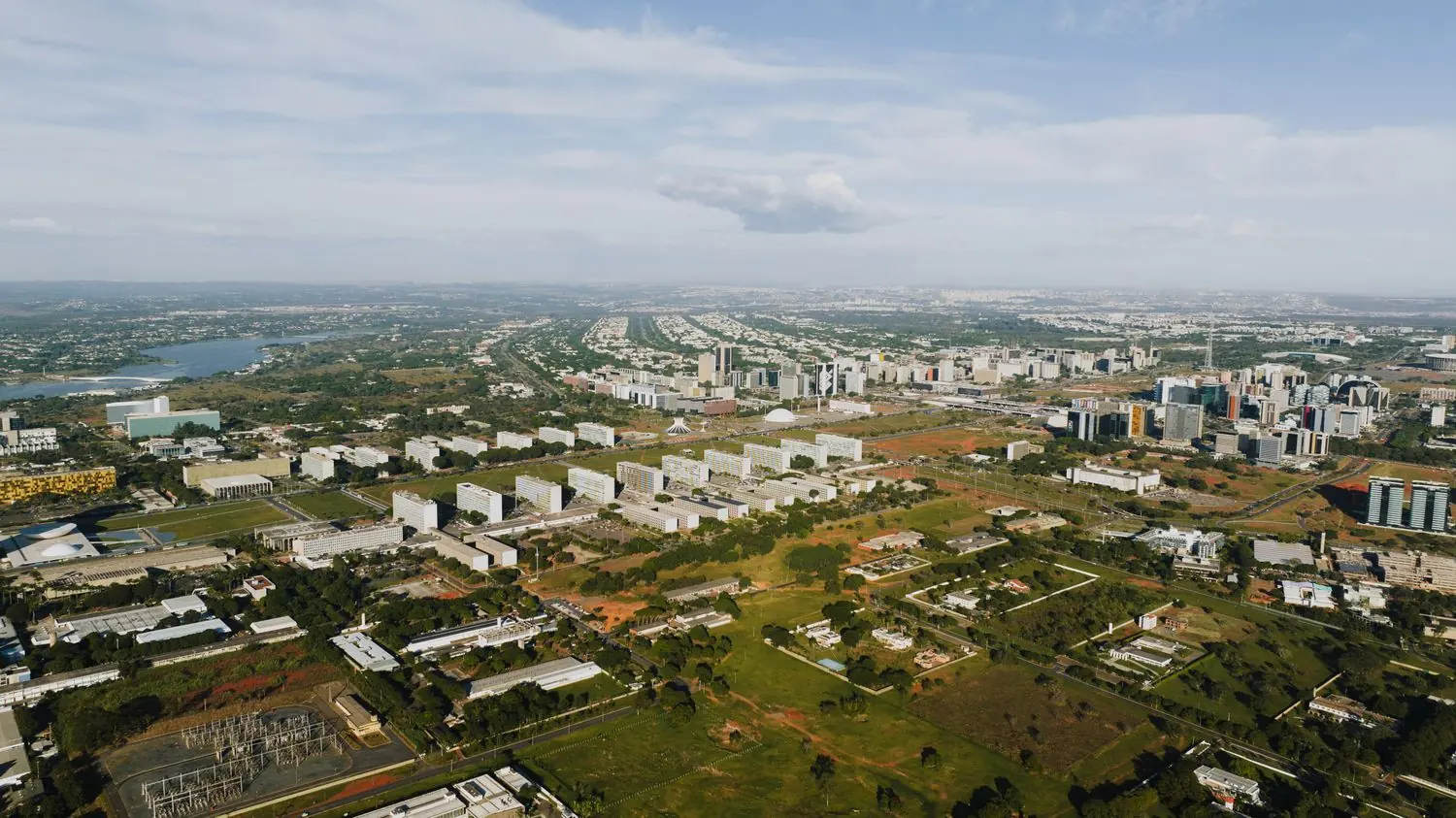
Brasília, DF, Brazil
Updated September 2026: homicide figures below are from the Atlas da Violência 2026 (Ipea/FBSP, 2024 data); the regional pattern is from the Secretaria de Segurança Pública do Distrito Federal (SSP-DF).
Is Brasília safe? Yes — and by the number that matters most, it is the second-safest capital in Brazil. The Federal District recorded 10.9 homicides per 100,000 residents in 2024, down 11.4% on 2023, according to the Atlas da Violência 2026 (Ipea/FBSP). Only Florianópolis, at 9.7, sits lower. The average across all 27 capitals is 26.6, so Brasília runs at well under half the national capital norm and at about a fifth of Salvador's 52.7.
That answer comes with one complication that no other guide states plainly, and it is the useful part. The Plano Piloto — the planned centre where the hotels, the ministries and every landmark sit — has recorded the highest crime rate per resident of any region in the Federal District, a pattern the Secretaria de Segurança Pública do DF's own data showed as far back as 2019 (SSP-DF data reported by Metrópoles). Not because it is dangerous, but because a small resident population hosts a daily flow of commuters, civil servants and visitors many times its size. Divide the thefts by the residents and the ratio looks bad. Divide them by the people actually present and it does not. The homicide number lives in the satellite cities; the theft number lives exactly where you will be standing.
Key Takeaways
- Brasília's homicide rate is 10.9 per 100,000 (Atlas da Violência 2026, 2024 data) — second-lowest capital in Brazil, behind Florianópolis at 9.7, and under half the capital average of 26.6.
- The DF's rate fell 11.4% between 2023 and 2024 (O Tempo, Atlas da Violência 2026, 2026) — the second-largest drop among the five safest capitals.
- The Plano Piloto nonetheless has the DF's highest crime rate per resident — the theft-follows-the-crowd effect, not a violence problem.
- The everyday risk in Brasília is not crime. It is a city designed for cars, where "walking to the next building" can mean a kilometre along a highway.
How Safe Is Brasília Compared With Other Brazilian Capitals?
The Atlas da Violência is the most rigorous homicide series in Brazil — it uses Ministry of Health mortality data rather than police records, which makes it consistent across states. On its 2024 figures, Brasília sits in the group of four capitals that are genuinely low-risk by the standards of a country whose national rate is 19.1 per 100,000 (20th Brazilian Public Security Yearbook, FBSP, 2025).
| Capital | Homicides per 100,000 (2024) | Note |
|---|---|---|
| Florianópolis | 9.7 | Lowest of any capital |
| Brasília (DF) | 10.9 | Down 11.4% on 2023 |
| Curitiba | 13.2 | |
| Rio de Janeiro | 20.35 | ISP-RJ, 2024 |
| Capital average | 26.6 | Atlas 2026 |
| Recife | 45.5 | |
| Maceió | 45.9 | |
| Salvador | 52.7 | Highest of any capital |
Two things stand out. First, the gap between the bottom and top of that table is fivefold — which is why our ranking of Brazil's safest cities treats the country as several safety environments rather than one. Second, Brasília's number is not a fluke of one good year: the DF's rate fell 11.4% from 2023 to 2024 (O Tempo, Atlas da Violência 2026, 2026), and it already held second place in the previous edition. When the DF ranked second on 2022 data, the commander of the Military Police, Colonel Ana Paula Habka, said: "The integration and completeness of the DF's security forces has played a crucial role in Brasília being considered the second-safest capital in Brazil" (Metrópoles, 2024). Two editions later the position held.
For a visitor, the practical reading is this: Brasília's risk of violent crime is closer to Florianópolis or Curitiba than to Rio, and nowhere near the Northeastern capitals. If you have already decided that Curitiba or Florianópolis is an acceptable risk, Brasília is the same decision.
Why Is the Plano Piloto Both the Safest and the Most-Robbed Part of the DF?
This is the fact that makes Brasília different from every other city on this site, and it comes straight from the DF's own crime statistics.
The Federal District is not one city. It is the Plano Piloto — Lúcio Costa's aeroplane-shaped plan of the Asa Sul, Asa Norte and the Esplanada — surrounded by more than thirty "administrative regions" that grew up around it: Ceilândia, Taguatinga, Samambaia, Planaltina and the rest. Together they hold about three million people; the Plano Piloto is home to only a small fraction of them.
The violence is in the ring, not the centre. SSP-DF's own analysis of intentional violent crime describes a historical concentration in the most populous administrative regions — Ceilândia, Samambaia, Taguatinga and Planaltina are the names that recur — with the Plano Piloto appearing in the data for a different reason, as the region that absorbs the DF's daily flow rather than as a source of violence (Correio Braziliense, on SSP-DF data, 2026).
And yet, measured per resident, the Plano Piloto has the highest rate of recorded crime in the DF. The reconciliation is the denominator. Every weekday the centre absorbs the workforce of the entire ring — ministries, embassies, the bus terminal, the shopping centres — and then empties at night. Phone theft and car break-ins scale with the people present; the population statistic only counts the people who sleep there. The same arithmetic makes Pinheiros the theft leader in São Paulo and the Zona Sul the theft leader in Rio. It is a feature of every city's busiest district, and in Brasília the busiest district is simply the whole planned centre.
What that means for you: the crime you are most exposed to in Brasília is opportunistic theft in the crowded parts of the Plano Piloto — the Rodoviária, the Conjunto Nacional, the Setor Comercial, the queues at the landmarks. It is the same list of habits as anywhere in Brazil, covered in our guide to the scams that actually run here: phone out of sight, bag zipped and in front, card never out of your hand.
Which Areas of Brasília Are Safest for Tourists?
Brasília is unusual in that the areas tourists use and the areas with the lowest crime overlap almost entirely. The residential wings of the plan and the newer districts beside them — Sudoeste, Cruzeiro, Lago Sul — are among the quietest parts of a quiet city, and all sit within minutes of the Esplanada.
| Area | What it is | Safety read | Who it suits |
|---|---|---|---|
| Asa Sul | The southern wing of the plan; hotel sector, residential superquadras, embassies | Low violence; daytime theft in the commercial sectors | First-time visitors, everyone |
| Asa Norte | Northern wing; university, residential, quieter commerce | Low violence; some empty stretches at night | Longer stays, budget |
| Sudoeste / Octogonal | Newer residential district west of the Asa Sul | Among the DF's quietest; residential, well-lit | Families, longer stays |
| Lago Sul | Lakeside low-rise, embassies, restaurants | Very low crime; needs a car or Uber for everything | Comfort, cars |
| Setor Hoteleiro (Sul/Norte) | The hotel blocks beside the Eixo Monumental | Fine by day; isolated and windswept at night | Business, short stops |
| Rodoviária / Setor Comercial | Central bus terminal and the office blocks around it | The DF's busiest theft zone; avoid lingering after dark | Transit only |
The superquadras — the residential blocks of the two wings — are the safest places to base yourself and the most pleasant: low-rise, tree-lined, with a bakery and a bar on each commercial strip. If your budget allows, a stay in the Asa Sul or Sudoeste puts you in the lowest-crime part of a low-crime city. The hotel sectors are safe but sterile; their real problem is that nothing is walkable from them after the ministries close.
Is It Safe to Walk Around Brasília?
Yes, in the sense that matters for crime. No, in the sense that matters for your feet — and this is the risk that catches visitors, not robbery.
Brasília was designed in the 1950s for a population that would drive. The Eixo Monumental — the two-kilometre avenue from the bus terminal to the Praça dos Três Poderes — has no shade and few crossings. The distance between the Cathedral and the National Congress looks like a stroll on the map and is 1.5 km of open concrete. Between superquadras, pedestrian routes often run through underpasses or along highway verges. In a city built around the car, crossing the road is a bigger daily hazard for a pedestrian than being robbed on it.
The honest walking rules for Brasília are about heat, distance and crossings:
- Walk the Esplanada in the morning or late afternoon, never at midday between October and March. Carry water; there are almost no kiosks along the monumental axis.
- Cross at the underpasses and marked crossings. Drivers on the Eixo do not expect pedestrians, and the tesourinhas — the cloverleaf junctions — are not designed to be crossed on foot at all.
- After dark, the Esplanada empties. It is not dangerous in the way a Rio street can be, but it is isolated, and isolated is where opportunistic theft happens. Take an Uber back to the superquadra rather than walking the axis at night.
- The superquadras themselves are the walkable Brasília. Within a block and its commercial strip you can do everything on foot, at any hour, and that is where the city is actually pleasant.
Getting Around Brasília: Uber, Metro and Driving
Uber and 99 work throughout the DF and are the default for visitors; the city's distances make them close to compulsory. Our guide to whether Uber is safe in Brazil covers the habits — confirm the plate, sit in the back, share the trip — and they apply here without modification. Fares across the Plano Piloto are short and cheap by Rio or São Paulo standards because the roads are wide and the traffic light.
The metro is a single line that runs from the Rodoviária through the Asa Sul and out to the satellite cities of Taguatinga, Ceilândia and Samambaia. It is clean, cheap and safe in daylight, and useful for reaching the Asa Sul's superquadras. It is not useful for the Esplanada landmarks, which sit on the monumental axis rather than the metro line, and it stops early — the last trains run around 23:30. The Rodoviária itself, the central bus station where the metro and the intercity buses meet, is the one part of the centre where you should keep the standard big-city posture at all times: it is the busiest single point in the DF, and busy is where theft concentrates.
Driving is genuinely reasonable in Brasília, unlike Rio or São Paulo — wide roads, clear signage, ample parking — but our guide to driving in Brazil still applies to the one thing that matters here: do not leave anything visible in a parked car, anywhere, at any hour. Car break-ins are the DF's signature property crime, and the hotel sector's open car parks are a known target.
What Should Tourists Avoid in Brasília?
Little, by Brazilian standards, and the list is short enough to be honest about:
- Lingering at the Rodoviária after dark. It is the theft hotspot of the entire DF. Transit through it; do not wait around in it.
- The satellite cities at night without a reason to be there. Ceilândia, Planaltina and Samambaia are where the DF's violent crime concentrates. They are ordinary working cities by day, and none of them is on a tourist route; there is simply no need to be in them after dark.
- Anything visible in a parked car. The one property crime Brasília is known for.
- Walking the Eixo Monumental at midday or at night. Sunstroke by day, isolation by night. Neither is a crime risk exactly, and both are the most common way a Brasília visit goes wrong.
- The assumption that "safest capital" means "no precautions." It means the violent-crime risk is low. The phone-out-of-sight rules from our Brazil safety habits guide are the same as anywhere.
What to Do If Something Goes Wrong in Brasília
Brasília has an advantage most Brazilian cities lack: it is the federal capital, so consular support for almost every nationality is a short ride away. Embassies are concentrated in the Setor de Embaixadas Sul and Norte, on the lake side of the Asa Sul and Asa Norte.
- Emergency numbers are national: 190 police, 192 ambulance, 193 fire. Our guide to Brazil's emergency numbers explains what to say and how to file a boletim de ocorrência — the police report without which no insurance claim on a stolen phone will settle.
- The Delegacia Especial de Atendimento ao Turista (DEATUR) handles crimes against tourists in the DF and has English-speaking staff. For a stolen phone or wallet, this is the station to use; the report can also be filed online through the Polícia Civil do DF.
- Freeze accounts before you replace the phone. A stolen handset and a drained account are the same event minutes apart.
Frequently Asked Questions
Is Brasília safe for tourists?
Yes. Its homicide rate of 10.9 per 100,000 (Atlas da Violência 2026, 2024 data) is the second-lowest of any Brazilian capital, behind only Florianópolis at 9.7, and under half the capital average of 26.6. The violence that does exist concentrates in satellite cities such as Ceilândia and Planaltina, which are not on any tourist route. The realistic risk in the tourist centre is opportunistic theft in crowded spots like the Rodoviária.
Is Brasília safer than Rio de Janeiro?
By homicide rate, yes, by roughly half: 10.9 per 100,000 in the DF against 20.35 in Rio (ISP-RJ, 2024). The two cities also differ in kind. Rio's risk is geographic — a street that stops being a tourist street a block later. Brasília's is about crowds and distances: theft where people gather, and a car-designed layout that makes walking between districts impractical.
Is the Plano Piloto safe at night?
The residential superquadras of the Asa Sul and Asa Norte are safe at night and are the pleasant part of the city after dark. The Esplanada and the hotel sectors are not dangerous but are isolated once the ministries close, and isolation is where opportunistic theft happens. Take an Uber rather than walking the monumental axis at night, and treat the Rodoviária as transit only.
Which is the safest neighbourhood in Brasília?
Sudoeste/Octogonal and Cruzeiro are among the quietest districts in the DF, residential and well-lit, and both are ten minutes from the Esplanada. The Asa Sul's superquadras are the most practical safe base for a visitor, with the hotel sector and landmarks in walking or short-Uber range.
Is Brasília worth visiting for safety-conscious travellers?
Yes, and it is one of the easiest stops to add to a Brazil itinerary on safety grounds. It combines the second-lowest capital homicide rate in the country with the federal embassy district, Niemeyer's architecture and a metro. The trade-off is that it is a city designed for cars — our Brazil itinerary guide covers how to slot a one- or two-day Brasília stop between Rio and the Northeast without losing a day to transfers.