Things to Do in São Paulo: Is It Worth Visiting? (2026)

Jump to section
Updated August 2026: this guide uses 2025 SSP-SP crime data alongside current visitor information for São Paulo's main museums and parks.
São Paulo gets written off as the business city you fly through on the way to Rio. That is a mistake worth about three days. It holds the best museum collection in the Southern Hemisphere, a park designed by the same architect as Brasília, and a food scene no other Brazilian city comes close to.
It also holds a fact no guidebook prints next to its attraction list: Avenida Paulista is the single worst address in São Paulo for phone theft, with 469 police reports in January and February 2025 alone (SSP-SP via Exame, 2025). MASP, the city's number-one attraction, sits on that avenue.
Both things are true. This guide covers what to see and how to see it without handing your phone to a passing motorbike.
Key Takeaways
- Three days is the right length for a first visit — enough for Paulista, Ibirapuera, the historic centre and one food day
- The Pinacoteca holds over 8,000 works and draws roughly 500,000 visitors a year; Ibirapuera Park, opened in 1954, was designed by Oscar Niemeyer with landscaping by Roberto Burle Marx
- The Mercado Municipal has run since 1933 and holds around 300 stalls — it is a meal, not a photo stop
- The attraction map and the theft map overlap. Avenida Paulista (469 reports) and Pinheiros (1,023) lead the city, and both are on every itinerary
- São Paulo is not walkable end to end. Treat it as clusters connected by Metro and Uber, never as one continuous stroll
Is São Paulo Worth Visiting?
Yes, for three days. Fewer than two and you are only seeing an airport and a hotel; more than four and you are repeating yourself unless you have a specific interest in food, art or nightlife.
The case against São Paulo is that it has no beach, no postcard mountain and no single icon like Christ the Redeemer. That is accurate. The case for it is that it has the things a country's largest city has and its resort towns do not: serious museums, a restaurant scene built by Italian, Japanese, Lebanese and Northeastern Brazilian immigration, and neighbourhoods that feel like places people actually live rather than places built to be photographed.
The honest framing is that São Paulo rewards a certain kind of traveller. If your ideal day is a beach and a caipirinha, skip it and give the days to Rio or the Northeast. If your ideal day is three museums, a long lunch and a bar you would not have found alone, São Paulo will outperform anywhere else in Brazil.
For most first-time Brazil itineraries, the pattern that works is Rio for the landscape, São Paulo for the culture and food, then somewhere coastal. Our 7, 10 and 14-day Brazil routes show how those legs fit together.
What Are the Top Things to Do in São Paulo?
Five things carry a three-day visit. Everything else is optional.
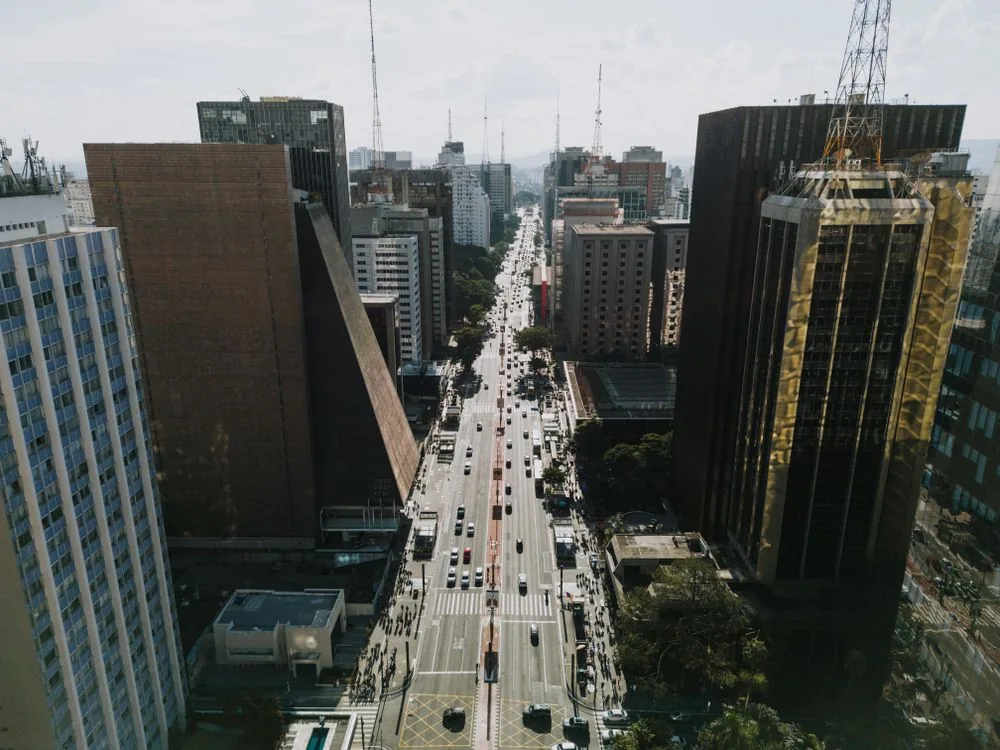
MASP and Avenida Paulista. The Museu de Arte de São Paulo is as famous for Lina Bo Bardi's building — a glass box suspended under two red concrete beams, with the ground beneath left open as a public plaza — as for the collection inside. The avenue it sits on is São Paulo's spine: a kilometre and a half of banks, cultural centres and street performers that closes to cars on Sundays and fills with the entire city.
Ibirapuera Park. Opened in 1954, designed by Oscar Niemeyer with landscaping by Roberto Burle Marx — the same pairing behind much of Brasília. It is not just green space. The park contains the Museum of Modern Art, the Museu Afro Brasil, the Oca pavilion, a planetarium and a Japanese garden. You can spend a full day inside it without leaving.
Pinacoteca do Estado. Founded in 1905, the oldest art museum in the city, holding more than 8,000 works of 19th and 20th-century Brazilian art and drawing around 500,000 visitors a year. It sits beside Luz station in the historic centre, in a converted brick building that is worth seeing on its own terms.
Mercado Municipal. Running since 1933, with roughly 300 stalls. Go hungry. The mortadella sandwich and the pastel de bacalhau are the two things everyone orders, and both are large enough to replace lunch.
Eating. This is the real reason to give São Paulo days rather than hours. The city has the largest Japanese population outside Japan, a deep Italian inheritance in Bixiga, and Northeastern Brazilian cooking brought by internal migration. A food day here beats a museum day almost anywhere else in the country.
Beyond those five: Beco do Batman in Vila Madalena for street art, the Theatro Municipal for the building, the Football Museum inside Pacaembu stadium, and Liberdade for the Japanese-Brazilian district and its Sunday market.
Which Neighborhoods Should You Base Yourself In?
São Paulo is roughly the size of a small country and does not have a single centre. Where you sleep decides how much of your day you spend in traffic.
| District | Best for | Why it works | Tradeoff |
|---|---|---|---|
| Avenida Paulista / Bela Vista | First visits, short stays | Central, walkable to MASP and cultural centres, best Metro access | Busy, noisy, and the highest-theft corridor in the city |
| Jardins | Comfort, food, shopping | Polished streets, strongest hotel stock, quieter at night | Most expensive |
| Pinheiros | Food-led trips, longer stays | The best restaurant density in Brazil, good bar scene | Leads the city in phone-theft reports |
| Vila Madalena | Nightlife, street art | Bars, galleries, Beco do Batman on foot | Less forgiving if you improvise late returns |
| Itaim Bibi | Business trips | Predictable hotels and dining | Furthest from classic sightseeing |
For a first visit, Paulista or Jardins. Both put you inside the Metro network and within a short ride of everything on the list above. Our São Paulo safety guide breaks the districts down further by time of day.
Is São Paulo Nightlife Worth It?
It is the best in Brazil, and it runs later than visitors expect. Bars fill around 22:00 and clubs do not get going until well after midnight — arriving at 21:00 means drinking alone.
Three areas carry it. Vila Madalena is the classic bar crawl: dense, walkable within itself, and the easiest for a first night out. Pinheiros runs slightly older and more food-driven, with bars attached to serious kitchens. Baixo Augusta is the late, loud, mixed option and the most likely to still be moving at 04:00.
Two rules make the difference between a good night and a bad one. Take a ride to and from — the walk between areas is where problems happen, not the venues themselves. And keep the phone in a front pocket rather than a back pocket or a table. The drink-spiking scam known as Boa Noite Cinderela is the one nightlife risk worth genuinely fearing in Brazil, and it works by separating you from your judgement before separating you from your things.
How Many Days Do You Need in São Paulo?
Three. Here is what fits.
Day 1 — Paulista. MASP in the morning, the avenue on foot, Instituto Moreira Salles or Japan House in the afternoon, dinner in Jardins. If it is a Sunday, the avenue is closed to cars and the day gets better.
Day 2 — Ibirapuera and the centre. Park in the morning, including at least one of its museums. Afternoon in the historic centre: Pinacoteca, Theatro Municipal, Luz. Return before dark — the centre empties after business hours and is not where you want to be improvising at night.
Day 3 — Food and neighbourhoods. Mercado Municipal for an early lunch, Liberdade in the afternoon, Vila Madalena or Pinheiros for the evening.
A fourth day buys you the Football Museum, a day trip, or simply a slower version of the above. If your trip continues to Rio, the São Paulo to Rio de Janeiro route covers whether to fly or take the bus. If you are extending into the state, Campinas is the next city most travellers ask about.
How Do You Visit These Attractions Safely?
This is the part other guides leave out, and it is where the two maps collide.
São Paulo state has Brazil's lowest homicide rate — 5.46 per 100,000 in 2025, the lowest since the SSP-SP series began in 2001. Lethal violence is genuinely unlikely to touch a visitor. But the capital recorded 29,169 phone robbery and theft reports in January and February 2025 alone — one every three minutes — and 80% happened on public streets (SSP-SP via Exame, 2025).
Now look at where:
| Rank | Location | Reports (Jan–Feb 2025) | What is there |
|---|---|---|---|
| 1 (address) | Avenida Paulista | 469 | MASP, Instituto Moreira Salles, Japan House |
| 1 (district) | Pinheiros | 1,023 | The restaurant district everyone recommends |
| 2 (district) | Bela Vista | 831 | Paulista's southern edge, Bixiga |
| 3 (district) | Bom Retiro | 705 | Near Luz and the Pinacoteca |
Every place on the must-see list is on the theft list. That is not a coincidence and it is not a warning to stay away — it is a description of how this crime works. Phone theft follows density and disposable income, not danger. The districts with genuinely high violence barely register here, because there are fewer tourists and less worth taking.
So the advice is not "avoid Paulista." It is:
- Do not walk down Avenida Paulista navigating with your phone in your hand. Step into a shop, a café or a museum lobby to check the map.
- Do not pull the phone out at a Metro entrance or bus terminal. Roughly 10% of cases cluster at those transition points.
- Screenshot your route before leaving the hotel. A phone in a pocket is invisible; a phone in a hand is inventory.
- Use a cross-body bag worn in front, not a backpack, in the centre and on Paulista.
- Take a ride after dark, even for short distances. Our guide to Uber safety in Brazil covers pickup habits that matter more than the app you choose.
- Carry one card and some cash, not your whole wallet. Paying in Brazil covers how Pix and cards actually work here.
Do those six things and São Paulo is a straightforward city to visit. Skip them and you join a statistic that fills a police report every three minutes.
São Paulo has the deepest club scene in the country, but the rules for going out are national. Our guide to nightlife in Brazil covers the hours, the comanda system and what to watch for.
Frequently Asked Questions
Is São Paulo worth visiting for tourists?
Yes, for about three days. It has Brazil's strongest museum and restaurant scene, and neighbourhoods that feel lived-in rather than staged. It has no beach and no single postcard icon, so travellers who want landscape over culture should give those days to Rio or the Northeast instead.
What is the number one attraction in São Paulo?
MASP, the São Paulo Museum of Art, on Avenida Paulista. Lina Bo Bardi's suspended glass-and-concrete building is a landmark in its own right, and the plaza left open underneath it functions as the city's main public space.
How many days do you need in São Paulo?
Three. Day one for Avenida Paulista and its museums, day two for Ibirapuera Park and the historic centre, day three for the Mercado Municipal, Liberdade and an evening in Vila Madalena or Pinheiros. A fourth day is comfortable but not necessary.
Is it safe to walk around São Paulo?
By day, in Paulista, Jardins, Pinheiros and Vila Madalena, yes. The risk is property crime rather than violence: the city logged 29,169 phone thefts in two months of 2025, 80% of them on public streets. Keep your phone out of your hand while walking, and take a ride after dark rather than walking between districts.
Is São Paulo better than Rio de Janeiro?
They are different trips rather than competing ones. Rio wins on landscape, beaches and the single-icon experience. São Paulo wins on food, museums and nightlife. Most first-time Brazil itineraries include both, with Rio getting more days.
The Bottom Line
São Paulo is worth three days, and the travellers who enjoy it most are the ones who stop expecting Rio. It is a city of clusters rather than a single centre, best approached by Metro and ride-hailing rather than on foot end to end.
The one thing to internalise before you arrive: the attraction list and the phone-theft list are the same list. That is not a reason to skip Avenida Paulista. It is a reason to walk down it with your phone in your pocket.