Is Natal, Brazil Safe for Tourists? (2026 Guide)

Jump to section
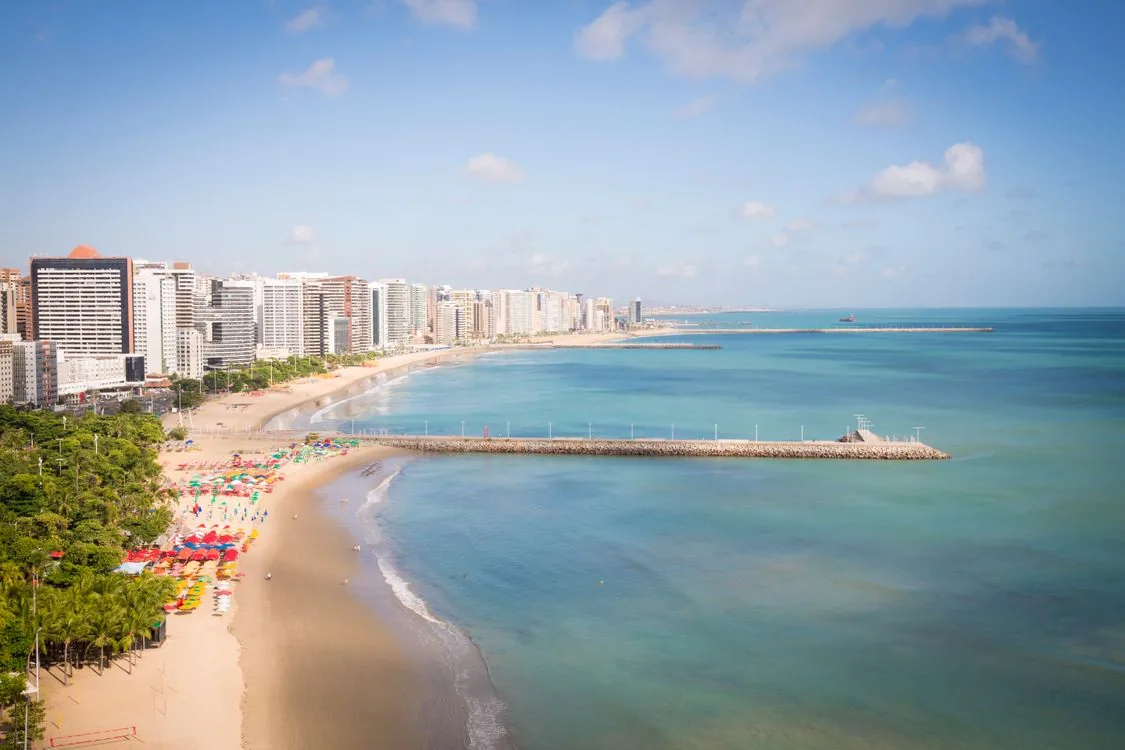
Updated April 2026: this guide uses current U.S. State Department advisory guidance, the latest Fórum Brasileiro de Segurança Pública state-level homicide data, Numbeo safety indices, and verified information about Natal's tourist corridor, airport transfers, and the buggy tours along Rio Grande do Norte's north and south coast.
Is Natal safe? For a beach-focused itinerary in 2026, mostly yes — but the question is narrower than it looks. Natal's tourist geography is the most compact of any Northeast Brazil capital: roughly ten kilometers of Via Costeira hotels, the Ponta Negra strip at its southern end, and a handful of day-trip destinations up and down the coast. If you don't leave that corridor, the city's broader crime picture barely touches your trip. If you drift inland or into the Zona Norte, the picture changes sharply.
Most English-language content about Natal still leans on 2017-era statistics, when Rio Grande do Norte had one of the highest homicide rates in Brazil. That data is real, but it's also eight years stale. The 2024 number is the one that matters for planning a trip right now.
For the country-level picture first, start with our Brazil safety guide. If you're comparing Northeast capitals, the Fortaleza, Brazil safety guide and Recife, Brazil safety guide cover the two closest alternatives with overlapping beach-trip logic.
Key Takeaways
- Natal works best for tourists who stay in Ponta Negra or Via Costeira, use Uber or 99 between zones, and treat anything outside the southern beach corridor as optional — not automatic.
- Brazil holds a U.S. Level 2 Travel Advisory (Exercise Increased Caution), and Rio Grande do Norte's homicide rate dropped to 21.65 per 100,000 in 2024, down from 63.9 in 2017.
- Risks concentrate in the Zona Norte periphery, nightlife-heavy stretches of Ponta Negra after 1 a.m., and the walk between hotels and cash points — not the beach itself.
Is Natal, Brazil Safe for Tourists in 2026?
For beach-focused itineraries, yes — with caveats that matter more than in Rio or Fortaleza. The U.S. Embassy and Consulates in Brazil currently display Travel Advisory Level 2: Exercise Increased Caution for Brazil as a whole, with no elevated state-level warning specific to Rio Grande do Norte (U.S. Embassy and Consulates in Brazil, 2026). The state's homicide rate has trended sharply down: from 63.9 per 100,000 in 2017 to 21.65 per 100,000 in 2024 (List of Brazilian states by murder rate, 2024). That's one of the steepest sustained declines of any Brazilian state.
The city-level number sits higher than the state average, as you'd expect — Natal's municipal homicide rate runs around 36.9 per 100,000, still elevated by international standards but concentrated almost entirely in non-tourist neighborhoods. Numbeo lists the city with a Crime Index of approximately 75.7 and a Safety Index of 24.3 (Numbeo, 2025). That index reflects city-wide resident perception, not tourist-corridor experience; the distinction is the whole story.
Brazil's overall violent-death numbers also fell 5% in 2024 compared with the previous year, according to Agência Brasil reporting on Fórum Brasileiro de Segurança Pública data (Agência Brasil, February 2025). The states with the worst figures are not in the Far Northeast — they cluster in Bahia, Pernambuco, and parts of the Amazon. Rio Grande do Norte's trajectory has been the opposite.
The practical implication: tourists who stay in Ponta Negra or the Via Costeira resort corridor, use app-based transport, and keep evening movements short and intentional tend to find Natal significantly more manageable than a headline-level look at the state's past would predict. The city rewards staying inside the southern beach corridor.
Which Areas of Natal Are Best for Tourists?
The strongest tourist zones in Natal cluster along the southern coast and form what's functionally a single tourist corridor. Ponta Negra sits at the southern end, anchored by the Morro do Careca dune and a long beach strip of hotels, pousadas, and restaurants. Via Costeira runs north from Ponta Negra for roughly ten kilometers, hemmed in by Parque das Dunas on one side and the Atlantic on the other, and holds most of the city's international-brand resorts. The central beaches — Praia dos Artistas, Praia do Meio, Praia do Forte — form the third zone, and they're best treated as daytime-only destinations.
Ponta Negra is the default base for first-time international visitors. Most hotels sit along or just behind the beach avenue, within walking distance of the Morro do Careca viewpoint, the main restaurant strip, and the Vila de Ponta Negra — a slightly elevated neighborhood where nightlife and bars concentrate. The beach itself is broad, the lifeguard presence is consistent, and there's steady foot traffic from morning through mid-evening.
Via Costeira suits travelers who want a resort-style base rather than a walkable strip. The 10-kilometer corridor has no through-streets to residential neighborhoods — Parque das Dunas state park walls off the inland side — which gives it a gated, contained feel. Most resorts here have private beach access, pool complexes, and in-house restaurants. It's a quieter alternative to Ponta Negra, and the geographic separation is genuinely a safety feature: you'd have to make a deliberate effort to leave the corridor.
The central Natal beaches — Praia dos Artistas, Praia do Meio, Praia do Forte — are historically important and still pleasant during the day, with visible police presence and steady activity. After sunset, they empty out and the tone shifts quickly. Visit for lunch, see Forte dos Reis Magos (the city's 16th-century fort), then head back to Ponta Negra or Via Costeira before dark.
Three zones, three uses — pick the one that fits how you want to travel.
If you want the comparison across Northeast capitals for choosing a base, our Fortaleza and Recife guides cover the two closest alternatives — each with a different scale and a different rhythm.
What Should Tourists Avoid in Natal?
The risk patterns that actually affect Natal tourists are narrower than a state-level "Northeast crime" framing would suggest. Three behaviors account for most reported incidents: walking through peripheral Zona Norte neighborhoods that aren't on any tourist itinerary, the late-night walk between Ponta Negra's Vila nightlife strip and the beachfront hotels, and using unfamiliar ATMs on quiet side streets after dark.
Neighborhoods such as Felipe Camarão, Cidade da Esperança, and the outer edges of Mãe Luíza aren't on any standard tourist itinerary, and there's no practical reason to improvise into them. If your hotel, restaurants, day trips, and airport transfers all stay inside the Ponta Negra–Via Costeira corridor, the entire trip can live there.
The Vila de Ponta Negra — the bar and music strip on the upper side of Ponta Negra — is the zone most tourists actually interact with at night. It's fine in groups, fine with an Uber booked from the bar to your hotel, and a bit rougher when you walk it alone after 1 a.m. Common-sense rules do most of the work: keep your phone in your pocket on the walk, don't carry the day's entire cash in one spot, and don't pull an expensive camera out on the dim stretch between the Vila and the beach avenue.
ATM use deserves its own note. Cash withdrawals are routine in Brazil and the bigger bank branches on Avenida Engenheiro Roberto Freire (the main road through Ponta Negra) are fine during daylight. Avoid smaller ATMs tucked into side streets at night — that's where the "express kidnap" risk is higher across Brazil, not just in Natal. Our common scams in Brazil guide covers the pattern in more depth.
Is Transport in Natal Safe for Tourists?
App-based transport is the standard and by far the safest option for visitors. Uber, 99, and InDrive all operate across Natal with strong coverage in the tourist zones, the airport, and the resort corridor. That reduces almost every transport decision to a single question: where's the car?
Governador Aluízio Alves International Airport (NAT) sits in the neighboring municipality of São Gonçalo do Amarante, about 40 kilometers from Ponta Negra and around 35 kilometers from the northern end of Via Costeira. Budget 45 to 60 minutes for the drive depending on time of day. A typical Uber fare from NAT to Ponta Negra runs roughly R$80–110; pre-booked hotel transfers are slightly more expensive but remove the pickup friction entirely.
The airport has a regulated app-pickup area and a 24-hour taxi stand. Use one of those — not the informal transfer touts who sometimes approach arriving international passengers in the terminal. That single habit removes the most common airport-adjacent scam.
Inside the city, Uber and 99 are preferable to flagging taxis at the curb, mostly because app-based pricing removes the negotiation step and the driver identity is traceable. Municipal buses in Natal are extensive but route-oriented toward resident commutes and aren't a typical tourist tool. For day trips to Genipabu (north) or Pipa (south), book through an established operator rather than improvising a rental-car drive on BR-101, especially if it's your first Brazil trip.
For the trip-insurance clauses that matter most on buggy tours and beach excursions, our travel insurance for Brazil guide covers the medical and repatriation coverage most tourists should verify before landing.
What Should Tourists Know About Natal's Beaches and Day Trips?
Natal's beach safety inside the southern corridor is generally strong — Ponta Negra has consistent lifeguard coverage near the Morro do Careca end, and Via Costeira's resort beaches are managed private-access zones. The layer that actually matters is the day-trip planning: the two marquee excursions, Genipabu to the north and Pipa to the south, put you on highways where operator choice is the single most important decision.
Genipabu sits about 25 kilometers north of Natal and is the quintessential Rio Grande do Norte experience — tall white sand dunes, beach-cart buggy rides across the ridgelines, and the "sessions" where drivers offer riders either "com emoção" (with thrill) or "sem emoção" (without). Two practical rules apply. First, always choose a licensed operator from the Natal tour desks rather than a curbside driver. Second, seatbelts are non-negotiable. Buggy accidents on the Genipabu dunes are uncommon but severe when they happen, almost always linked to unbelted riders and off-book drivers. The licensing-and-seatbelt combination handles the real risk.

Pipa — about 85 kilometers south of Natal along BR-101 — is the other universal day trip. It's a small beach town with dramatic cliffs, calmer water than Ponta Negra, a small nightlife strip, and more dolphins than you'd expect. A day-trip transfer costs less than improvising, handles the parking, and gets you home by 7 p.m. Over-nighters are worth it for travelers who want a slower pace for a second stop; book the stay directly rather than showing up and hunting for a pousada.
Maracajaú, the third "must-do," is a reef complex about 55 kilometers north of Natal where catamarans take visitors out to natural pools during the low-tide window. It's well-organized, the operators are the main regional names, and the excursion comes back into the city in the late afternoon.
For the broader seasonal context — when the sea is calmest, when the sun hits its most reliable window, and when prices surge — our best time to travel to Brazil guide covers the October-to-February window that shapes most Northeast beach planning.
What to Do If Something Goes Wrong in Natal
Start inside. If anything happens — theft, a lost passport, a medical situation — move to a safe indoor point first: your hotel, a restaurant, a shopping mall. Praia Shopping in Ponta Negra and Midway Mall in the Tirol neighborhood are both useful landmarks if you need an air-conditioned interior with security and bathrooms. Most hotels in Ponta Negra and Via Costeira have English-capable front-desk staff who will help place the right call.
Emergency contacts for Natal:
- 190 — Polícia Militar (Police)
- 192 — SAMU (Medical emergency)
- 193 — Bombeiros (Fire / rescue)
For non-emergency reporting — a stolen phone or a lost travel document — Rio Grande do Norte offers electronic police reporting through the state's Delegacia Virtual portal. You can file a formal boletim de ocorrência without visiting a physical station. That's the document your travel insurance company will ask for. Ask your hotel to help you navigate the Portuguese-language interface; most have done it before for other guests.
Natal also has a Delegacia de Polícia do Turista (DEPTUR) that serves the Ponta Negra area and specifically handles incidents involving visitors. It's a better first stop than a general police precinct if you're not sure where to start.
Enroll in STEP (Smart Traveler Enrollment Program) before leaving the U.S. at step.state.gov. It's free, takes under 10 minutes, and gives the State Department a way to reach you in a genuine emergency. For Rio Grande do Norte, U.S. consular support is routed through the U.S. Consulate in Recife — there's no consulate in Natal itself. For most tourists, the Brazil Safe Travel app also provides context-aware safety alerts, emergency numbers, and language help for the reporting process — worth having installed before you arrive.
Is Natal Worth Visiting?
Yes — for a beach-focused itinerary, Natal offers one of the most compact, predictable bases in Northeast Brazil. The city bills itself as the Cidade do Sol because it averages close to 300 sunny days per year, and the tourism infrastructure is concentrated enough that most first-time visitors never leave the southern corridor.
Ponta Negra and Morro do Careca are the skyline image most people picture when they think of Natal — a broad beach ending in a dune that climbs 107 meters out of the coastline. The Vila de Ponta Negra gives the tourist strip an evening that doesn't feel artificial. Via Costeira offers the resort-coast alternative. Genipabu's buggy tradition is a near-universal day outing, and Pipa — 85 kilometers south — is worth the drive for one of Brazil's most photographed small beach towns.
Compared with Fortaleza, Natal is smaller, tighter, and easier to base out of; compared with Recife, it leans more strongly toward beach-and-dune than colonial-and-cultural. Travelers doing a multi-city Northeast trip often pair Natal with Pipa as a beach half, then add either Fortaleza (buggies, wind sports) or Recife/Olinda (history, music) as the second half. For the full list of regional options, our Brazil travel destinations guide covers the trade-offs in more depth.
Frequently Asked Questions
Is Natal, Brazil safe for tourists?
Natal is safe for most beach-focused itineraries when travelers stay in Ponta Negra or along the Via Costeira resort corridor and use app-based transport. Brazil holds a U.S. Level 2 Travel Advisory, and Rio Grande do Norte's state homicide rate dropped from 63.9 per 100,000 in 2017 to 21.65 in 2024 (Fórum Brasileiro de Segurança Pública, 2024).
Is Ponta Negra safe at night?
Ponta Negra is fine at night within the main strip — restaurants, hotels, and the beach avenue stay active through the evening. The one stretch worth an Uber rather than a walk is the connector between the Vila de Ponta Negra bar strip and the beachfront after about 1 a.m. Keep phones pocketed, carry only the cash you need, and avoid isolated side streets away from Avenida Engenheiro Roberto Freire.
What areas should tourists avoid in Natal?
Peripheral Zona Norte neighborhoods — Felipe Camarão, Cidade da Esperança, outer parts of Mãe Luíza — aren't on any tourist itinerary, and there's no reason to improvise into them. The practical rule is simpler: stay inside the Ponta Negra–Via Costeira corridor, use Uber or 99 for any movement, and treat the central beaches (Praia dos Artistas, Praia do Forte) as daytime only.
Is it safe to do a dune buggy tour from Natal?
Dune buggy tours from Natal — most commonly to Genipabu, about 25 kilometers north — are generally safe when booked through licensed operators with the state tourism board. The two non-negotiable rules: choose a licensed operator from your hotel or a tour desk rather than a curbside driver, and insist on seatbelts for every rider. Unbelted riders with unlicensed operators account for almost all reported incidents.
What is the safest way to get from Natal airport to Ponta Negra?
Use Uber, 99, or InDrive from the designated app-pickup area at Governador Aluízio Alves International Airport (NAT). The typical fare runs R$80–110 to Ponta Negra, and the drive takes 45 to 60 minutes depending on traffic. Pre-booked hotel transfers are a solid alternative. Skip the informal transfer touts inside the terminal — the regulated pickup areas are clearly marked.
The Bottom Line on Natal Safety
Natal rewards travelers who think of it as a beach corridor rather than a city. Book a hotel in Ponta Negra or on Via Costeira, use Uber for every movement between zones, arrange day trips through established operators, and the whole itinerary lives inside roughly ten kilometers of coastline. That pattern handles almost everything a first-time visitor needs.
The state's homicide trend is the most important piece of framing: Rio Grande do Norte has been on a multi-year decline, not a plateau, and the 2024 figure is meaningfully different from the 2017 peak that most older safety content still quotes. Stay current on the data, plan around the southern corridor, and Natal works.
For the American-traveler frame specifically, is Brazil safe for Americans covers consular support and the State Department advisory framework in more depth. For the practical habits that travel with you across every Brazilian destination, Brazil safety tips covers the pattern recognition that keeps the whole country — not just Natal — manageable.