Is Manaus, Brazil Safe for Tourists? (2026 Guide)

Jump to section
Updated September 2026: this guide uses current U.S. State Department advisory guidance, CDC traveler-health recommendations for Amazonas state, and updated information on Manaus tourist infrastructure, including transport pricing and the city's evolving public-security picture.
Is Manaus safe? For most Amazon-focused itineraries, yes — but the question is slightly different here than for any other major Brazilian city. Manaus sits in the middle of the rainforest. The trip you're planning probably isn't really about the city itself; it's about the Rio Negro, the Encontro das Águas, Anavilhanas archipelago, or a jungle lodge somewhere downriver. That changes what "safety" even means. You still need to manage urban risk in the hotel zone, but the bigger calls are about health prep, structured transfers, and choosing a base that matches your itinerary.
Manaus is the capital of Amazonas state in Brazil's North region, about 1,500 kilometers from Belém by air and more than 2,700 kilometers from Rio de Janeiro. That distance matters for planning. The city's tourist logic is vertical — arrive, stage out of Ponta Negra or the Teatro Amazonas area, then depart by boat or small plane to wherever the actual Amazon experience is. Treating Manaus as a walking-heavy city break is the single most common planning mistake.
For the country-level picture first, start with our full Brazil safety guide. If you're comparing Amazon gateways, the Belém, Brazil safety guide covers the eastern option — a very different city with overlapping health prep.
Key Takeaways
- Manaus works well for tourists who build the trip around Ponta Negra, the Teatro Amazonas historic core, and structured Amazon cruises or jungle lodges — rather than improvised city exploration.
- Brazil holds a U.S. Level 2 Travel Advisory (Exercise Increased Caution), and CDC recommends Yellow Fever vaccine and malaria awareness for most Amazonas visitors.
- Risks concentrate in peripheral neighborhoods, after-dark walking outside the tourist core, and crowded Centro market areas — app-based transport and indoor-to-indoor movement solve most of them.
Is Manaus, Brazil Safe for Tourists in 2026?
For most Amazon-focused itineraries, yes — but Manaus demands more health preparation and more structured transport than any coastal Brazilian city. The U.S. Embassy and Consulates in Brazil currently display Travel Advisory Level 2: Exercise Increased Caution for Brazil as a whole, with no elevated state-level warning specific to Amazonas (U.S. Embassy and Consulates in Brazil, 2026). On the health side, CDC's Brazil traveler page and Yellow Book recommend Yellow Fever vaccine for most travelers aged 9 months and older going to Amazonas state, and recommend malaria chemoprophylaxis for all areas of Amazonas state, Manaus included (CDC Travelers' Health: Brazil, 2026).
The local picture has also shifted. The most recent national data is unambiguous: the Atlas da Violência 2026 (Ipea/FBSP) records Manaus's homicide rate falling 21.8% between 2023 and 2024, one of the steepest drops of any Brazilian capital (O Tempo, Atlas da Violência 2026, 2026). The rate is still above the capital average of 26.6 per 100,000, but the trend and institutional capacity are moving in the right direction.
The practical implication: tourists who stay in Ponta Negra or a well-chosen hotel near the Teatro Amazonas, use Uber or 99 for any movement between zones, and organize lodge transfers through the operator tend to find Manaus considerably more manageable than its reputation predicts. The city rewards structure and penalizes improvisation — more than most Brazilian destinations.
Which Areas of Manaus Are Best for Tourists?
The strongest tourist zones in Manaus are not the same ones you'd pick in Rio or Salvador. Coastal cities have an orla — a beach promenade that naturally anchors the visitor experience. Manaus instead has a riverfront resort zone (Ponta Negra), an upscale residential and commercial district (Adrianópolis), and a compact historic core around the Teatro Amazonas. Most international tourists stage their trip out of one of these three.
Ponta Negra is the default base for first-time Amazon visitors. It sits on the Rio Negro about 13 kilometers from the old center and concentrates most of the internationally branded hotels, a long riverside boardwalk, and evening restaurants. Its geographic separation from the dense urban core is actually a safety feature: the night rhythm here is more resort-like than city-like, and most incidents reported by tourists in Manaus don't happen in this zone.
Adrianópolis is the practical alternative: an upscale residential and commercial district with the city's best mall (Amazonas Shopping), a cluster of hotels, and good restaurants. It works well for travelers who want to be closer to the airport and historic center without the resort-zone tempo of Ponta Negra.
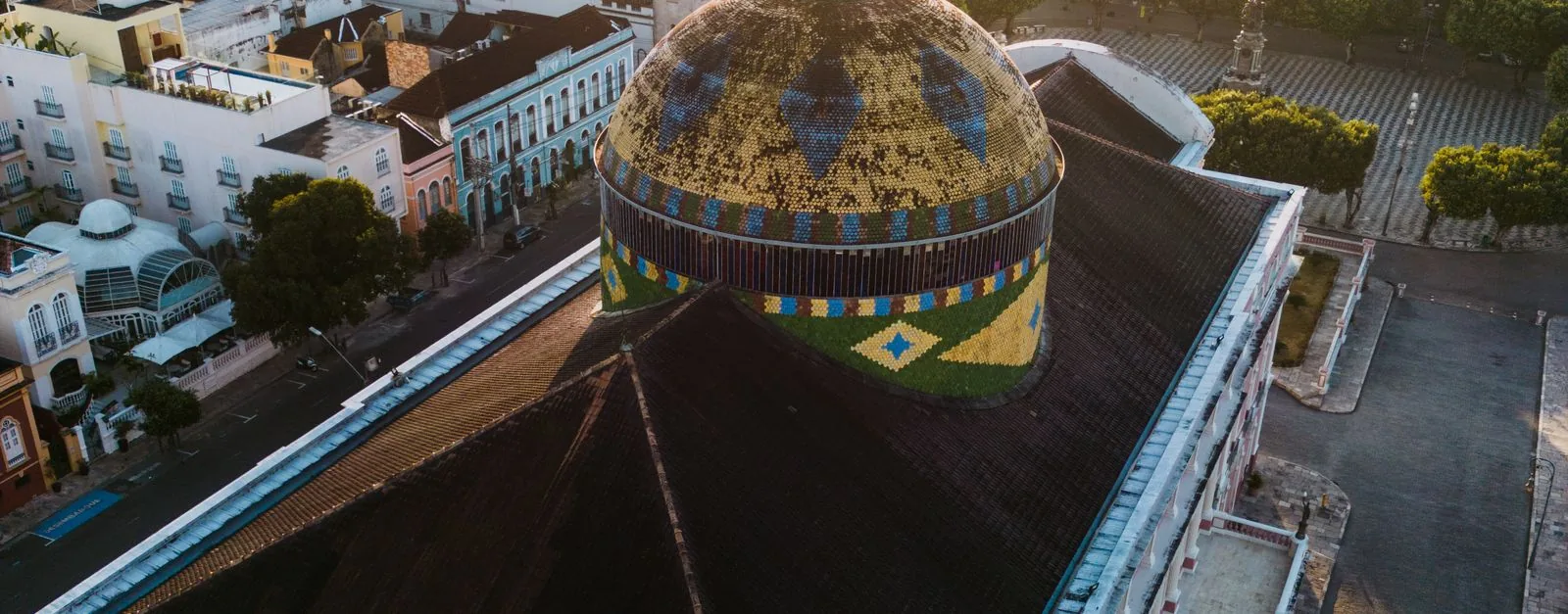
The Teatro Amazonas / Largo São Sebastião core — the restored pink opera house and the surrounding square — is essentially a daytime destination for most visitors. The cobbled plaza and nearby cafés are active from mid-morning through early evening. You visit, eat, photograph the building, then move on. It isn't where most tourists sleep.
The three main zones each serve a different kind of trip — pick the one that fits your itinerary.
If you're weighing the two Amazon gateways, the eastern option is a completely different city with overlapping health prep and a more walkable colonial core.
What Should Tourists Avoid in Manaus?
The risks that actually affect tourists in Manaus are narrower than a generic "Amazon capital" framing suggests. Three patterns cover most reported incidents: visible phones and jewelry in the crowded Centro market areas, solo walking at night outside the immediate tourist core, and improvised curbside transport instead of app-based rides.
Peripheral neighborhoods like Alvorada, Compensa, São José, and São Jorge aren't on any standard tourist itinerary, and there's no reason to improvise into them. That's not a neighborhood-shaming list — it's practical advice. If your hotel, restaurant, or tour operator is in one of the main tourist zones, your full trip can stay inside that footprint.
The Centro market area is worth visiting, especially around Mercado Adolpho Lisboa, but treat it the way you'd treat any dense Latin American market: keep phones in pockets rather than in hands, wear shoulder bags across the body, and take photos from fixed positions with your back to a structure before pocketing the camera. Early to mid-morning is the calmest window. Don't linger into the late afternoon.
Night-time walking between Centro and the port area, or from Centro toward hotels in Adrianópolis, is where most of the trouble for tourists actually begins. That's the case for calling an Uber from inside a restaurant or bar, not flagging anything at the curb. The specific habit — stay inside until the car is two minutes away — removes the most common night-time risk pattern not just in Manaus but in almost every Brazilian city. Our common scams in Brazil guide covers the rest of the pattern recognition.
Is Transport in Manaus Safe for Tourists?
App-based transport is the standard and by far the safest option for visitors. Uber, 99, and InDrive all operate in Manaus with broad coverage across the tourist zones, airport, and hotel districts. Uber's own average for a UberX from Eduardo Gomes International Airport (MAO) into the city is around R$32–33, and the app directs you to the airport's designated pickup point after you request (Uber MAO airport page, 2026). That's the cleanest way to start any Manaus trip.
Eduardo Gomes (MAO) is about 14 kilometers from Ponta Negra and 13 kilometers from the city center. Budget 25 to 40 minutes depending on time of day. The airport runs 24 hours and has pre-booking kiosks for regulated taxis alongside the app pickup area. Avoid the informal transfer touts that approach arriving international passengers before the official taxi or app area.
City taxis work fine for short daytime trips but introduce more friction at night. App-based rides are cheaper on average and remove the price-negotiation step. Public buses in Manaus are extensive but aren't a typical tourist choice — routes are oriented toward resident commutes, and conditions vary widely.
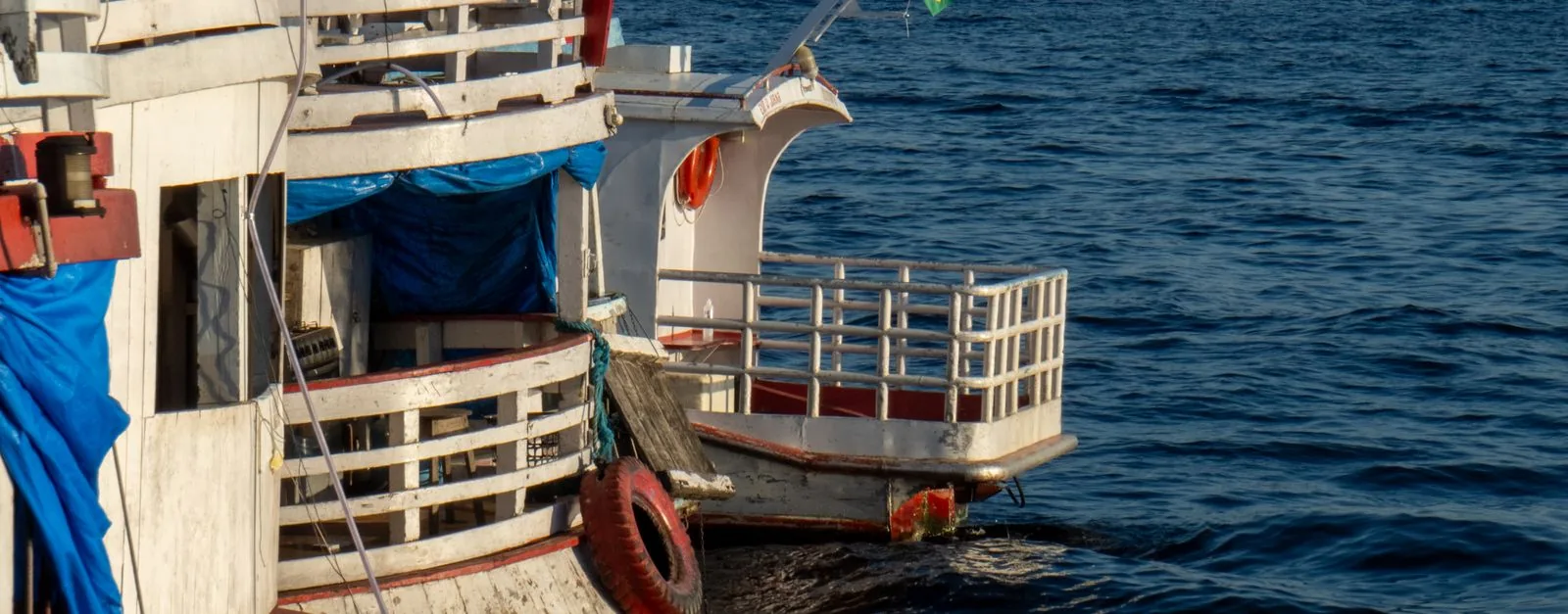
Boat transfers to Amazon lodges, cruises, and river destinations should always be arranged through the lodge or tour operator, never improvised at a dock. Operators handle the specific marina (Ponta Negra, Marina do Davi, or the Manaus Moderna docks depending on destination), vessel licensing, safety equipment, and return timing. Showing up at a waterfront and negotiating your own trip to a lodge is the single most avoidable risk in any Manaus itinerary.
Our travel insurance for Brazil guide covers the medical-evacuation clauses that matter most for jungle and river trips — coverage choices that apply here more than for any other Brazilian destination.
What Health Precautions Do Tourists Need for Manaus?
Manaus requires the most Amazon-specific health preparation of any major Brazilian tourist city. CDC recommends Yellow Fever vaccine for all travelers aged 9 months and older going to Amazonas state, and lists chikungunya, dengue, malaria, yellow fever, and Zika as mosquito-borne risks endemic throughout the Brazilian Amazon basin (CDC Travelers' Health: Brazil, 2024-2026). That is a stricter bar than for Rio, São Paulo, Fortaleza, or Salvador, where Yellow Fever is usually not recommended for city-only visits.
Yellow Fever vaccine should be given at least 10 days before arrival. A single dose provides long-term protection, and some onward destinations after Brazil (certain Caribbean and African countries) require a valid certificate if you've been to a yellow fever risk area. Schedule a travel medicine consultation 4–6 weeks before departure if possible.
Malaria is the next layer. CDC recommends malaria chemoprophylaxis for all areas of Amazonas state — Manaus city included, not only lodges and river excursions — and lists atovaquone-proguanil, doxycycline, mefloquine and tafenoquine as the options (CDC Travelers' Health: Brazil, 2026). Options include atovaquone-proguanil, doxycycline, and tafenoquine — your travel medicine provider will match the drug to your itinerary and medical history.
Amazonas state is the strictest health-prep signal in Brazilian travel — two layers that coastal cities don't require.
Beyond Yellow Fever and malaria, a few baseline habits matter. Use DEET or picaridin repellent, especially at dawn and dusk. Stay in screened or air-conditioned rooms when possible. Don't drink tap water in Manaus — bottled water is cheap and available everywhere. Hepatitis A and Typhoid are recommended as routine Brazil travel vaccines, and they matter more here than on a coastal itinerary because of varied food and water exposure during river trips.
What to Do If Something Goes Wrong in Manaus
Start inside. If anything goes wrong — theft, lost document, a medical issue — move to a safe indoor location first: your hotel, a restaurant, a shopping mall. Trying to sort out a problem on a street corner, especially at night, adds friction and risk. Most hotels in Ponta Negra and Adrianópolis have English-capable front-desk staff who can help you place the right call.
Emergency contacts for Manaus:
- 190 — Polícia Militar (Police)
- 192 — SAMU (Medical emergency)
- 193 — Bombeiros (Fire / rescue)
For non-emergency reporting (phone theft, lost passport), Amazonas state offers electronic police reporting through the state public security portal, which lets you file a formal boletim de ocorrência without visiting a physical station — the document your travel insurance company will ask for. Ask your hotel to help you navigate the Portuguese-language interface.
Enroll in STEP (Smart Traveler Enrollment Program) before leaving the U.S. at step.state.gov. It's free, takes under 10 minutes, and ensures you receive security alerts and that the U.S. Embassy can reach you in a serious emergency. For Manaus specifically, STEP matters more than in Rio or São Paulo because the U.S. presence in Manaus is a Consular Agency, not a full consulate: it is open 9 a.m. to noon on weekdays ((92) 3611-3333), and outside those hours emergencies go to the U.S. Embassy in Brasília on (61) 3312-7400 (U.S. Embassy and Consulates in Brazil, contact page, 2026). Knowing that chain before you arrive beats figuring it out on the ground.
The Polícia Turística (tourist police) maintains a presence in the Teatro Amazonas and Ponta Negra areas and speaks some English during peak tourism periods. For most tourists, the Brazil Safe Travel app also provides context-aware safety alerts and quick access to the correct emergency numbers, language help, and nearest reporting options — worth having installed before you land.
Is Manaus Worth Visiting for the Amazon Experience?
Yes — for the right traveler, Manaus is the single best gateway in Brazil for what most people actually want from an Amazon trip. The city itself is a launching pad, and the experiences it connects to are ones you can't get anywhere else in the country.
The Encontro das Águas, where the black-water Rio Negro meets the sandy-brown Solimões, runs for several kilometers without mixing because the two rivers have different temperatures, densities, and speeds. It's a 30–45 minute boat ride from the city's main docks and a near-universal first-day outing for visitors staging out of Ponta Negra.
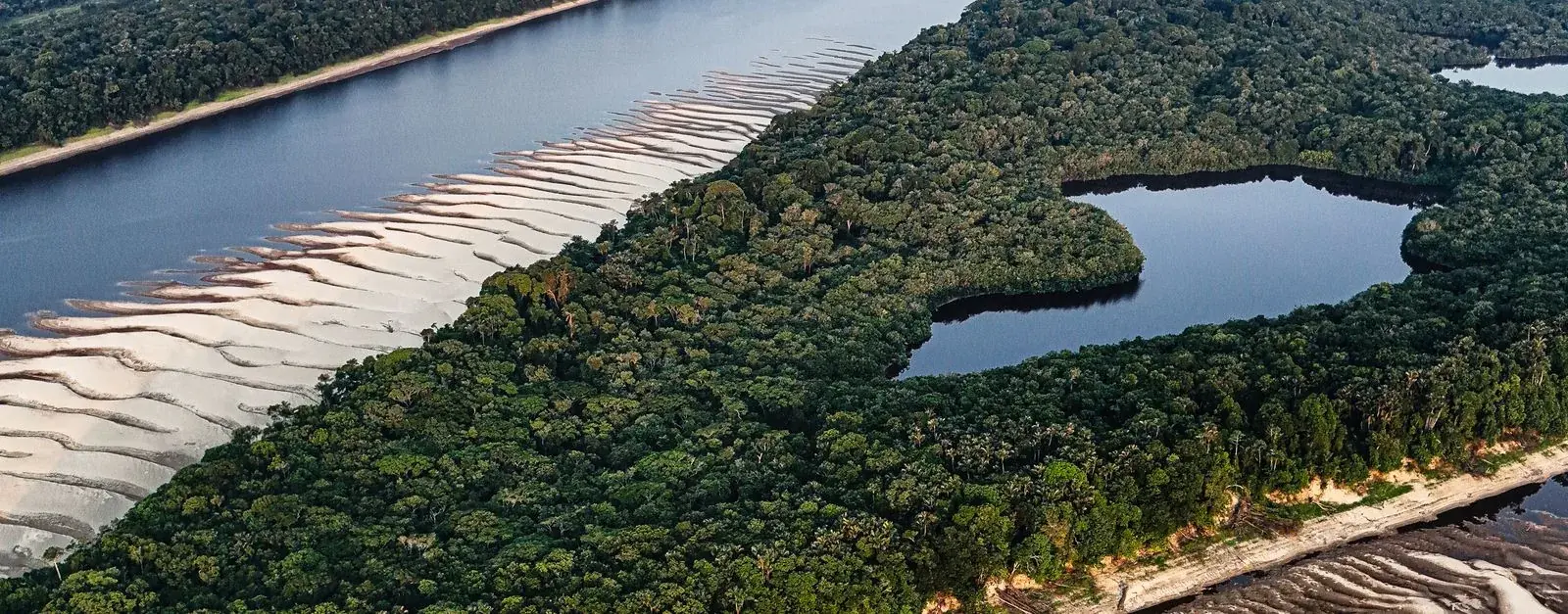
Anavilhanas National Park, the second-largest river archipelago in the world, is a 3–4 hour drive northwest from Manaus and the base for some of the best jungle lodge stays in the Amazon. Operators run 3–5 day packages that include transfer, guided hikes, night canoe outings, and wildlife spotting. This is where most serious Amazon visitors actually spend their time.
The Teatro Amazonas, the 19th-century opera house built at the height of the rubber boom, anchors the city's cultural identity. Tours run throughout the day and the square out front (Largo São Sebastião) is one of the more pleasant daytime public spaces in any Amazon capital.
Compared to Belém — the other Amazon gateway — Manaus' draw is overwhelmingly nature-first: cruises, lodges, and river tours. Belém's draw is culture-first: Ver-o-Peso market, colonial Cidade Velha, and Ilha do Marajó. Travelers who want both often pair them; travelers choosing one usually pick Manaus for rainforest immersion and Belém for Amazonian food and colonial history. Our Brazil travel destinations guide lays out how to build an itinerary with more than one region, and best time to travel to Brazil covers the dry-season and flood-season calendar that shapes every Amazon trip.
Frequently Asked Questions
Is Manaus, Brazil safe for tourists?
Manaus is safe for most Amazon-focused tourist itineraries when travelers stay within the Ponta Negra, Adrianópolis, or Teatro Amazonas tourist zones, use app-based transport, and book lodge and river transfers through recognized operators. Brazil holds a U.S. Level 2 Travel Advisory (Exercise Increased Caution) (U.S. Embassy and Consulates in Brazil, 2026), and the city's homicide rate fell 21.8% between 2023 and 2024 (Atlas da Violência 2026).
Do tourists need a Yellow Fever vaccine for Manaus?
Yes, in most cases. CDC recommends Yellow Fever vaccination for all travelers aged 9 months and older going to Amazonas state, which includes Manaus, because the state is within the Amazonian yellow fever transmission zone (CDC Travelers' Health: Brazil, 2026). The vaccine should be given at least 10 days before arrival. Book a travel medicine consultation 4–6 weeks before your trip.
What areas should tourists avoid in Manaus?
Tourists rarely need to visit peripheral neighborhoods like Alvorada, Compensa, São José, or São Jorge — none of them are on standard itineraries. The practical advice is simpler: stay in Ponta Negra, Adrianópolis, or near the Teatro Amazonas, use Uber or 99 for any city movement, and keep phones pocketed while walking through the Centro market areas. Night walking outside the main tourist zones is the single risk to remove.
Is it safe to do an Amazon jungle tour from Manaus?
Yes, jungle and river tours from Manaus are generally safe when booked through established operators. Lodges and cruise companies handle the entire transfer chain — marina, vessel, guide, return — which removes most of the practical risk. CDC recommends discussing malaria chemoprophylaxis with a travel medicine provider before any rural or forested excursion in Amazonas (CDC Travelers' Health: Brazil, 2024-2026).
What is the safest way to get from Manaus airport to a hotel?
Use Uber, 99, or InDrive from the designated app-pickup point at Eduardo Gomes International Airport (MAO) — the app shows you where. Average fares run about R$33 to the city and the ride takes 25–40 minutes. Pre-booked hotel transfers are another solid option. Avoid informal transfer touts in the arrivals hall.
The Bottom Line on Manaus Safety
Manaus rewards structure. Book a Ponta Negra or Adrianópolis hotel, do your Yellow Fever and malaria prep four to six weeks before departure, use Uber for every city movement, and arrange lodge or cruise transfers through the operator. That pattern alone handles 90% of what would otherwise feel overwhelming about visiting a capital city in the middle of the Amazon.
The city is not the destination; the region is. Manaus is the practical port of entry for Rio Negro cruises, Anavilhanas lodges, Encontro das Águas outings, and the broader Amazon basin experience that no other Brazilian city can match. Treating it as a 1–2 night gateway rather than a city break makes the entire trip feel predictable.
For the American-traveler frame specifically, is Brazil safe for Americans covers consular support, documentation, and the State Department advisory framework in more depth.
If you want practical habits that travel with you across every Brazilian destination, Brazil safety tips covers the pattern recognition that keeps the whole country — not just Manaus — manageable.