Rio de Janeiro Travel Guide: Location, Costs & Essentials

Jump to section

Updated April 2026. This guide covers every essential fact American tourists need before landing in Rio — time zone, weather, currency, language, costs, and more.
Rio de Janeiro is home to 6.78 million people (IBGE, 2023), yet first-time visitors often land without knowing which time zone they're entering, what the weather will be like, or how far their dollar will go. This guide answers all of those questions in one place — and links out to our deeper dives on safety, beaches, nightlife, and hotels.
If safety is your first concern before planning a trip, start with our complete Is Rio de Janeiro safe for tourists? guide. If you're still deciding which Brazilian cities to visit, our Brazil travel destinations guide gives you the full country overview.
Key Takeaways
- Rio de Janeiro is in southeastern Brazil, 360 km (224 mi) from São Paulo, in the GMT-3 time zone year-round (Brazil abolished Daylight Saving Time in 2019)
- The currency is the Brazilian Real (R$); budget travelers spend ~R$200/day; mid-range
R$400/day ($70 USD at current rates)- Best months to visit: April–June and August–September — pleasant weather, fewer crowds, and lower prices than the January–February peak season
Where Is Rio de Janeiro Located in Brazil?
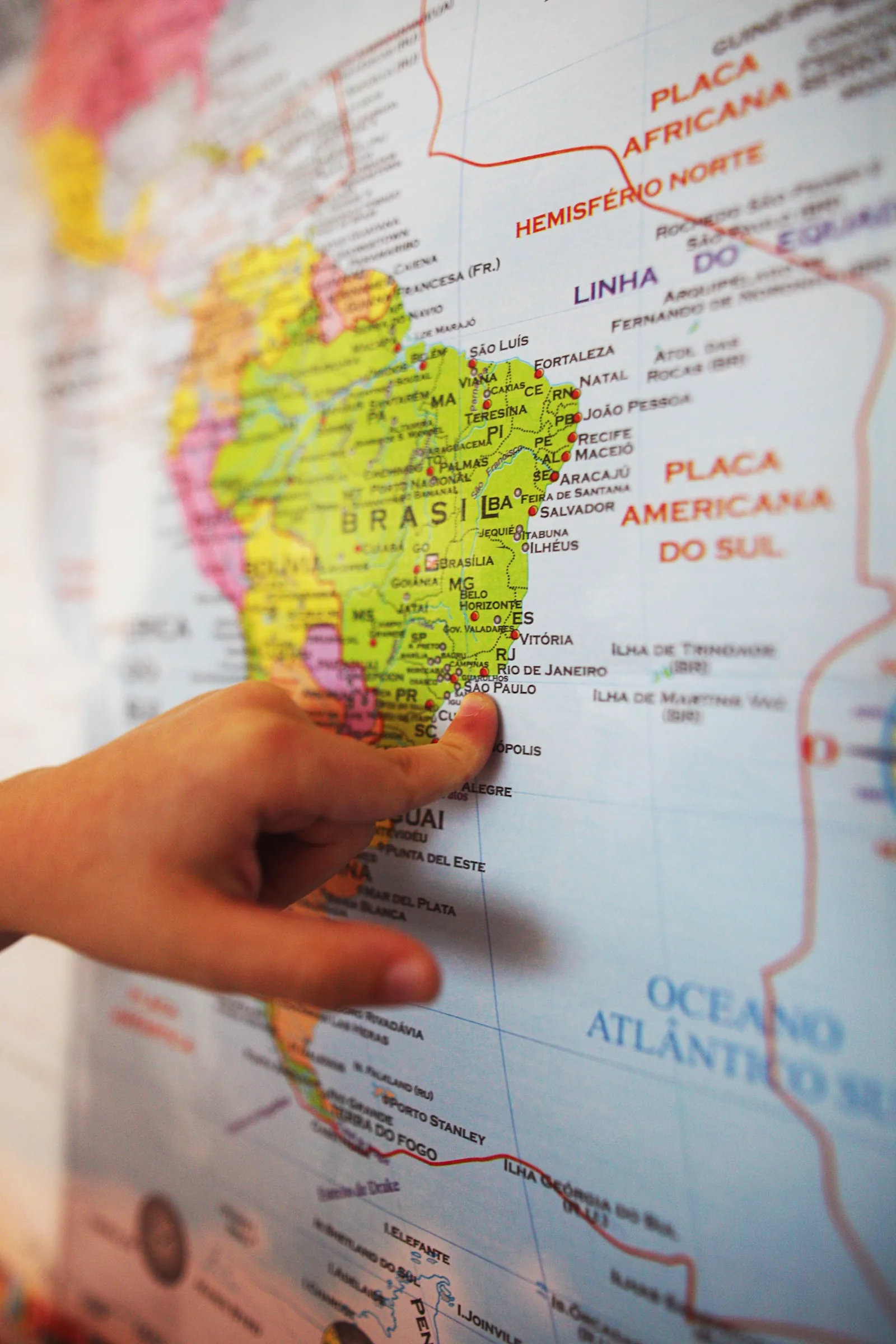
Rio de Janeiro sits on Brazil's southeastern Atlantic coast, within the state of the same name, at roughly 22°54′S 43°11′W (IBGE, 2023). The city wraps around the western shore of Guanabara Bay — one of the largest bays in the world by water volume — and is flanked by granite mountain peaks, including the 396-meter Sugarloaf and the 710-meter Corcovado, where Christ the Redeemer stands.
In practical travel terms:
- From São Paulo: 360 km (224 mi) south; a 1-hour domestic flight or 5–6 hours by bus
- From Brasília: 1,150 km (715 mi); roughly 2 hours by air
- From Buenos Aires, Argentina: 1,980 km (1,230 mi); 3 hours by air
- From Miami, USA: approximately 7,600 km (4,700 mi); 9–10 hours non-stop
The city divides into two broad tourism zones. Zona Sul (South Zone) — including Ipanema, Leblon, Copacabana, and Flamengo — is where most international visitors stay. Zona Norte (North Zone) is more residential and industrial, home to the Maracanã stadium and the main samba schools.
For a full breakdown of Brazil's best places to visit beyond Rio, check our guide to Brazil's top destinations when you're ready to plan a wider itinerary.
What Time Is It in Rio de Janeiro Right Now?
Rio de Janeiro operates on Brasília Time (BRT), which is UTC-3 — three hours behind Greenwich Mean Time (Time and Date, 2025). Brazil's federal government eliminated Daylight Saving Time permanently in 2019, meaning Rio's clock never changes. Whatever offset applies when you book your flight applies when you land.
Here's how Rio time compares to major US and international cities:
| City | Offset from Rio | Notes |
|---|---|---|
| New York / Miami (EST) | Rio is 2 hrs ahead | (UTC-5 vs UTC-3) |
| New York / Miami (EDT, summer) | Rio is 1 hr ahead | (UTC-4 vs UTC-3) |
| Los Angeles (PST) | Rio is 5 hrs ahead | (UTC-8 vs UTC-3) |
| Los Angeles (PDT, summer) | Rio is 4 hrs ahead | (UTC-7 vs UTC-3) |
| London (GMT) | Rio is 3 hrs behind | (UTC+0 vs UTC-3) |
| London (BST, summer) | Rio is 4 hrs behind | (UTC+1 vs UTC-3) |
| Sydney (AEDT) | Rio is 14 hrs behind | (UTC+11 vs UTC-3) |
Practical tip for travelers: The fact that Rio doesn't change its clocks while the US does means the gap between Rio and New York is either 2 or 3 hours depending on the time of year — always double-check your flight connection math around US DST transitions in March and November.
What Is the Weather Like in Rio de Janeiro?
Rio de Janeiro has a tropical climate with a hot, wet summer and a dry, mild winter — average temperatures range from 18°C (64°F) at cool winter nights to 38°C (100°F) on summer afternoons (Instituto Nacional de Meteorologia, INMET, 2024). Humidity stays high year-round, which makes the heat feel more intense than the thermometer alone suggests.
Season-by-Season Breakdown
Summer (December–March): This is peak tourist season — Carnival falls in February or early March, and New Year's Eve on Copacabana draws over 3 million people. Average highs sit around 32–35°C (90–95°F) with heavy afternoon rain showers most days. It's the busiest and most expensive time to visit.
Autumn (April–June): Temperatures ease to 24–28°C (75–82°F) and rain drops significantly. Fewer crowds, lower hotel prices, and pleasant evenings make this arguably the best time to visit Rio for most travelers.
Winter (July–September): July is cool and dry — the most-searched month for Rio weather. Expect highs of 24–26°C (75–79°F) and lows around 17–18°C (63–65°F). Rain is rare. This is peak domestic tourism season since Brazilians vacation in July (school holidays), so book accommodations in advance.
Spring (October–November): Warming back up toward summer levels; rain increases in November. A decent shoulder period with moderate prices.
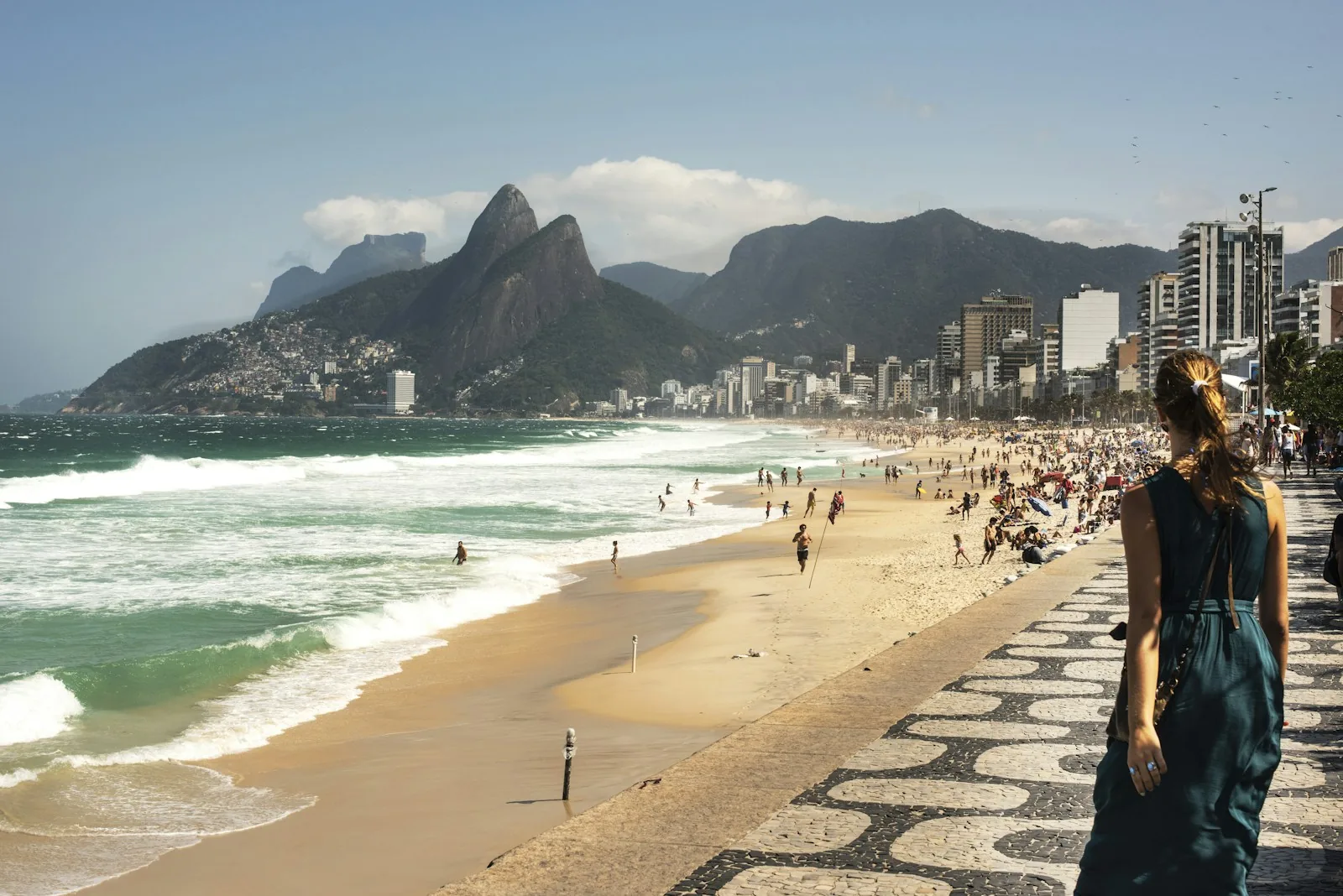
For planning purposes, April through June and August through September hit the sweet spot: warm enough to enjoy beaches, dry enough for outdoor sightseeing, and uncrowded enough to get a hotel room without six months' notice. Our best time to visit Brazil guide covers seasonal timing across the whole country.
What Currency Does Rio de Janeiro Use?
Rio de Janeiro uses the Brazilian Real (BRL, symbol R$) — the country's sole national currency since 1994 (Banco Central do Brasil, 2025). As of early 2026, the exchange rate is approximately R$5.60–5.80 per US dollar, though this fluctuates with Brazil's monetary policy and global currency markets.
Where to Exchange Money
Best option: Use an international ATM at a major bank (Bradesco, Banco do Brasil, Itaú) after you arrive. Your home bank's debit card will typically give you a rate close to the interbank rate, minus a small fixed fee.
Avoid: Airport exchange booths typically offer rates 10–15% worse than ATMs. The same applies to hotel concierge desks. Currency exchange apps like Wise can be useful for larger transfers before you travel.
Tipping culture: Tipping is not legally required in Brazil — a 10% service charge is often added to restaurant bills automatically (look for "serviço" on the receipt). If it's not included, 10% is the norm. Taxi drivers don't expect tips; hotel bellhops typically receive R$5–10 per bag.
Cards: Visa and Mastercard are widely accepted in Zona Sul tourist areas. American Express is less commonly accepted. Carry some cash in R$20 and R$50 notes for small restaurants, beach vendors, and taxis that don't accept cards.
What Language Is Spoken in Rio de Janeiro?
Brazilian Portuguese is Rio's official and only widely spoken language (IBGE Census, 2022). Unlike the Portuguese spoken in Lisbon, Brazilian Portuguese has a distinct accent, vocabulary, and rhythm — and Rio's carioca dialect is considered one of the most distinctive in the country, characterized by its softer "s" sounds and open vowels.
English in Rio
English proficiency is concentrated in the tourism industry. Hotel front desks, airline counters, and upscale restaurants in Ipanema and Leblon typically have at least one English-speaking staff member. Away from Zona Sul tourist corridors — in Lapa, Santa Teresa, or most of Zona Norte — English speakers are harder to find.
A few phrases worth knowing:
| English | Portuguese | Pronunciation tip |
|---|---|---|
| Where is...? | Onde fica...? | "ON-jeh FEE-ka" |
| How much? | Quanto custa? | "KWAN-too KOOS-ta" |
| I'd like... | Eu quero... | "Eh-oo KEH-roo" |
| Thank you | Obrigado (m) / Obrigada (f) | "oh-bree-GAH-doo" |
| Do you speak English? | Você fala inglês? | "voh-SAY FAH-la een-GLESH" |
Translation apps (Google Translate's camera mode works well for menus) handle the gap comfortably for most tourist interactions.
How Much Does a Trip to Rio Cost?
A solo mid-range trip to Rio costs approximately R$350–500/day (about $62–90 USD at current rates), covering a 3-star hotel in Copacabana, two sit-down meals, public transit, and one paid attraction (Numbeo Cost of Living Database, 2025). Rio is generally cheaper than Miami or New York but more expensive than most Southeast Asian destinations.
Daily Budget Tiers
| Traveler Type | Daily Budget (BRL) | Daily Budget (USD ~) | What You Get |
|---|---|---|---|
| Budget | R$150–220 | $27–40 | Hostel dorm, street food, public metro/bus |
| Mid-Range | R$350–500 | $62–90 | 3-star hotel Copacabana, restaurant meals, Uber |
| Comfort | R$700–1,000 | $125–180 | 4-star hotel Ipanema, all meals at restaurants |
| Luxury | R$1,500+ | $265+ | 5-star hotel Leblon, private tours, fine dining |
Biggest Cost Drivers
Accommodation is the largest variable. Ipanema and Leblon are consistently the priciest neighborhoods; Copacabana offers mid-range options at 20–30% lower rates. Book well ahead for Carnival — prices for the week leading up to Fat Tuesday can be 3–5x normal rates.
Food is flexible. Rio's street food scene is excellent and cheap: a pão de queijo (cheese bread) costs R$2–4, a full prato feito lunch at a neighborhood restaurant runs R$25–40, and a beachside caipirinha is R$20–35. Fine dining in Leblon can run R$200–400 per person.
Transport is affordable. The metro covers Zona Sul and Centro efficiently at R$6.70/ride. Uber is widely available and typically R$20–50 for Zona Sul trips. Avoid metered taxis at night — they often don't use the meter.
For more on what to see and do with your budget, read our Rio de Janeiro beaches and attractions guide and Rio nightlife and restaurants guide.
A Brief History of Rio de Janeiro
Rio de Janeiro was founded on March 1, 1565, by Portuguese explorer Estácio de Sá — making it over 460 years old in 2026 (Arquivo da Cidade do Rio de Janeiro, 2025). The city's name, meaning "January River," reflects a navigational mistake: the Portuguese who arrived on January 1, 1502 mistook Guanabara Bay for a river mouth.
Key Historical Moments
1763 — Capital of Portuguese Brazil: Rio replaced Salvador (Bahia) as the colonial capital and became the administrative, commercial, and cultural center of Portuguese South America.
1808 — Portuguese Royal Court arrives: When Napoleon invaded Portugal, King João VI and the entire royal court fled to Rio — making it the only city outside Europe to serve as the seat of a European monarchy. The court's arrival triggered an explosion of urban development: banks, libraries, botanical gardens, and printing presses were all established in Rio during this period.
1822 — Brazilian Independence: Dom Pedro I declared independence from Portugal on September 7, 1822. Rio remained the capital of the new Empire of Brazil.
1889–1960 — Capital of the Republic: Rio was the capital of Brazil for nearly 200 years total, shaping the country's politics, culture, and economy. The Maracanã stadium opened in 1950 for the FIFA World Cup. Bossa nova was born in the late 1950s in Ipanema apartment buildings.
1960 — Brasília replaces Rio as capital: President Juscelino Kubitschek moved the federal government to the newly built Brasília, stripping Rio of its political role but not its cultural dominance.
2016 — Olympic Games: Rio hosted the Summer Olympics and Paralympic Games, becoming the first South American city to do so, drawing athletes and visitors from 207 countries.
Frequently Asked Questions
What time zone is Rio de Janeiro in?
Rio de Janeiro is in the Brasília Time (BRT) zone, UTC-3, year-round. Brazil permanently abolished Daylight Saving Time in April 2019, so Rio never changes its clocks. For US travelers: Rio is 2–3 hours ahead of the US East Coast depending on whether North America is observing DST.
What is the best month to visit Rio de Janeiro?
May and June are widely considered the best months for most tourists. The rainy season ends, temperatures average a comfortable 25–28°C (77–82°F), crowds are lower than in Carnival season, and hotel prices drop 30–50% from peak rates. September is another strong option with similarly pleasant weather.
Is English widely spoken in Rio?
English is spoken in the tourist areas of Zona Sul (Ipanema, Leblon, Copacabana hotels, and upscale restaurants), but not widely outside those areas. A translation app and a few basic Portuguese phrases will go a long way in markets, local restaurants, and neighborhoods off the main tourist circuit.
How much cash should I bring to Rio?
Plan to use ATMs at major banks (Bradesco, Itaú) rather than bringing large amounts of foreign cash. For daily expenses, R$200–300 in cash is comfortable for a mid-range day — enough for meals, transit, and tips — with a card for hotels and larger purchases. Avoid airport exchange kiosks; their rates are typically 10–15% worse than bank ATMs.
How far is Rio from the Amazon rainforest?
Rio and the Amazon are about 2,700 km (1,680 mi) apart — they're in entirely different regions of a country the size of the contiguous United States. Manaus, the main gateway to the Amazon, is a separate 3.5-hour flight from Rio. Don't assume a Rio trip includes jungle proximity; the two require separate planning.
Conclusion: Your Rio Trip Starts Here
Rio de Janeiro is a city of contradictions — subtropical beaches and dramatic mountain terrain, colonial history and Olympic-era infrastructure, spectacular wealth and visible poverty. That complexity is exactly what makes it one of the world's most compelling destinations. You'll navigate it better with a clear picture of the basics: you're landing in UTC-3, spending Brazilian Reais, speaking Portuguese, and ideally arriving in May or early September.
This guide is the hub. Follow these links to go deeper on everything the city offers:
- Is Rio de Janeiro safe for tourists? — the honest breakdown with 2024 crime data
- Best beaches and things to do in Rio — where to go and what to see
- Rio nightlife and best restaurants — where to eat and drink
- Best hotels in Rio de Janeiro — neighborhoods, price tiers, and top picks
- Rio Carnival and New Year's Eve guide — how to plan for the big events
- Best time to travel to Brazil — how Rio's seasons fit into a broader Brazil itinerary