Brazil Do's & Don'ts: Etiquette Every Visitor Should Know

Jump to section
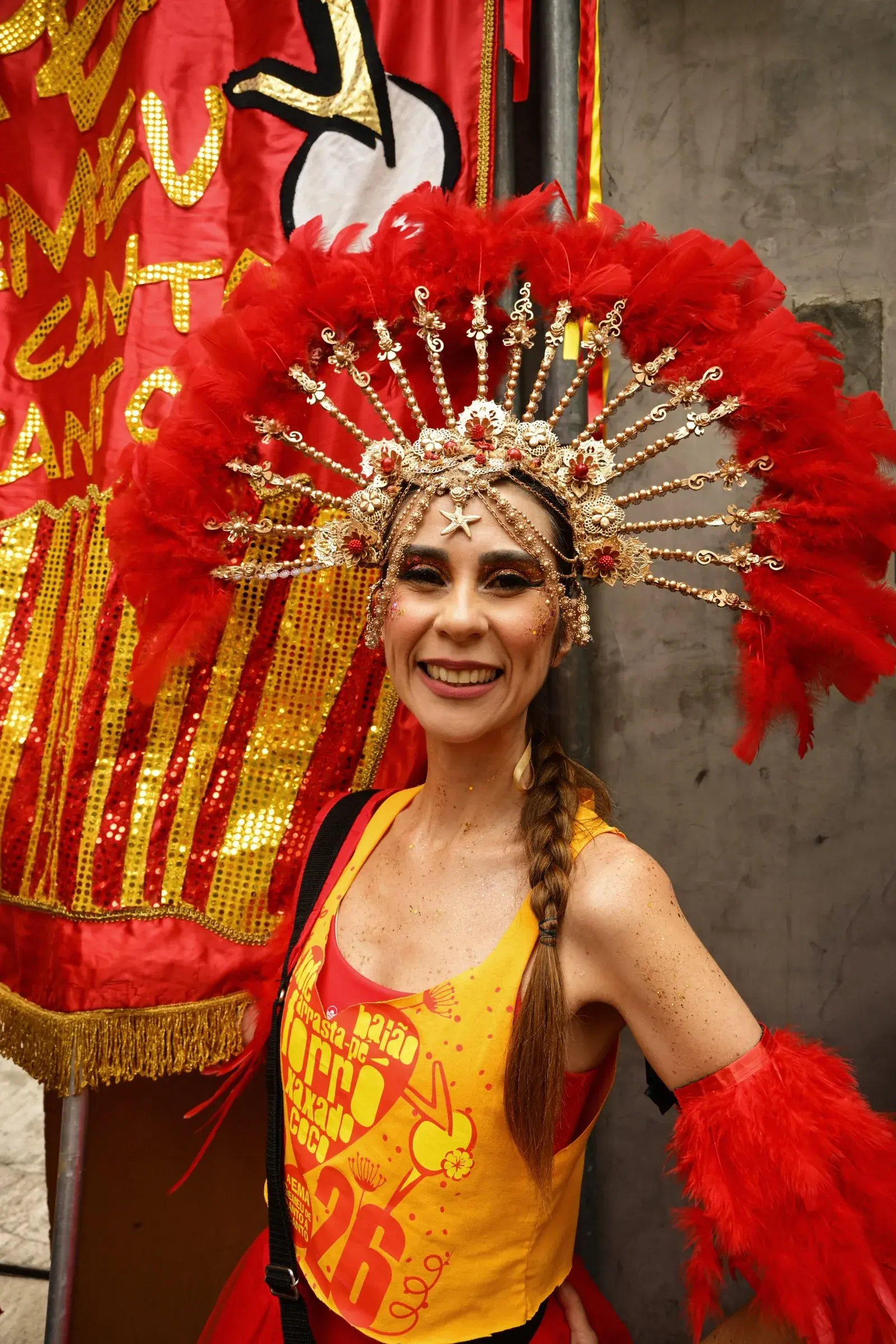
Updated July 2026: this guide draws on Brazilian cultural sources, current tourism figures from Embratur and the Ministry of Tourism, and etiquette references that reflect how Brazilians actually greet, eat, dress, and socialize today.
What are the real do's and don'ts in Brazil, and which ones actually matter? The short answer: Brazilians are warm, physical, and remarkably patient with visitors who make an effort, so a fumbled greeting won't sink your trip. Brazil welcomed a record 6.65 million foreign tourists in 2024, up 12.6% on the year before, which means locals in the main destinations see plenty of confused first-timers and rarely hold it against them (Travelmole, 2025). The etiquette that counts is the kind that signals respect, and in a few cases the kind that keeps you out of trouble.
Here's the thing most guides miss: in Brazil, manners and safety aren't separate subjects. Dressing sensibly off the beach, learning ten words of Portuguese instead of defaulting to Spanish, and paying attention to which streets and neighborhoods locals treat as off-limits are all pieces of the same habit. Follow the local script and you blend in, get warmer treatment, and stay clear of the situations that go wrong for tourists. For the broader risk picture, pair this with our Brazil safety guide.
Key Takeaways
- Brazilians are physically warm: cheek kisses, hugs, and light touching are normal, and pulling away can read as cold (Frommers, 2025).
- Brazil is the only Portuguese-speaking country in South America, and assuming people speak Spanish is a real sore point (Connect Brazil, 2025).
- Some habits are about safety, not just manners: with 6.65 million foreign visitors in 2024, the tourists who respect local rules on dress, photography, and no-go areas have the smoothest trips (Travelmole, 2025).
What Are the Most Important Brazil Do's & Don'ts?
If you remember only a handful of Brazil do's and don'ts, make them the ones that carry weight: greet people warmly, don't assume they speak Spanish, cover up when you leave the beach, keep your OK-sign hand to yourself, and respect local rules about where you go. Everything else is polish. Brazilian culture is welcoming and forgiving, so effort matters more than perfection (Cultural Atlas, 2025).
Why start with a shortlist? Because visitors tend to over-worry about small table manners while missing the two or three things that genuinely land as rude or risky. A quick side-by-side helps sort signal from noise.
| Do | Don't |
|---|---|
| Greet with a cheek kiss or hug when it's offered | Recoil, step back, or stay stiff and formal |
| Try a few words of Portuguese | Default to Spanish and assume it's "close enough" |
| Cover up before leaving the sand | Wear swimwear into shops, churches, or restaurants |
| Give a thumbs up to say "all good" | Flash the OK sign, which reads as a crude insult |
| Ask about family, food, football, and music | Open with politics, religion, crime, or someone's income |
| Follow your guide's lead in favelas and unfamiliar areas | Wander into unknown neighborhoods or photograph people freely |
Keep that table in mind and most of the rest falls into place. The sections below unpack each one, starting with the moment you meet someone.
How Do Brazilians Greet Each Other?
Warmly, and with more physical contact than many visitors expect. Women kiss women and men kiss women on the cheek, even at a first introduction, while men usually greet each other with a handshake plus a shoulder pat or a back-slapping hug (Frommers, 2025). The number of kisses varies by region: one in São Paulo, two in Rio and much of the country (Street Smart Brazil, 2025).
So what do you actually do when someone leans in? Mirror them. The kiss is usually air-cheek-to-cheek starting on your left, and following your host's lead is the safest move. Brazilians also stand closer during conversation and touch your arm or shoulder to make a point, which reads as friendliness rather than a breach of your personal space (Frommers, 2025).
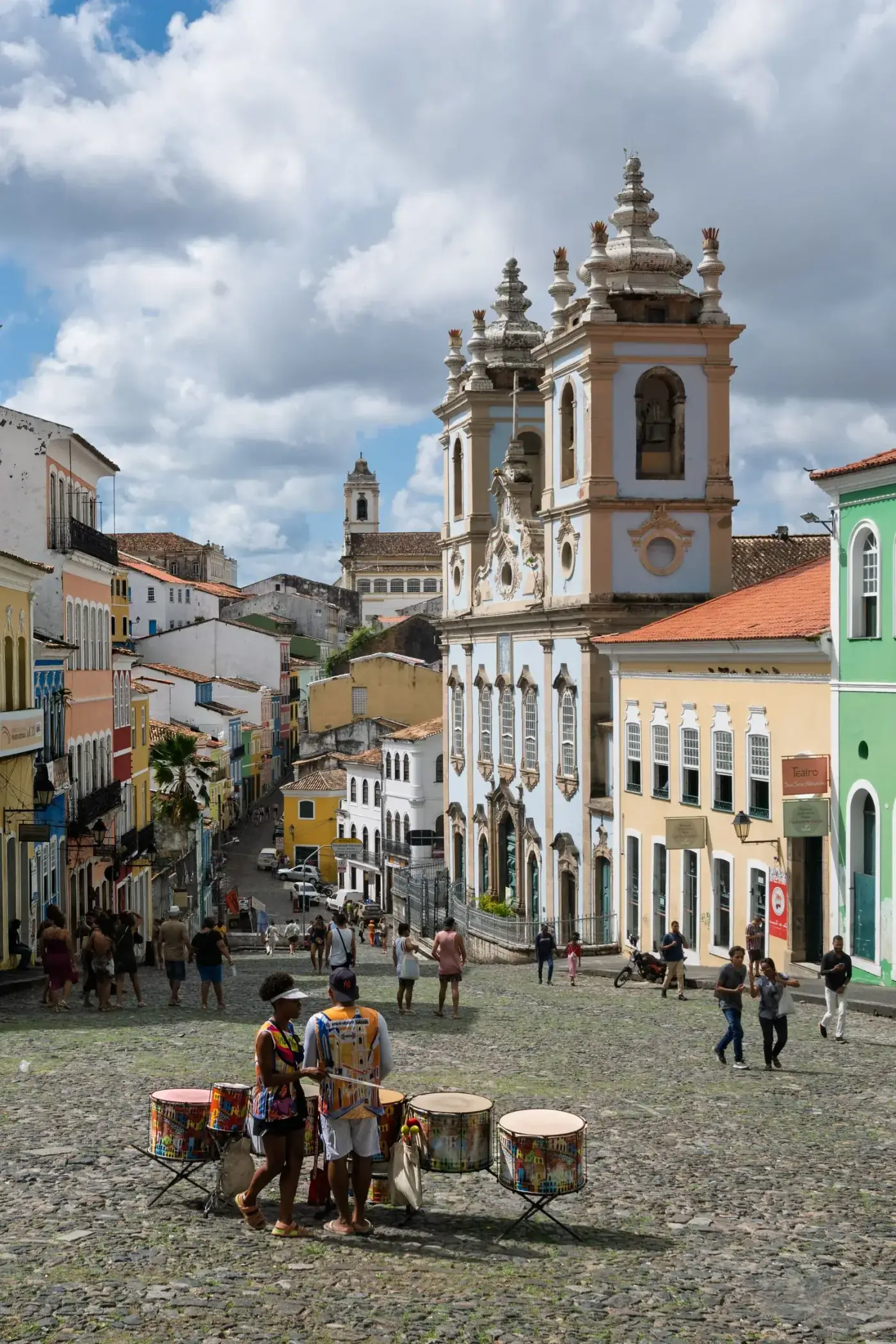
The one real don't here is pulling back. Stepping away or keeping people at arm's length can come across as cold or standoffish. If you're genuinely not comfortable with a kiss, offer your hand early and clearly for a handshake; that reads as a preference, not a rejection. Eye contact and a smile do a lot of the work either way.
Do Brazilians Speak Spanish? Why Language Is a Point of Pride
No, and assuming they do is one of the quickest ways to start on the wrong foot. Brazil is the only country in South America where Portuguese is the official language, a legacy of the 1494 Treaty of Tordesillas that split the continent between Portugal and Spain (Connect Brazil, 2025). Brazilians don't like being lumped in with their Spanish-speaking neighbors, and greeting them with "hola" lands flat.
Does this mean you need fluent Portuguese? Not at all. It means you should default to Portuguese, not Spanish, even a rough version of it. A simple "oi," "obrigado" (if you're male) or "obrigada" (if you're female), and "por favor" signals that you know where you are. Brazilians are famously delighted by foreigners who try their language, and that goodwill translates into warmer, more patient help (Connect Brazil, 2025).
The practical move is to load a few phrases before you fly. Numbers, greetings, "how much is it," and "where is the bathroom" cover most daily friction. Our Brazilian Portuguese phrases guide has a starter set built for travelers. Lean on that instead of hoping your high-school Spanish carries over, because in Brazil it mostly won't, and it can quietly annoy the person you're asking for help.
What Is "Horário Brasileiro"? Understanding Brazilian Time
It's the local shorthand for the relaxed relationship Brazil has with the clock. The concept of hora brasileira acknowledges that social events, and often meetings, rarely start at the stated time, and arriving 15 to 30 minutes late to a party or dinner is normal rather than rude (Street Smart Brazil, 2025). If a Brazilian friend says "come at eight," showing up at eight sharp may mean catching your host in the shower.
Does that mean nothing runs on time? Not quite, and this is where visitors trip up. Business meetings, tours, transfers, and anything with a ticket still expect punctuality, and Brazilians who want to stress a firm start time literally say "com pontualidade britânica," with British punctuality (Street Smart Brazil, 2025). Tolerance for lateness is also regional: the South runs tighter, while the North and Northeast are more forgiving.
The simple rule of thumb: be on time for anything transactional, and don't stress about being fashionably late to anything social. If you're the guest, showing up exactly on the dot can even fluster a host who's still setting up. Read the situation, and when in doubt, ask whether the start time is "brasileira" or firm.
Brazilian Etiquette for Dining and Tipping
At the table, Brazilian etiquette leans more formal than many visitors assume. Food is rarely touched with bare hands, even pizza, fruit, and sandwiches, which get cut with a knife and fork; if you must use your hands, wrap the food in a napkin (Etiquette Scholar, 2025). Keep your wrists resting on the table rather than your hands in your lap, and don't talk with your mouth full.
Tipping is simpler than in the US. Most restaurants, bars, and hotels already add a 10% service charge (serviço) to the bill, and Brazilians generally treat that as the tip (Wise, 2025). That charge is technically optional under Brazilian consumer rules, though it's customary to pay it, and you'd only add more for genuinely exceptional service (The Brazil Business, 2025).
So do you need to leave extra cash on top? Usually not. Check the bill for the 10% serviço before reaching for your wallet, and don't double-tip out of habit. Cards are widely accepted and often the cleanest way to pay, which also keeps your cash out of sight; our guide to paying in Brazil covers cards, Pix, and cash etiquette in more detail. Over-tipping isn't offensive, but it marks you as a tourist who didn't read the receipt.
How Should You Dress for Beaches, Churches, and Town?
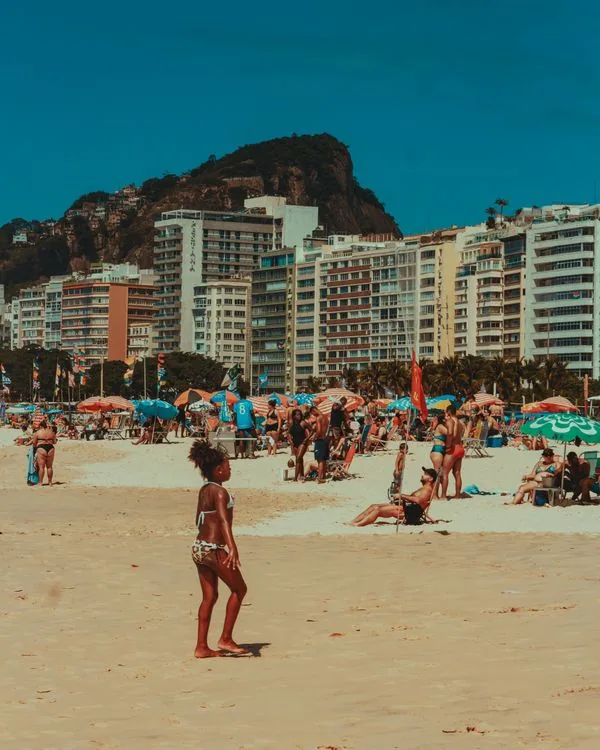
Context is everything, and getting it wrong is where dress becomes an etiquette problem. On the sand, less is expected: Brazilians wear small swimwear, skip beach towels in favor of a canga or rented chair, and consider hats, Hawaiian shirts, and sneakers a dead tourist giveaway (Caminhos Languages, 2025). The catch is that beachwear stays on the beach.
Where does the line fall? The moment you leave the sand. Wearing a bikini or swim shorts into a shop, restaurant, or church reads as sloppy at best and disrespectful at worst, so throw on a cover-up (Moon Travel Guides, 2025). Catholic churches expect covered shoulders and knees, no beachwear, and hats off indoors, and this matters more in smaller towns and during religious celebrations (Caminhos Languages, 2025).
There's a safety angle too. Flashy dressing, visible jewelry, and expensive-looking gear draw the wrong attention off the beach, so dressing down is both polite and practical. In cities, light, breathable, unshowy clothing helps you blend in. For a region-by-region packing breakdown, from the Amazon to the Southern winter, see what to wear in Brazil. The rule to remember: match your clothing to the room you're walking into, not the one you just left.
Which Things Not to Do in Brazil Could Actually Offend?
A few gestures and habits cross from awkward into genuinely rude, and these are the things not to do in Brazil worth memorizing. Top of the list: the American "OK" sign, thumb and index finger in a circle. In Brazil it's a vulgar insult, roughly equivalent to raising your middle finger, and it's been offending visitors here for decades (Penn State, 2020). Want to signal approval instead? Use a thumbs up.
Photography is the other easy misstep. Don't point a camera at people, homes, or favelas without asking; residents aren't scenery, and in favela visits you should photograph only after your guide confirms it's okay (Travel And Tour World, 2025). A favela is someone's neighborhood, not a photo backdrop, and treating it like an attraction is both disrespectful and a way to make yourself unwelcome fast.
Conversation has its own minefield. Brazilians are open and expressive, but with people you don't know well, steer clear of politics, religion, crime, poverty, and deforestation, and never ask about someone's income or savings (Cultural Atlas, 2025). Criticism of Brazil from a foreigner stings even when locals grumble about the same things themselves. Stick to football, family, food, music, and the country's natural beauty, and you'll find people happy to talk for hours.
Why Respecting Local Rules Keeps You Safe
Because in Brazil, the etiquette of "don't go there" is often a safety instruction in disguise. Locals know which streets flip after dark, which neighborhoods aren't for wandering, and when a beach empties out for a reason. Respecting those unwritten rules is partly about manners and largely about not walking into avoidable trouble, which is exactly why the smoothest trips among 2024's record 6.65 million visitors belonged to people who followed local cues (Travelmole, 2025).
What does that look like in practice? Ask your hotel or guide which areas are fine and which aren't, don't assume a quiet street is a safe one, keep valuables and phones out of sight, and never treat a favela or unfamiliar periphery as a place to explore solo. The same instinct that keeps you polite, following the local script, keeps you out of the situations that go wrong for tourists.
This is where the Brazil Safe Travel app earns its place: its GPS risk-zone layer flags neighborhoods and streets that locals already avoid, and its scam and incident alerts surface the tricks aimed at foreigners before you meet them, so "respect local rules" stops being vague advice and becomes something you can actually see on a map. Pair it with our rundown of common scams in Brazil so the polite instinct and the safety instinct point the same direction.
Frequently Asked Questions
These are the questions travelers ask most once the broad "how do I not offend anyone" worry narrows into specific, everyday situations.
Is it rude to shake hands instead of kissing in Brazil?
No. A handshake is perfectly acceptable, especially between men or in formal settings. If you'd rather not exchange cheek kisses, offer your hand early and clearly so it reads as a preference. What can seem cold is stepping back or staying stiff, so keep it warm with eye contact and a smile.
Do I need to speak Portuguese to travel in Brazil?
Not fluently, but you should try Portuguese rather than Spanish. Brazil is the only Portuguese-speaking country in South America, and locals genuinely appreciate the effort. A dozen basic phrases, greetings, thanks, numbers, and "how much," cover most daily interactions and earn you noticeably warmer, more patient help.
Should I tip in Brazil?
Usually the tip is already included. Most restaurants and bars add a 10% service charge to the bill, and Brazilians treat that as the gratuity. Check the receipt before adding more; you'd only tip extra for exceptional service. Over-tipping isn't offensive, but it's unnecessary and marks you as a first-time visitor.
Which hand gestures should I avoid in Brazil?
Avoid the American "OK" sign, the circle made with thumb and index finger, which is a vulgar insult in Brazil comparable to the middle finger. Skip the middle finger and the "corno" horns gesture too. When you want to signal that everything is fine, a thumbs up is safe and widely understood.
Can I take photos in favelas?
Only with care and consent. Don't photograph people, homes, or favela streets without asking, and on organized favela visits, take pictures only when your guide confirms it's appropriate. Residents live there; they aren't scenery. Treating a favela as a photo backdrop is disrespectful and can quickly make you unwelcome or unsafe.
Brazil rewards visitors who show up warm, curious, and willing to follow the local script. Greet people generously, reach for Portuguese instead of Spanish, dress for the room you're in, keep the OK sign in your pocket, and treat "don't go there" as friendly advice rather than a challenge. Do that and the country's famous warmth opens up fast. Before you go, round out your prep with our Brazil safety guide, a few Brazilian Portuguese phrases, and a scan of the common scams in Brazil.