Vaccines for Brazil Travel: The Full 2026 Checklist

Jump to section
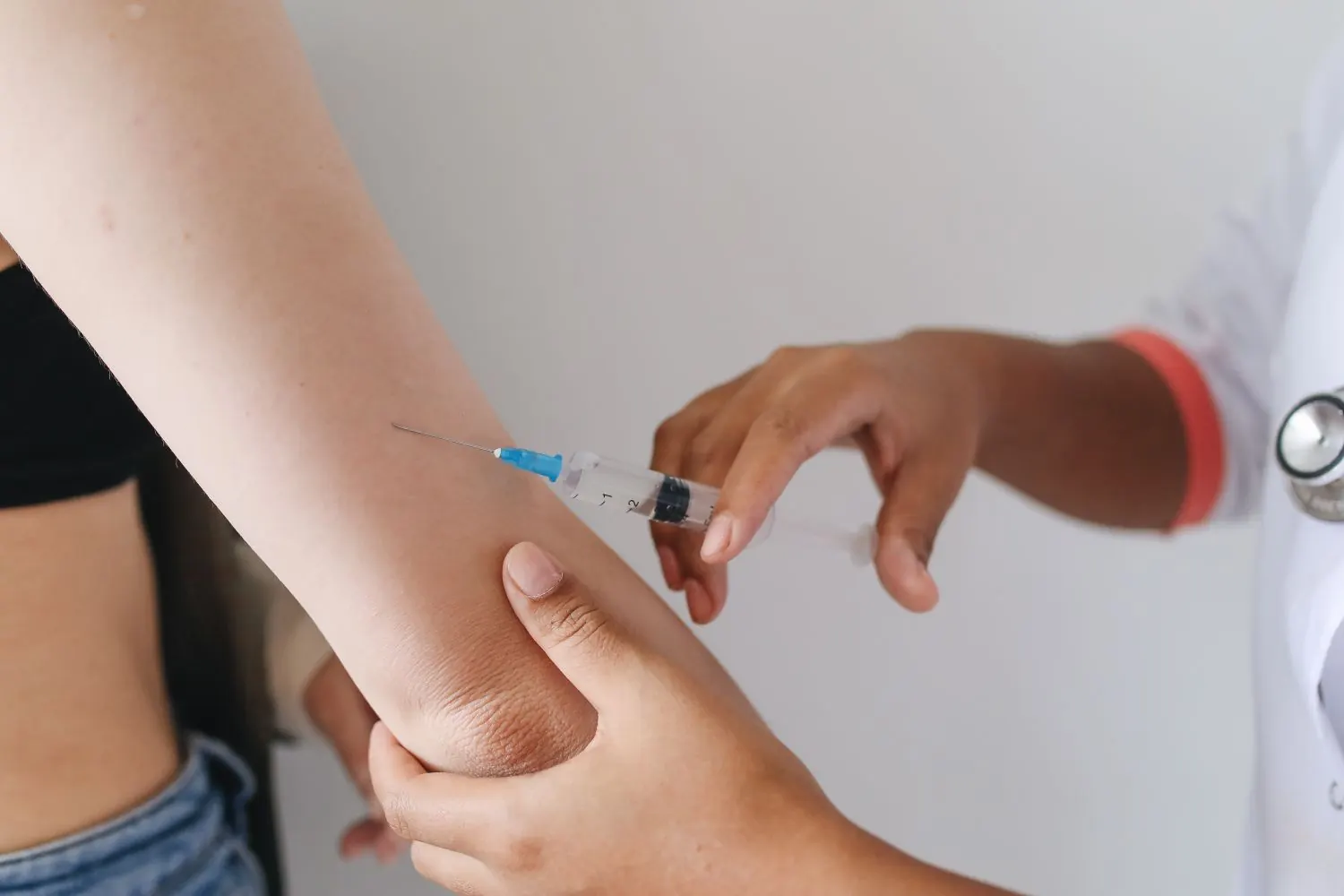
Updated July 2026: this checklist reflects current CDC Yellow Book 2026 guidance and 2024–2025 Brazilian public-health data for US travelers planning a trip.
Here's the short version most travelers get wrong: Brazil does not demand a single vaccine at the border if you arrive straight from the United States. That fact quietly convinces a lot of people they can skip the travel clinic entirely. It's the wrong lesson to draw.
"Not required to enter" and "not recommended for your health" are two completely different lists, and for Brazil the second list is long. The CDC recommends yellow fever vaccination for travelers heading to Rio de Janeiro, São Paulo, Brasília, Iguaçu Falls, and most of the country (CDC Yellow Book, 2026). It also recommends hepatitis A regardless of where you go. Add typhoid, hepatitis B, rabies, and your routine shots, and the picture looks nothing like "no vaccines needed."
So which ones actually apply to your trip? That depends on your route, your season, and how far off the tourist trail you go. This checklist walks through every vaccine worth considering for Brazil in 2026, sorts them by who needs them, and shows where the shots stop and everyday safety awareness begins.
If you're still shaping the route itself, our full Brazil travel guide is a good place to start before you book a clinic visit.
Key Takeaways
- No vaccine is legally required to enter Brazil directly from the US, but the CDC recommends hepatitis A for everyone and yellow fever for most of the country (CDC Yellow Book, 2026).
- Your exact list depends on route and length of stay: typhoid, hepatitis B, rabies, and malaria pills are situational, not universal.
- Book a travel-health appointment four to six weeks before departure so multi-dose vaccines have time to work.
Are Any Vaccines Required to Enter Brazil?
No vaccine is required to enter Brazil if you travel directly from the United States, because the US is not on the World Health Organization's yellow fever risk list (CDC Yellow Book, 2026). Brazilian immigration will not ask for a vaccination card at the airport in that scenario. The requirement only appears in a specific case.
That case is arrival from a country the WHO flags for yellow fever transmission. If you fly to Brazil after visiting parts of sub-Saharan Africa or certain neighboring South American countries, Brazil can require proof of yellow fever vaccination on an International Certificate of Vaccination or Prophylaxis, the yellow card. A layover doesn't usually trigger it, but a real stopover in a listed country can.
So the honest answer to "what's required?" is: for a direct US-to-Brazil trip, nothing. The moment your itinerary routes through a yellow-fever country, the rules change, and you'll want that yellow card in hand.
Here's the trap, though. Travelers hear "nothing required" and mentally file the whole health question under "done." The border isn't a health advisor. It only enforces the narrow rule about disease spreading across countries — it says nothing about the diseases you might actually catch inside Brazil. That's what the rest of this checklist covers.
The Core Vaccines the CDC Recommends for Brazil
The CDC recommends four vaccines for most travelers to Brazil beyond routine shots: hepatitis A, yellow fever, typhoid, and hepatitis B (CDC Yellow Book, 2026). These aren't border requirements. They're the shots travel-medicine doctors reach for because the exposure risk is real across the country, not just in one region.
Hepatitis A tops the list because it spreads through contaminated food and water, and the CDC recommends it regardless of your destination in Brazil. You can pick it up from a street-food stall in São Paulo as easily as from a rural guesthouse. It's a two-dose series, but a single dose gives strong short-term protection, so even a late booking helps.
Yellow fever is the big one for Brazil. The CDC recommends it for travelers aged nine months and older going to a long list of states, including Rio de Janeiro state and city, São Paulo state and city, Brasília, Minas Gerais, and the Iguaçu Falls area in Paraná. That covers the vast majority of tourist itineraries. We break down the route-by-route logic in our dedicated guide to whether you need the yellow fever vaccine for Brazil.
Typhoid matters most if you'll eat outside major hotels and restaurants, visit smaller cities, or stay with friends and family. Like hepatitis A, it's a food-and-water disease, so adventurous eaters and longer-stay travelers benefit most.
Our read: the single biggest mistake we see is travelers treating yellow fever as the only Brazil vaccine because it gets the most headlines. Hepatitis A is the one nearly every visitor should have, and it's the easiest to overlook.
Hepatitis B spreads through blood and body fluids. The CDC suggests considering it for most travelers, and especially anyone who might get medical or dental care, a tattoo, a piercing, or who may have new sexual partners. Many US adults were vaccinated in childhood, so check your records before assuming you need it.

Which Routine Vaccines Should You Already Have?
Before any Brazil-specific shot, the CDC wants you current on routine vaccines — MMR, Tdap, polio, varicella, influenza, and COVID-19 (CDC Travelers' Health, 2026). These protect against diseases that still circulate worldwide, and international travel is exactly when gaps get exposed.
Measles is the standout. Outbreaks flare up globally, and a crowded airport or a packed Carnival street block is a textbook exposure setting. If you were born after 1957 and aren't sure you had two MMR doses, that's worth confirming before Brazil.
Tetanus protection, bundled into the Tdap shot, matters more on an active trip than people expect. A cut on a hike, a scrape on a beach rock, a minor bike spill — Brazil's outdoor draws create plenty of small-wound moments. If your last tetanus booster was more than ten years ago, refresh it.
Don't overlook flu and COVID-19 either. Brazil's flu season runs opposite to the northern hemisphere's, roughly April through September, so a Brazilian winter trip can drop you into active flu circulation while your home country is mid-summer. Staying current on both is the cheapest protection on this whole list, because you can often get them at a local pharmacy in a single visit.
The reassuring part: most US adults already have the bulk of these. The point isn't to re-vaccinate — it's to spot the one lapsed booster before it becomes a problem abroad.
What Vaccines Do You Need for the Amazon and Rural Brazil?
Route decides everything here. A beach-and-city trip to Rio and São Paulo needs a very different list than a river cruise deep into the Amazon, where malaria and rabies enter the picture and yellow fever protection becomes non-negotiable (CDC Yellow Book, 2026).
Malaria is the clearest example of route-based risk. There's no malaria vaccine for travelers, so protection comes from prescription antimalarial pills plus mosquito precautions. The CDC recommends antimalarials for parts of the Amazon basin — including rural areas of Amazonas, Acre, Rondônia, Roraima, Amapá, and Pará — but not for Rio, São Paulo, Salvador, Iguaçu, or the main coastal tourist zones. If the Amazon isn't on your route, you likely don't need malaria pills at all.
Rabies is another situational shot. The CDC suggests the pre-exposure rabies vaccine for travelers with extended stays, those spending lots of time outdoors or around animals, and anyone visiting remote areas where medical care is hours away. Backpackers, wildlife guides, and long-term volunteers should discuss it; a one-week city trip generally doesn't warrant it.
For the Amazon specifically, yellow fever moves from "recommended" to "essential." The region is squarely inside the endemic zone, and mosquitoes there carry the virus year-round.

The takeaway is simple: map your vaccines to your itinerary, not to a generic country list. A travel-clinic doctor can look at your exact route and tell you which of these situational shots actually apply.
What About Dengue in Brazil?
Dengue is Brazil's biggest mosquito-borne threat, and it's not one a standard traveler shot solves. Brazil recorded its worst dengue epidemic on record in 2024, with roughly 6.6 million probable cases and about 6,199 deaths (PAHO / Brazil Ministry of Health, 2024). The numbers stayed high into 2025, especially in São Paulo state.
There is a dengue vaccine, and Brazil rolled it out in its public system — the government secured 9.5 million doses for its 2025 campaign (Agência Brasil, 2025). But it's aimed at residents in high-transmission areas, and the available vaccine isn't a routine recommendation for most short-term international visitors. For the typical traveler, dengue protection is behavioral, not biological.
That means repellent does the heavy lifting. Use one with DEET, picaridin, or oil of lemon eucalyptus, and reapply it — dengue's mosquito, Aedes aegypti, bites during the day, not just at dusk. Long sleeves in the early morning and late afternoon help, and air-conditioned or screened rooms cut nighttime exposure.
Timing matters too. Dengue season peaks during Brazil's warm, wet months, roughly December through May, which overlaps with Carnival and the summer beach season when many tourists visit. If you're traveling then, treat repellent as non-negotiable gear, right alongside sunscreen. The same daytime-mosquito habits also reduce your risk from Zika and chikungunya, which share the same carrier.

When and Where Should You Get Vaccinated?
Timing is the detail travelers most often botch. The CDC recommends seeing a travel-health provider four to six weeks before departure, because several travel vaccines need time to build protection or come as multi-dose series (CDC Travelers' Health, 2026). Book too late and you lose the window for full coverage.
Yellow fever is the clearest reason to plan ahead. The vaccine takes about ten days to become protective, and in the US it's only available at designated yellow-fever vaccination centers, not every pharmacy. You'll also get an official yellow card — the ICVP — which is worth keeping with your passport in case a later leg of your trip requires proof.
What we tell travelers: even if you're down to the wire, still go. A last-minute visit can't undo a multi-dose series, but a single hepatitis A dose or a quick tetanus booster given a week out is far better than nothing.
Where you go depends on the shot. A travel medicine clinic is the most complete option — it can handle yellow fever, prescribe antimalarials, and issue the yellow card in one visit. Routine shots like flu, COVID, and Tdap are often cheaper and faster at a regular pharmacy. Your primary care doctor can cover hepatitis A and B if you plan far enough ahead.
Cost varies, and travel vaccines aren't always covered by standard health insurance. That's a separate question from trip coverage — if a medical issue happens during your trip, that's where a policy earns its keep, which we cover in our guide to travel insurance for Brazil.
Where Vaccines Stop and On-the-Ground Safety Begins
Vaccines handle the diseases you might catch. They do nothing for the wrong turn into an unsafe neighborhood, the distraction scam near a landmark, or the moment you need help fast and don't speak Portuguese. Health prep and situational safety are two different layers, and a good Brazil trip uses both.
This is where an on-the-ground tool sits alongside your shots. The Brazil Safe Travel app shows higher-risk areas by GPS, flags the most common scams before they reach you, and offers ready-to-use emergency audio in Portuguese — exactly what you want if you need to reach a pharmacy or clinic quickly and the language is a barrier. A vaccine is protection you carry in your bloodstream; the app is protection you carry in your pocket.
Think of it as biological protection versus situational protection. One is settled in a clinic before you fly; the other you manage every day on the ground. For the bigger picture of how safe the country actually is and how risk shifts by place and season, read our Is Brazil safe? guide, and if Rio is on your list, our Rio de Janeiro safety guide goes deep on the city. Use Brazil Safe Travel as the prevention layer that runs the whole trip.
One more everyday-health note that isn't a vaccine at all: water. Knowing where tap water is fine and where to stick to bottled prevents the most common traveler stomach trouble — our tap water in Brazil guide breaks it down city by city.
Frequently Asked Questions
Are vaccines required to enter Brazil from the US?
No. If you fly directly from the United States, Brazil requires no vaccination certificate, because the US isn't on the WHO yellow fever risk list (CDC Yellow Book, 2026). Proof of yellow fever vaccination is only required if you arrive from a country flagged for yellow fever transmission.
What is the single most important vaccine for Brazil?
For most travelers, hepatitis A. The CDC recommends it regardless of your destination in Brazil because it spreads through contaminated food and water, a risk in every city and region (CDC Yellow Book, 2026). Yellow fever is close behind for most tourist routes.
Do I need malaria pills for Brazil?
Only for parts of the Amazon basin. The CDC recommends antimalarials for rural areas of states like Amazonas, Acre, Rondônia, and Roraima, but not for Rio, São Paulo, Salvador, Iguaçu, or the main coastal destinations (CDC Yellow Book, 2026). There's no malaria vaccine, so pills plus repellent do the job.
Is there a dengue vaccine for travelers to Brazil?
A dengue vaccine exists and Brazil uses it in its public system, securing 9.5 million doses for 2025 (Agência Brasil, 2025). It targets residents in high-transmission areas, not short-term visitors. For travelers, dengue protection means daytime-effective repellent, not a shot.
How far in advance should I get my Brazil vaccines?
Four to six weeks before departure, per the CDC (CDC Travelers' Health, 2026). Yellow fever needs about ten days to take effect, and some vaccines are multi-dose. Even a last-minute visit is worth it for single-dose protection like hepatitis A or a tetanus booster.
The Bottom Line on Brazil Travel Vaccines
Brazil asks for no vaccines at the border if you come straight from the US — but that's a customs rule, not health advice. The list that actually protects you is longer: hepatitis A and yellow fever for most trips, typhoid and hepatitis B depending on how and where you travel, routine shots like MMR and Tdap for everyone, and malaria pills only if the Amazon is on your route. Dengue stays a repellent-and-timing question rather than a shot for most visitors.
Settle all of it in one travel-clinic visit four to six weeks out, and you'll land with the health side handled. For everything the shots can't cover — risky areas, scams, and language gaps — lean on Brazil Safe Travel on the ground, and start narrowing your destination and season with our Is Brazil safe? guide.
This article is general travel-health information, not medical advice. Confirm your personal vaccine needs with a licensed travel-medicine provider based on your health history and exact itinerary.